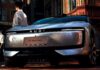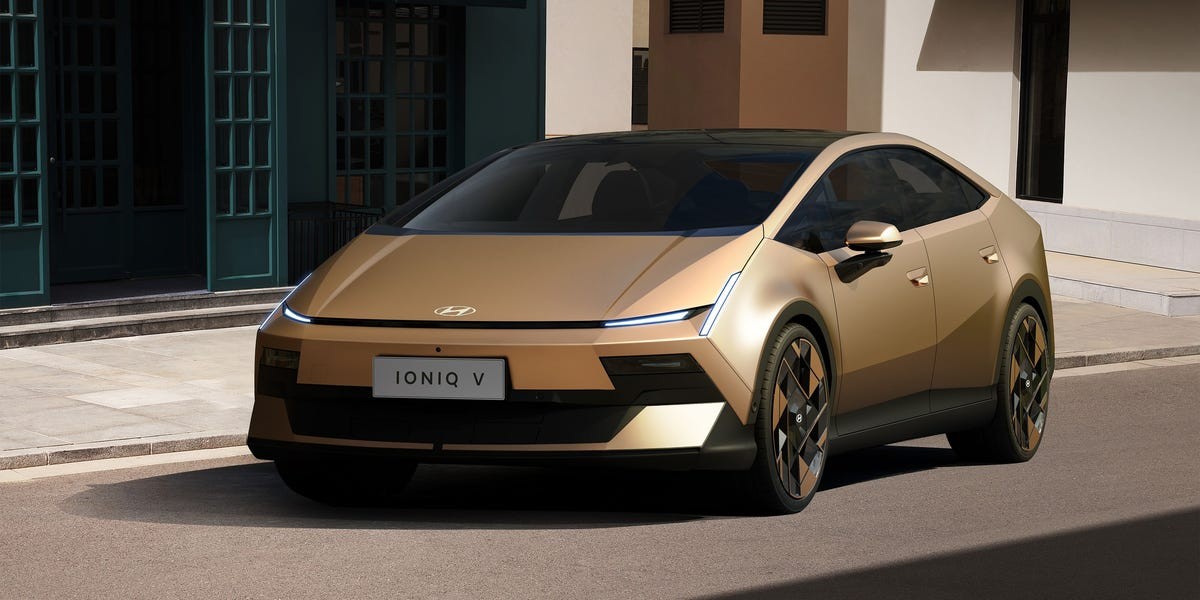
Hyundai has officially transitioned its recent “Venus” concept into a production-ready electric sedan: the Ioniq V. While it shares a naming convention with the brand’s global electric vehicle (EV) lineup, this model is a strategic pivot specifically engineered for the Chinese market.
A New Design Language: “The Origin”
The Ioniq V departs significantly from the boxy, retro-futuristic aesthetic of the Ioniq 5. Instead, it embraces a sleek, aerodynamic “wedge” silhouette characterized by:
– Razor-thin LED headlights that mimic the split design of the Hyundai logo.
– Frameless doors and a “floating” mirror design, both optimized to minimize aerodynamic drag.
– A low-slung profile that positions the vehicle in the mid-size sedan segment, roughly comparable to the dimensions of a Hyundai Sonata.
High-Tech Interior and Performance
Recognizing the high expectations of Chinese consumers for digital integration, Hyundai has designed an interior that is almost entirely screen-driven.
- Digital Cockpit: The dashboard is dominated by a massive 27-inch, 4K resolution screen. To maintain a minimalist look, Hyundai has eliminated the traditional instrument cluster, opting instead for a high-tech Head-Up Display (HUD) to provide essential driving data.
- Range and Efficiency: While specific battery capacities remain undisclosed, the Ioniq V is rated for a range of approximately 600 km (373 miles) according to the CLTC standard.
Note: The CLTC (China Light-duty Vehicle Test Cycle) is generally less stringent than the EPA standards used in the US, meaning real-world range may differ.
Strategic Shift: “In China, For China, To Global”
The launch of the Ioniq V is more than just a new model release; it is the cornerstone of a massive strategic overhaul. Hyundai is implementing a new philosophy dubbed “In China, For China, To Global.”
This approach treats China not just as a sales destination, but as a primary R&D hub for global products. Under this roadmap, Hyundai intends to:
1. Launch 20 new models in China over the next five years.
2. Target the mid-size to large segments with both Battery Electric Vehicles (BEVs) and Plug-in Hybrid Electric Vehicles (PHEVs).
3. Use Chinese-developed models as blueprints for the global market.
What This Means for Other Markets
For enthusiasts in the United States and Europe, the Ioniq V is unlikely to arrive on local showroom floors. However, the vehicle serves as a “testbed” for Hyundai’s new design language, “The Origin.”
While the specific sedan and the upcoming SUV (based on the “Earth” concept) may remain regional, the design DNA and technological advancements seen in the Ioniq V are expected to trickle down into future Hyundai models worldwide.
The Ioniq V represents Hyundai’s aggressive attempt to compete in the world’s most competitive EV market by treating China as a laboratory for future global innovation.