In the modern automotive landscape, there is a visible shift toward downsizing: manufacturers are increasingly replacing large, naturally aspirated engines with smaller, turbocharged four-cylinder units to meet strict emissions and fuel-economy standards. However, this trend comes with a trade-off in long-term durability.
While turbocharging offers immediate power and efficiency, it introduces complexities that can compromise an engine’s lifespan. In contrast, Toyota’s GR-Series 3.5-liter V6 has established a reputation for extreme longevity, often outlasting its turbocharged rivals by hundreds of thousands of miles.
The Reliability Gap: Simplicity vs. Complexity
The primary reason for the V6’s superior lifespan lies in its mechanical architecture. Reliability in engineering is often a numbers game: fewer moving parts equal fewer points of failure.
- Naturally Aspirated Advantage: The GR-Series V6 relies on atmospheric pressure to draw in air. It lacks the complex peripheral systems required by turbo engines, such as intercoolers, high-pressure boost systems, and heavy-duty turbines.
- The Turbocharged Burden: To extract more power from a smaller displacement, turbochargers force compressed air into the cylinders. This process requires additional components that are prone to wear, leak, or fail over time, leading to expensive repairs that can range from $5,000 to $10,000.
Thermal Stress and Mechanical Fatigue
One of the most significant “silent killers” of an engine is heat. Turbocharged engines operate under much higher thermal and pressure loads than naturally aspirated ones.
Heat Management
Turbochargers function by recirculating hot exhaust gases through a turbine. This creates intense heat within the engine bay and the cylinder head. Over time, these extreme temperatures can accelerate the degradation of seals, gaskets, and internal metal components. Because the Toyota V6 does not rely on forced induction, it runs significantly cooler, reducing the rate of wear on its internal parts.
Smoothness and “Turbo Lag”
Beyond heat, there is the issue of how power is delivered. Turbocharged engines often suffer from “turbo lag” —a delay in power delivery while the turbine builds up sufficient pressure. This results in uneven torque delivery. The GR-Series V6, however, provides consistent, linear acceleration. This smooth power delivery reduces mechanical vibration and fatigue, contributing to the engine’s ability to reach staggering milestones.
A Proven Pedigree: From Commuters to Supercars
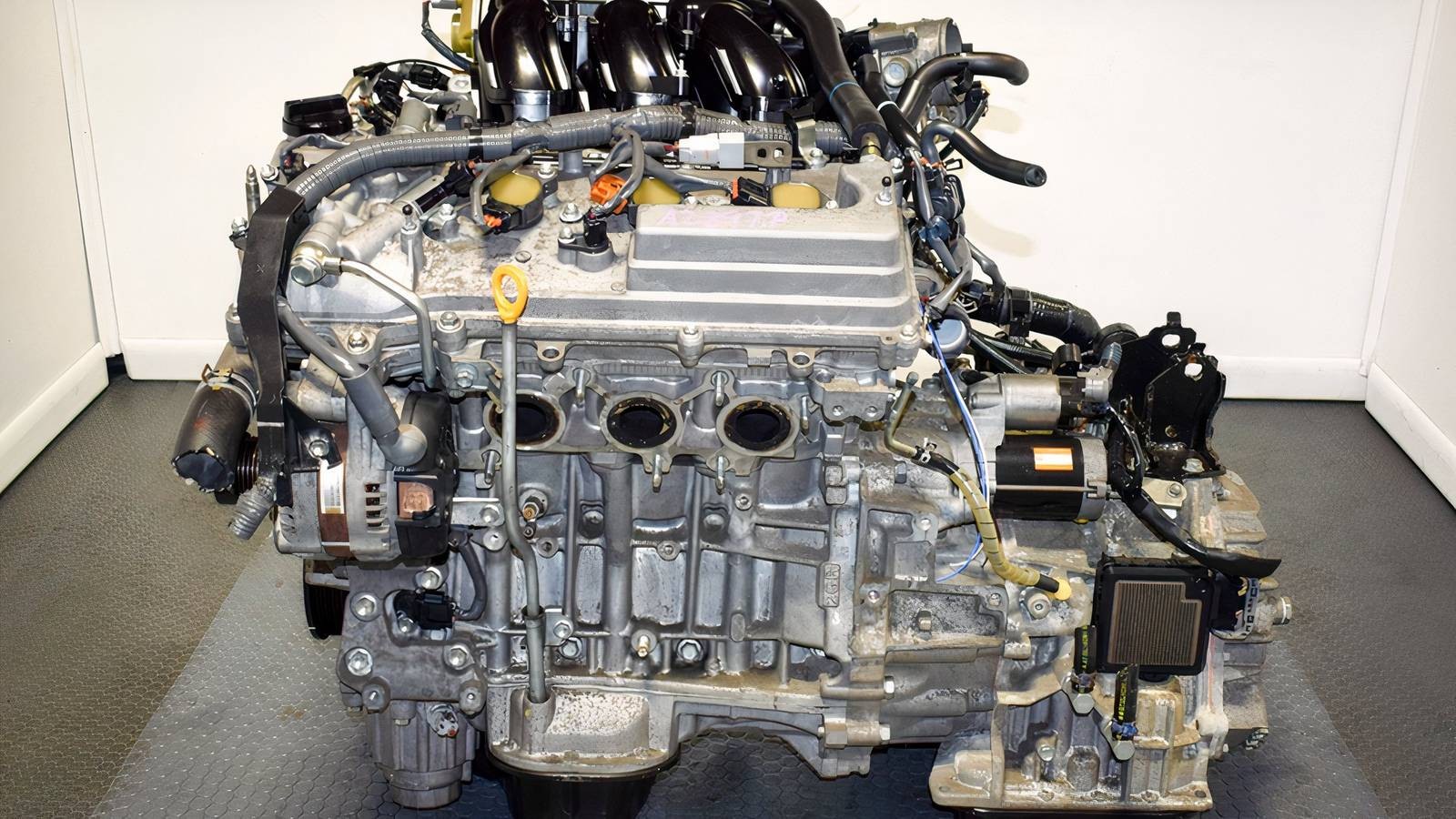
The durability of the GR-Series (specifically the 2GR-FE/2GR-FKS ) is not just theoretical; it is documented through decades of real-world use.
Toyota utilized this engine across a massive spectrum of vehicles, proving its versatility:
– Daily Drivers: It powered everything from the Toyota Camry and RAV4 to the Highlander and Tacoma.
– Luxury Models: It served as the heart of various Lexus models, including the RX, IS, and GS series.
– Performance Machines: The engine was so robust that Lotus adopted it for the Evora, Exige, and Emira, even utilizing supercharged variants.
In many documented cases, these engines have surpassed the 300,000 to 500,000-mile mark, provided they were subjected to regular maintenance.
Engineering for the Long Haul
Toyota’s success with this engine family is rooted in high-quality foundational construction. The GR-Series features:
– Durable Materials: The use of forged crankshafts and rigid engine blocks.
– Lightweight Efficiency: An all-aluminum construction that manages weight without sacrificing strength.
– Refined Evolution: Toyota has spent decades refining its engine generations (from the VZ to the MZ, and finally the GR), prioritizing reliability with every iteration.
Economic Benefits for the Owner
For the long-term owner, the advantages of the V6 extend to the wallet. While a small turbo engine might offer slightly better fuel economy in short bursts, the V6 offers:
1. Lower Operating Costs: The GR-Series is designed to run efficiently on regular 87-octane gasoline, whereas many high-performance turbo engines require premium fuel to prevent engine knock.
2. Reduced Maintenance Risks: With fewer electronic sensors and complex air-induction components, there are fewer “surprise” repair bills as the vehicle ages.
Conclusion
The Toyota GR-Series V6 remains a benchmark for automotive reliability because it prioritizes mechanical simplicity and thermal stability over the high-stress complexity of modern turbocharging. By choosing a design that runs cooler and features fewer moving parts, Toyota created an engine capable of enduring hundreds of thousands of miles of daily abuse.