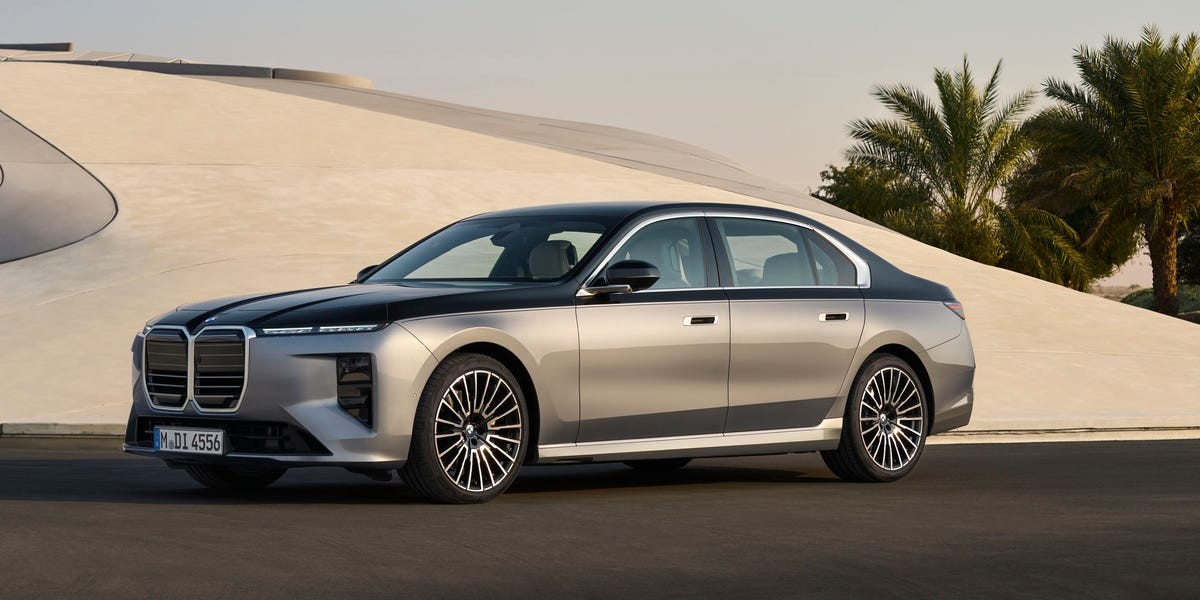
BMW has unveiled a significant mid-cycle refresh for its flagship 7-Series, signaling a bridge between the brand’s traditional luxury roots and its radical “Neue Klasse” electric future. The 2027 model lineup introduces a heavy dose of digital innovation, controversial ergonomic shifts, and a streamlined powertrain strategy.
A Bold, Digital-First Transformation
While the exterior silhouette remains familiar, the 2027 7-Series features a more assertive presence. The “face” of the car has been flattened and made more upright, characterized by a bluff front end and a prominent, illuminated twin grille. At the rear, BMW has opted for a minimalist aesthetic, featuring elongated, strip-like taillights.
The most profound changes, however, are hidden behind the doors. BMW is aggressively moving toward a “digital cockpit” philosophy, borrowing design language directly from its upcoming electric models (the i3 and iX3).
The Panoramic iDrive Experience
The interior moves away from traditional tactile controls in favor of an expansive digital landscape:
– Panoramic Display: A massive, pixel-based strip stretches across the entire dashboard from A-pillar to A-pillar, projecting speed and essential data directly at the driver’s eye level.
– Screen Dominance: A 17.9-inch central touchscreen is paired with a 14.6-inch dedicated screen for the front passenger.
– The End of the Clickwheel: In a major shift, the iconic iDrive rotary controller has been removed, moving the interface entirely toward touch and digital interaction.
– Controversial Ergonomics: The new steering wheel features a unique “spoke” design at the 12 and 6 o’clock positions. This forces drivers to grip the sides of the rim, placing their thumbs on touch-sensitive pods—a design choice that marks a significant departure from classic luxury driving dynamics.
Luxury Through Customization and Technology
To maintain its edge in the high-margin luxury segment, BMW is leaning heavily into bespoke personalization via its Individual program. Customers can now choose from over 500 colors, including a complex “Dual Finish” process that blends matte and metallic paints.
For rear passengers, the 7-Series remains a mobile sanctuary. The “Executive Lounge” option and the massive 31.3-inch Theater Screen continue to offer high-end entertainment. Notably, the new Theater Screen includes a built-in camera for video conferencing, acknowledging the growing trend of “mobile offices” among executive travelers. To offset the screen blocking the rearview mirror, BMW now offers a digital rearview camera system.
Streamlined Powertrains and Tech Architecture
BMW is refining its engine lineup by focusing on efficiency and electrification, even as it maintains a presence for internal combustion enthusiasts.
| Model | Engine Type | Key Specs |
|---|---|---|
| 740 / 740 xDrive | 3.0L Twin-Turbo Inline-6 | 394 hp / 398 lb-ft torque |
| 750e xDrive | 6-Cylinder Plug-in Hybrid | 483 hp / 516 lb-ft torque |
| i7 (50/60 xDrive) | Fully Electric | (EV variants) |
Note: The V-8 powered 760i has been removed from the immediate lineup, though a high-performance M-model is expected in the future.
Under the skin, the car utilizes a more advanced zonal electronic architecture. By using eFuses and simplified wiring, BMW has reduced weight and complexity, allowing the vehicle to manage its massive array of digital features—from 4D soundscapes via 36 speakers to remote parking via smartphone—more reliably.
Market Positioning and Availability
The 2027 7-Series launches this summer, with the plug-in hybrid (PHEV) arriving later this year. Pricing remains competitive for the segment, starting at $101,350 for the base 740 model—a negligible $500 increase over the previous year.
The Bottom Line: The 2027 7-Series represents BMW’s attempt to harmonize traditional luxury with a radical, screen-heavy digital future, prioritizing software and customization to compete in an increasingly tech-driven automotive market.