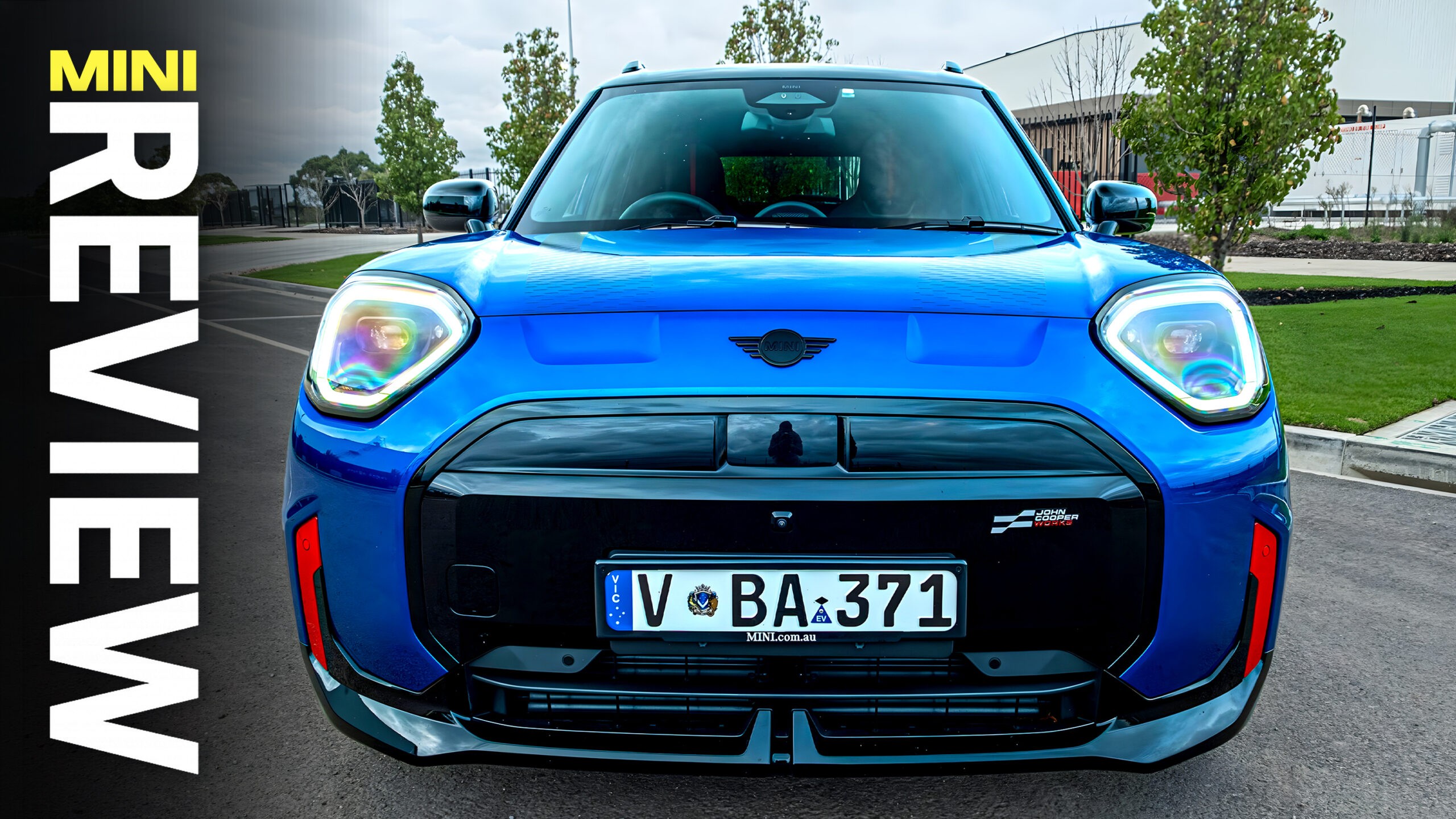
Mini launched the Aceman recently. Most people were surprised. You know why? They already have the Cooper. The Countryman exists too. Nobody asked for another Mini. But here we are.
Unlike the rest of the lineup, the Aceman is purely electric. No combustion engines hiding in the back. It fights the Volvo EX30. It takes on the Skoda Elroq. It even glares at the Kia EV3. Style points are high. Substance is debatable.
We tested the flagship. The JCW e Favoured. This isn’t the entry-level toy. It is the version meant to scare the neighbors.
Quick Facts That Don’t Add Up
Electric hot hatches are a niche. A small, weird niche. In terms of raw speed, the Aceman JCW gets bullied. Look at the two-door Cooper JCW or the all-wheel-drive Countryman. They have more power. Lots more. The Countryman boasts 308 horsepower and 364 lb-ft of torque. The Aceman has 255 hp. And 258 lb-ft.
Front-wheel drive. Single motor.
But numbers don’t tell the whole story. The Aceman feels frantic. Nervous. Like it wants to kill you. In Australia, this specific test car costs AU$65,992. That’s about $46,400. Is it expensive? For a Mini? No. They charge a premium for being stylish. And this thing is stylish.
Style Over Survival
Step inside. It feels joyful. Maybe too joyful for a car that struggles to put power to the ground. The center tunnel is thick. Not as thick as an automatic gearbox hump, but still there. Your phone sits in a shallow cup. Your water bottle? Maybe. The door pockets are jokes. You could lose a receipt in there forever.
Personality makes up for it. Mostly.
Our tester wore black recycled knit. Red patterns screamed from the passenger dash. Red stitching everywhere. A red strap on the bottom of the steering wheel. Gold accents on the speaker grilles. It looks like a race car designed by someone who loves color.
The screen is circular. Standard Mini fare. Apple CarPlay works wirelessly. The head-up display is old-school. It projects onto a little panel that pops up. Weirdly, it works with polarized sunglasses. That’s a win.
Being a JCW means extra toys. Harmon Kardon speakers. A panoramic roof. Heated, massaged driver seat. And ambient lighting that projects checkerboards on the ceiling. It’s cool. Is it practical? Hardly.
Rear seats fit children. Adults over 5’8″? Forget it. Legroom is tight. Headroom is tighter. Trunk space is 10.5 cubic feet. Fold the seats? 35.4 cubic feet. Acceptable for a grocery run. Terrible for IKEA furniture.
Sharp Edges And Torque Steer
Start the engine. There is no engine. But the feeling is instant. I drove the Countryman all week before this. When I slid into the Aceman, I checked the specs sheet again. Was it lying? Was this thing actually faster?
It feels sharper. The all-wheel-drive Countryman pushes forward smoothly. Predictable. Boring, almost. The Aceman snaps at your throat. All that torque hits two front tires and they argue with each other.
Torque steer. The steering wheel fights you. Left. Then right. Violently. It’s fun in a rollercoaster sense. Terrifying on a busy highway. Try accelerating gently? It still jerks. Hit the Boost button? An extra 27 horsepower dumps into the chassis for 10 seconds. The car feels alive. Too alive.
Wet roads make it worse. Traction control chatters like a broken record. It’s hard to launch smoothly. Our 0-60 times were 6.5 seconds. Mini claims 6.4. Close enough. Mid-range acceleration is okay. 5.6 seconds for 37-75 mph. Not mind-bending.
The Ride Is Cruel
Here is the problem. The ride is awful. Not “firm sports car” awful. “Bone-crushing” awful.
I have an old Renault Megane RS. It was stiff for 2014 standards. Compared to the Aceman, it felt like a cloud. Every pebble. Every expansion joint. You feel it all. On rough city streets, my passenger looked like a bobblehead on a dashboard display. Bouncing. Helpless.
Why? Heavy batteries sit low in the chassis. Minis are heavy. But this suspension has no compromise. No mercy. On a perfect track, maybe this works. On potholed streets in Seattle? No chance.
Corners? The Aceman loves them. Despite weighing nearly 3,900 pounds, it feels light. The steering is direct. Immediate. You point it, it goes. Until the traction control yells and yanks it back mid-corner. It doesn’t matter if you switched it off. It cares more than you do.
It’s fun. But it’s exhausting. And frankly, a combustion hot hatch in this price bracket is more engaging. At least they don’t numb your spine.
Range Anxiety
The battery is 49 kWh. Small by today’s standards. The Volvo EX30 has 51. The Alpine A290 has 52. Those cars have less power, though. Mini says you’ll get 221 miles. Maybe.
If you drive like a librarian, sure. Set the regen to maximum. Cruise slowly. You can average 14 kWh per 100 kilometers. Hit the gas? The range evaporates. Fast. Don’t plan cross-state trips without doing the math.
Final Thoughts
Mini should be commended. The Aceman JCW is a character study. It’s loud. It’s weird. It hides its mass surprisingly well. The steering communication is top-tier. It wants to drive you off a cliff.
But the ride quality is a dealbreaker. It’s jittery. Unpleasant. Torque steer is a liability. If Mini softens the springs and tames the front axle, this could be a gem. Until then, it’s a compromise that leans too far into the wrong direction.
Skip the JCW. Buy the regular version. You’ll thank me later. Probably. 🏎️