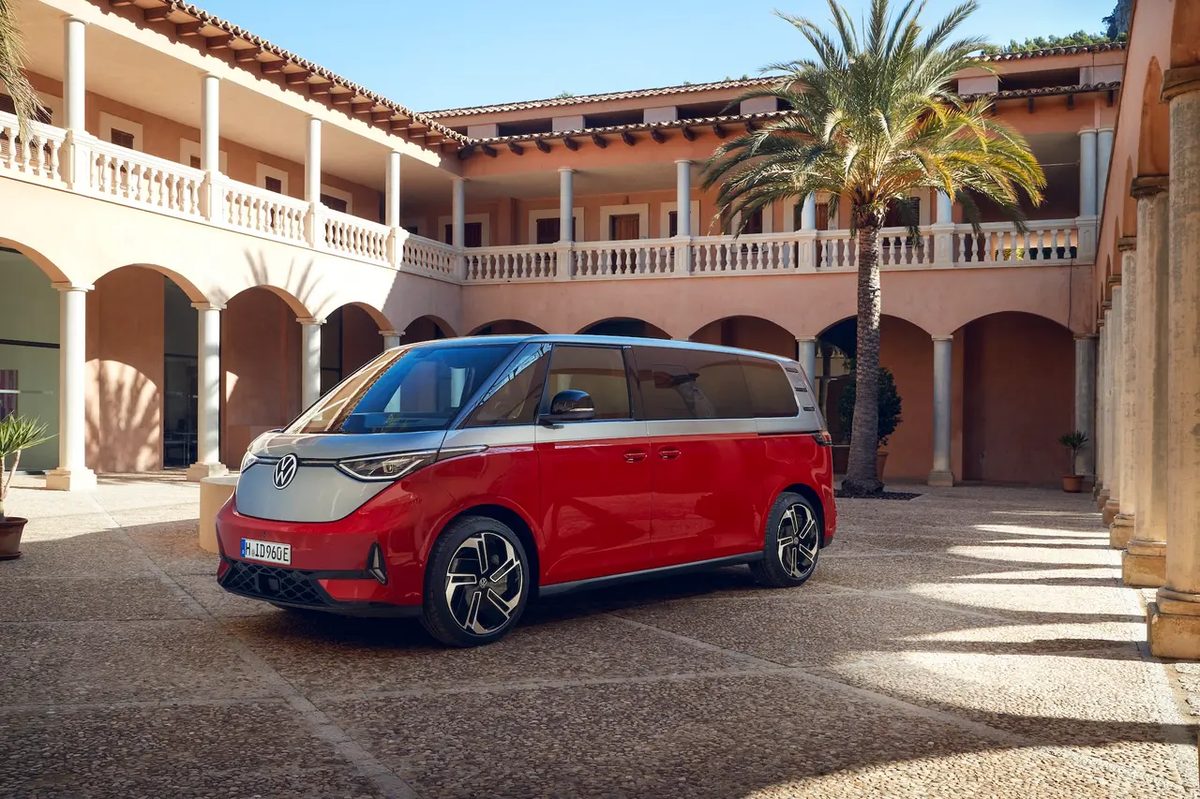
You thought the ID.Buzz was just for hauling groceries or weekend camping gear. You were wrong. Volkswagen has officially confirmed what enthusiasts have been screaming about since the concept first rolled out: the ID.Buzz GTX is real. This isn’t a gimmick. It’s the latest piece in Volkswagen’s broader puzzle to prove that “electric” doesn’t automatically mean “boring.”
With the ID.4 GTX already on the market and the ID.3 GTX and ID.7 Tourer GTX recently announced, the ID.Buzz GTX completes a surprisingly aggressive lineup. The brand is no longer just playing it safe with family haulers. They are actively injecting performance DNA into their electric fleet. The question isn’t whether it can be fast. It’s how fast it can get before it runs out of road.
Why This Matters for the ID.Buzz Lineup
Volkswagen isn’t just throwing badges around. The GTX sub-brand has become the performance arm of the German giant’s EV strategy. By slapping “GTX” on the ID.Buzz, they are signaling a departure from the relaxed cruising mode most people expect from a microbus.
“The ID.Buzz GTX is born to crown the line of sporting electric vehicles from the brand.”
This vehicle joins a growing family of performance EVs. It’s not an isolated experiment. It’s part of a coordinated effort to keep the brand’s sporty spirit alive while the rest of the industry pivots entirely toward efficiency and range. The ID.Buzz GTX represents that tension. It’s heavy. It’s boxy. And yet, it’s getting a powertrain tuned for adrenaline, not just aerodynamics.
The GTX Formula: More Power, More Attitude
So, what does the GTX badge actually buy you? In previous models like the ID.4 GTX, it meant dual motors. It meant AWD. It meant enough torque to make you check your speedometer twice after leaving a red light. While specific horsepower figures for the new ID.Buzz GTX have been guarded so far, the architecture is familiar.
The GTX line up currently includes:
* ID.4 GTX: Already available.
* ID.3 GTX: Recently announced.
* ID.7 Tourer GTX: Recently announced.
* ID.Buzz GTX: The latest addition.
This isn’t about tweaking suspension springs. It’s about fundamental power distribution. The ID.Buzz GTX is expected to leverage the same high-performance battery and motor configurations seen in its sedan and SUV cousins. That means launching from a standstill with serious shove.
How Does It Fit the Brand’s Sporty Spirit?
Volkswagen has a history with performance vans. The Golf GTI set the template. The Passat W12 pulled off the impossible with sheer engine size. Now, with the ID.4, ID.3, ID.7, and ID.Buzz all getting GTX treatment, the strategy is clear: electrification is the new stage for horsepower.
The ID.Buzz GTX isn’t just about being the fastest van. It’s about proving that utility vehicles can have a pulse. It’s about conjugating “sporty spirit” with “electrification” without compromising one for the other. The result is a vehicle that looks like a
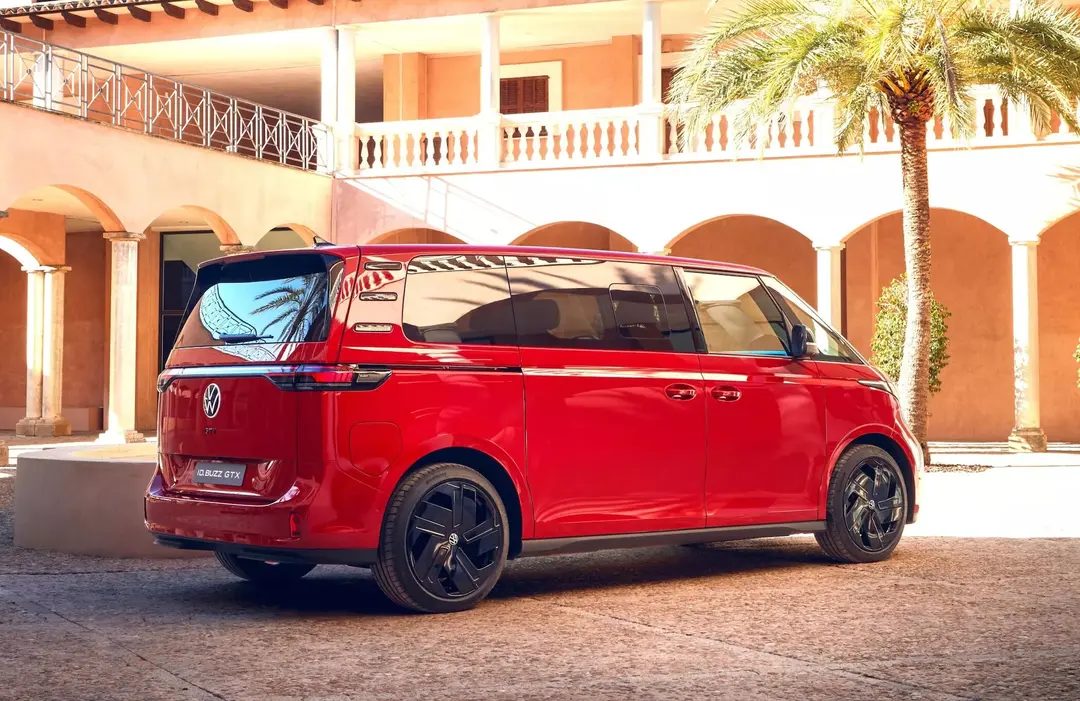
Une dynamique surprise pour le vénérable Combi
Les électriques grand public ont fait leur preuve en matière de puissance. Tesla. Porsche Taycan. Ford Mustang Mach-E. Ces noms dominent le conversation sur les performances. Les utilitaires, eux, restent généralement dans leur rôle. Pratique. Raisonnable. Pas vraiment associés au plaisir de conduite.
Volkswagen a décidé de briser cette convention. L’ID. Buzz GTX arrive avec une attitude bien plus agressive.
Des batteries pour soutenir la performance
La différence ne vient pas du hasard. Elle est structurelle. Cette version GTX s’appuie sur des packs batterie plus généreux. Vous avez le choix entre une capacité de 79 kWh ou l’option supérieure à 86 kWh.
Ces batteries ne sont pas là juste pour étendre l’autonomie. Elles soutiennent la demande énergétique massive requise par la nouvelle configuration motrice.
Sauter de 150 à 340 chevaux
La transformation est radicale. VW ne joue pas aux demi-mesures ici. La puissance moteur passe de 100 kW à 250 kW.
En termes plus concrets pour les conducteurs :
- Ancienne puissance : 150 ch
- Nouvelle puissance GTX : 340 ch
Sous la pédale, ce sont donc 340 chevaux qui se manifestent. C’est un bond significatif. Cela place le Combi bien au-delà du simple véhicule utilitaire. La dynamique change. L’accélération devient plus vive. Le caractère de la voiture en est transformé.
Volkswagen montre ainsi que l’électrique peut être amusant, même sur une plateforme conçue pour le transport de charge et de famille. La question n’est plus de savoir si l’ID. Buzz peut aller vite. Mais à quel point on peut le pousser avant que les pneus ne cèdent.
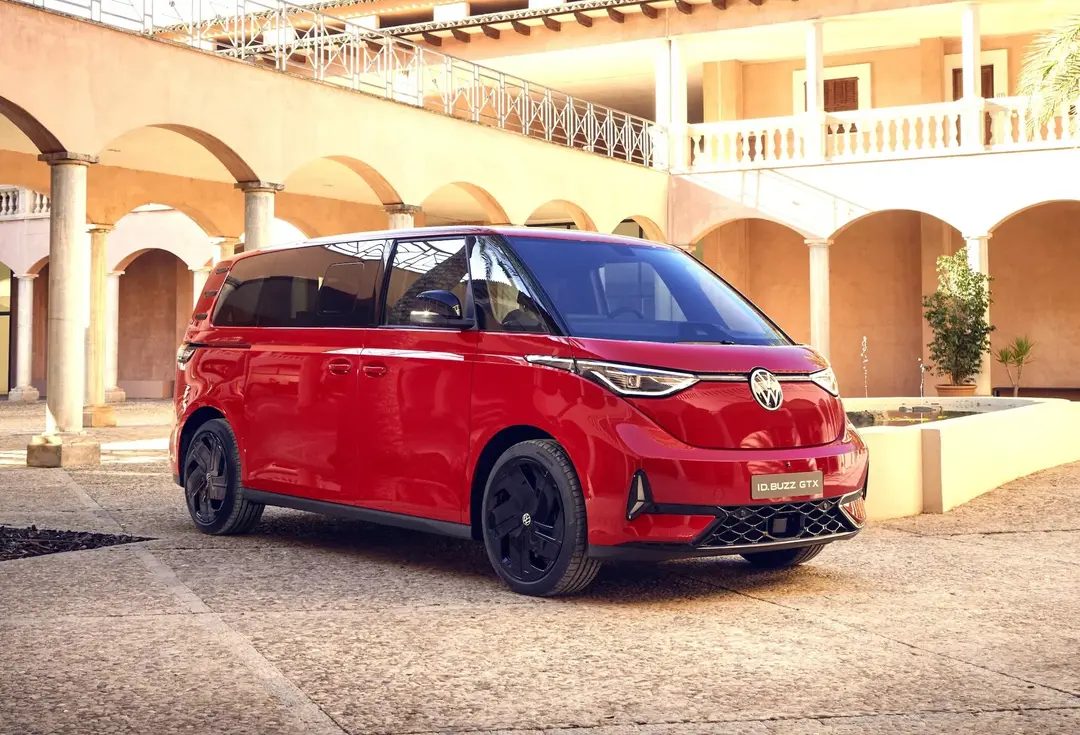
Thirty-four horsepower isn’t just a number. It’s a statement. Under the skin of the new ID.Buzz GTX, VW has packed enough punch to make the original Kombi look like a grocery getter. We aren’t talking about gentle city cruising here. This is serious torque.
To feed this beast, the electric van gets a choice in battery size. You can opt for the standard 79 kWh pack. Go for the extended wheelbase version, and you get a larger 86 kWh unit. But the real magic happens in how that power is delivered.
This isn’t a front-wheel-drive grocery hauler. The GTX uses dual motors. One in the front. One in the rear. That creates a true 4Motion all-wheel-drive system with intelligent management. The result? Zero to 100 km/h in just 6.5 seconds.
How the ID.Buzz GTX Handles Power Delivery
Lars Krause, a member of the board at Volkswagen, points out that the T1 from the late 1950s barely cracked 80 km/h. It struggled to move. The new GTX is the most powerful Combi in history. Period.
It’s available with two wheelbases. Two battery sizes. Five, six, or seven seats. And standard all-wheel drive. That last part matters. It gives the vehicle optimal traction in every driving situation. You aren’t just carrying people. You’re carrying weight. And you’re doing it with grip.
The GTX should hit dealerships in summer 2024. That’s the timeline. The specs are set. The only question is whether you can wait that long.
Towing Capacity and Interior Modularity
Let’s talk utility. This isn’t just about speed. It’s about what you can pull behind it. The standard five-seater version can tow up to 1,800 kg. That’s a substantial load. The extended version, which fits seven passengers, drops to 1,600 kg. Still impressive for an electric family hauler.
Inside, the second row of seats is fully modular. You can slide them forward or backward to optimize space. In the five-seat model, you get 150 mm of slide. The seven-seater offers 200 mm. That’s flexibility.
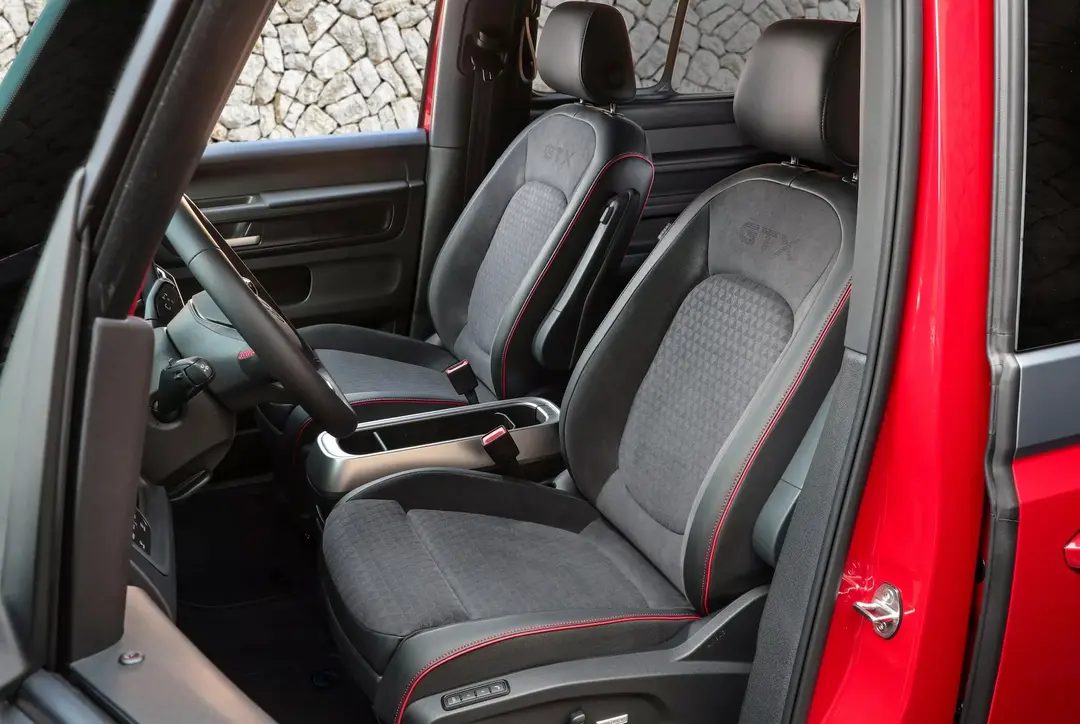
The GT trim doesn’t skip on style. The seats are black microfiber with a diamond pattern. Red piping adds contrast. The leather steering wheel features red cross-stitching. It looks fast. It drives fast.
Why This Changes the Electric Van Game
Most electric vans prioritize range over performance. The GTX flips that script. By integrating the motors directly into the 4Motion system, VW ensures that power isn’t wasted. It’s distributed where it’s needed.
The extended wheelbase adds 25 cm of length. That’s significant for cargo or passenger comfort. But it comes at a slight towing cost. The trade-off is clear. More space. Less tow capacity. Still enough to pull a decent trailer.
The interior choices reflect the sporty intent. The red accents aren’t subtle. They’re a nod to the performance heritage. The diamond stitching on the microfiber seats mimics high-end sport car upholstery. It’s a detail
GTX Trim and Charging Specs
The cabin inside the GTX trim is where things get interesting. It’s not just about the price tag. It’s about the materials. The design feels luxurious, sure. But more importantly, it feels welcome. You actually want to sit in this thing.
Now, let’s talk about range. The manufacturer hasn’t dropped the official numbers yet. We’re still waiting. But what we do know is that charging speed is where this car shines.
You have two battery options to play with here. The smaller 79 kWh pack. Or the larger 86 kWh version. Both handle fast charging aggressively.
The 79 kWh model accepts up to 185 kW on a DC fast charger. If you opt for the bigger 86 kWh battery, you can push that number up to 200 kW. That’s a meaningful difference.
Why does it matter? Because time is money. And time is frustration. With that peak power output, you can go from 10% to 80% charge in just 26 minutes.
That’s not just fast. It’s practical. You’re not stuck at a plug for an hour. You grab a coffee. You check your emails. You’re back on the road before most people have even plugged in.
Why This Matters for Long Trips
Most EVs struggle with charging curves. They start fast. Then they slow down to protect the battery. The GTX doesn’t seem to blink.
At 200 kW, the 86 kWh variant keeps that power high for longer. That means fewer stops. Shorter stops. It changes how you plan a trip.
You can cross state lines without turning into a charging station tourist. That’s the real luxury here. Not just the leather or the screens. The lack of range anxiety.
“One can go from 10 to 80% charge in just 26 minutes.”
It’s a tight window. But it works. The thermal management must be good. Because pushing 200 kW generates heat. If the battery gets too hot, the system throttles back. So either the cooling is impressive, or the BMS (Battery Management System) is doing its job well.
Which Battery Should You Pick?
It depends on your routine.
If you mostly drive around town, the 79 kWh is probably enough. And it charges fast enough for quick top-ups.
But if you do long highways? The 86 kWh is worth the extra coin. More range. Faster peak charging. It’s a better tool for the job.
The GTX isn’t just a badge. It’s a statement. Inside, it’s cozy. Outside, it’s efficient.