Formula 1 has long served as the shiny billboard for automotive tech. You see it in the honeycomb structures and tire innovations that eventually trickle down to street cars. But in 2024, the sport is shifting gears in a way that feels less like evolution and more like a complete rewrite of the code. There will be no drivers in the cockpits. Or rather, the driver is an artificial intelligence.
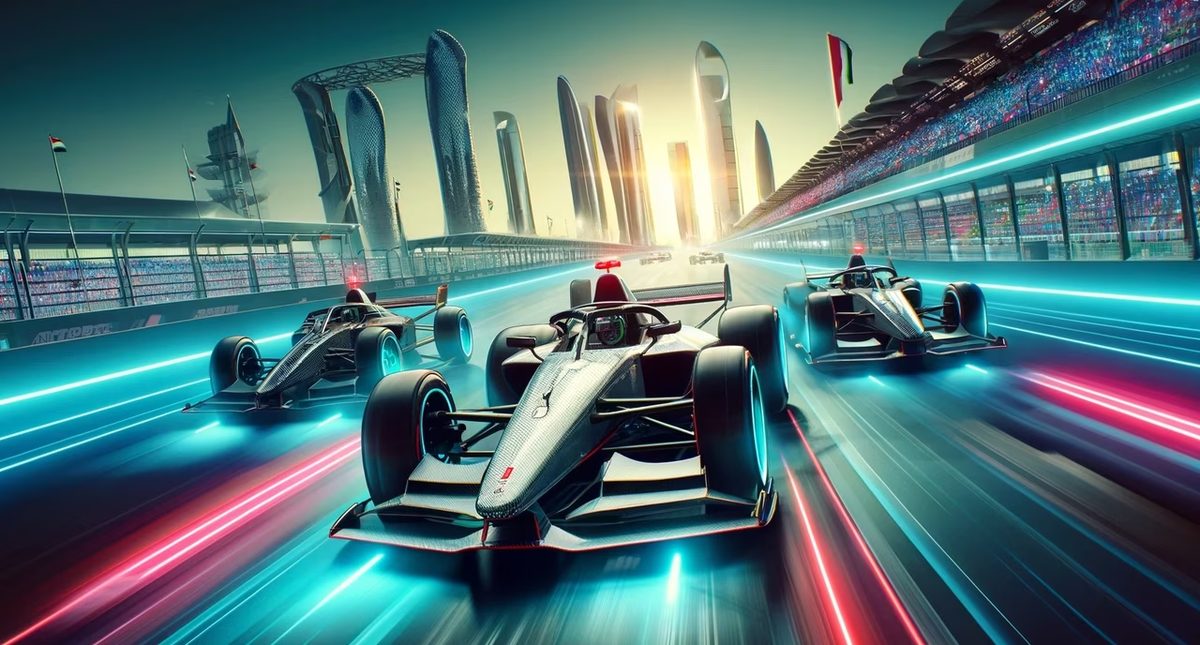
On Saturday, April 27, Abu Dhabi will host a historic first. The Abu Dhabi Autonomous Racing League (A2RL) will stage the inaugural race of fully autonomous vehicles. This isn’t just a demo. It’s a high-stakes competition inviting a new kind of professional into the paddock: AI developers.
In traditional F1, engineers and mechanics push hardware to the limit. Here, the hardware is identical. The variable is the software. The goal is to prove that machine learning can handle the precision required for professional racing.
Identical Cars, Different Minds
The field consists of eight teams competing in Dallara Super Formula SF23 chassis. These aren’t custom-built prototypes with unique aerodynamic quirks. They are spec cars. Every vehicle comes equipped with the same autonomous technology stack, including LiDAR arrays, cameras, and a suite of other sensors.
The playing field is leveled. No one has an advantage in mechanical grip or engine power. The only differentiator is the algorithm.
Each team has spent months coding and refining their machine learning models. They are racing to see which AI can interpret data, make split-second decisions, and execute the perfect line around the track. The prize is substantial. The winning team walks away with a $2.25 million purse.
The race proves that while hardware is becoming standardized, the intelligence driving it remains the primary battleground for innovation.
The Human Benchmark
To understand where this technology stands, you need a baseline. That’s where Daniil Kvyat comes in. The former Red Bull F1 driver has been pitted against the autonomous units during testing.
So far, Kvyat holds the edge. He is faster. But the gap is closing lap by lap. The AI is learning. It is adapting. It is getting better at the specific geometry of this track.
This dynamic highlights a critical question for the future of motorsport: How much of racing is mechanical mastery, and how much is pure decision-making? If the hardware is equal, the intelligence wins.
The relevance of these races might not be immediate. We are decades away from seeing fully driverless F1 cars on the grid. But the trajectory is clear. As algorithms improve, the distinction between human reflex and machine processing will blur.
The A2RL is a test bed. It is a proving ground for the systems that will eventually drive our daily commutes. And for now, it’s a race between silicon and instinct. Kvyat is winning today. But the code is running faster than it was yesterday.