


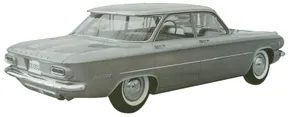
In the 1960s, the car market was a battleground. On the other side is the conservative, traditional Ford Falcon. Meanwhile, the wild and experimental Chevrolet Corvair had an air-cooled engine in the rear. Pontiac created a third path into this narrow opening. The result was the 1961-1963 Pontiac Tempest. This is not just a badge-engineered Chevrolet. It was a unique machine that challenged the orthodoxy of the American auto industry.
The recession of 1958 changed everything. American buyers suddenly cared about fuel economy and size. The Big Three must change their philosophy of “longer, lower, wider”. Ford had great success with the Falcon. Chrysler surprised fans with the durable Slant Six. Even traditional brands like Studebaker and AMC are moving into the compact segment.
GM responded with a versatile product range. They have an aggressive Chevy II. They had a traditional Chevrolet II (later Nova). But in between were the “B-O-P” compact cars, the Buick Special, the Oldsmobile F-85 and the Pontiac Tempest.
Split shell, different souls
All three siblings ride on a 112-inch wheelbase. They use the same basic Fisher chassis. On paper, they look like three. In fact, they are mechanically alien.
Tempest immediately stood out. It offered one of the most technologically advanced powertrains in American cars at the time. This is the most unusual of the trio. but why? Why would Pontiac do something so different?
The answer lies in resisting divisional strategy.
General Motors wants to spread the risk of rear-engine Corvairs to other divisions. Pontiac was the natural next step. Oldsmobile and Buick are also considering the development of a possible model based on the Corvair. Pontiac General Manager Semon E. “Bunky” Knudsen refused.
“If the dealers are telling people this is a new, more advanced model, how are the dealers going to justify the traditional transmission placement found in the rest of the Pontiac lineup?”
Mr. Knudsen has a point. The Corvair is rear-engined. The styling was cold. There is no traditional front grille. There is no substitute for a Pontiac V8. If Pontiac sold the Corvair under a different badge, customers would be confused. They destroyed their own V8 legacy.
“How do you justify adding $500 to $1,000 to the selling price of a car with a Pontiac nameplate?”
Knudsen knew what they didn’t want. They didn’t want to bash Corvair. They want something unique. They need direction. They found this in the John Z. DeLorean.
The Delorean Effect
John Z. DeLorean joined Pontiac in the early 1960s. he was young. Ambitious. His performance ideas simply didn’t fit into a compact car.
DeLorean saw an opportunity. The Tempest is more than just an economical car. It can become a platform for innovation. He sought to create features that would distinguish the Tempest from its Buick and Oldsmobile siblings.
One of these features is the transmission. While Buick and Oldsmobile stuck to their traditional setups, Pontiac looked elsewhere. They didn’t want to use a copy of the Corvair. They want something new.
That decision led to a powertrain that was as controversial as it was innovative. It uses a unique split transmission. Separating the engine and gearbox. This makes the transmission smoother. This also means that the Tempest handles differently than other compact cars.
DeLorean also paid special attention to its styling. Tempest has a unique appearance. This isn’t just a facelifted Chevrolet. It has its own identity. This allowed Pontiac to create a niche in the compact market.
However, there are also risks associated with innovation. New transmissions are complicated. Manufacturing costs are high. It is foreign to consumers who are used to traditional layouts.
Despite the difficulties, Tempest sold. This is not a Falcon. This is not Valiant. However, the situation is different. For many buyers, this difference is enough.
Legacy of division
The story of the Tempest is a story about domestic politics. This is the story of a division manager who said “no” to his company. This is the story of a young entrepreneur who saw the potential in compact cars.
The Tempest just didn’t make it. It’s thriving. It became a symbol of Pontiac’s independent spirit. Although the B-O-P line was eventually discontinued, the Tempest left its mark.
This shows that it is possible to build a powerful and exciting compact car. This shows that GM does not need to rely on badge engineering to fill every segment.
Today, the Tempest is a collector’s item. It’s not because it’s the best-selling compact. But that’s a different matter. This is unique. It was a Pontiac.
This is important.
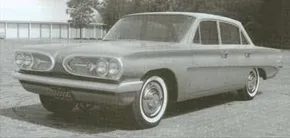

The compact part is messed up. Corvair derivatives had failed in markets like Buick and Oldsmobile. Pontiac had to step up. They took over the X-100 program. This is a multidisciplinary company. The goal is simple. Let’s build something bigger. Make it special.
The wheelbase has been extended. 108 inches became 112 inches. Added front engine placement rules. Both Buick and Pontiac built engines for it. The main body is divided. The style is not. None of these cars look like a Corvair.
John Z. DeLorean is responsible for the advanced design. He wanted to own the “broad track” portion of the project. Price is the enemy. New compact cars should be cheap. Requires existing technology. It requires an existing plant. The DeLorean team solved this problem by being creative within tight limits.
DeLorean didn’t want a boring compact car. He wanted the comfort of a big car. It should fit 6 adults. Operating costs should be low. The small size gives the impression of movement. He believes he can achieve all these goals. He also wanted a perfect 50/50 weight distribution.
how did he do it?
flat floor.
Equipped with a gearbox at the back.
flexible drive shaft.
Buick and Oldsmobile scoffed at the idea. They stick to the traditional layout. They don’t want anything exotic.
The results are revolutionary. The general public doesn’t understand. They call it “torsion bar”. Wrong name. This is not a rope. Forged steel torsion bar. High nickel. Chrome alloy. molybdenum. It’s powerful.
Manual transmission models have a 0.75 inch shaft. The automatic transmission has a 0.65-inch unit. The gearbox does not amplify the torque. I went right away. This means that the axle is under-tensioned. It can be made very small. Conventional drive shafts are even thicker. This is not the case.
The manufacturing process is very expensive. forging. The magnetic flux removes the defects. shot peening. It became direct. An anti-rust coating is applied. Find out about the costs of your project. The advantages of this flexible drive shaft will become clear later.
But first we must deal with the engineering challenge. The Pontiac Tempest did not originally use a V8 engine. It uses a 4-cylinder engine.
Pontiac Tempest 4 cylinder engine
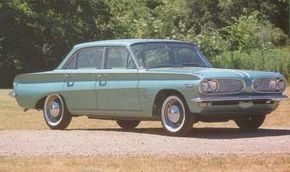

DeLorean knew the Pontiac Tempest needed a powerplant that was cheap to manufacture and strong enough to beat the competition. Buick and Olds introduced shiny new V-6s and aluminum V-8s. Pontiac was short-lived. DeLorean’s choice? V-8.
The decisive factor here is the price. Funding for the development of this unique gearbox drive shaft system ran out. The transmission should be cheap. Off-the-shelf parts are the only way to keep your budget from skyrocketing. So the team decided to strip the Pontiac V-8.
They need a proof of concept. Engineers used a 389-cid V-8. They drilled a hole in the left bank piston. Disable the valve train on the same cylinders. Back to the full-size sedan.
Frankenstein’s Engine. Stopping the cylinder creates additional resistance. Still, it reached 92 miles per hour. Fuel economy isn’t bad for a £4,000 metal brick. It worked.
Design Trophy 4
Then we just removed the left bank from the left bank. New parts will follow. special crankshaft. custom camshaft. Two different intake manifolds. V-8 ignition system. Accessories are reduced.
The block itself, the 215-cid OHV V-8, came later. It is very heavy. The 389’s crankcase remains virtually unchanged, making it about two-thirds the weight of the V-8.
Compatibility is a real win. Engines share pistons. ring pin link bearing cylinder head oil pan pump crank pulley harmonic balancer
It’s the same machine. Same assembly line. Manufacturing costs have dropped significantly.
Variations in performance
Three basic versions of the Trophy 4 were introduced for the 1961 model year.
-
**Base engine. Regular fuel. 8.6:1 compression. Two-barrel carburetor. Power is 110 horsepower at 3800 rpm. Torque is 190 lb-ft at 2,000 rpm. The automatic version has a hotter cam. 130 horses, price 4400. Torque is rated at 2,200 rpm and 195 pound-feet.
-
**Advanced settings. Preserves the two-barrel carburetor. Increase the compression ratio to 10.25:1. Requires premium fuel. The manual transmission produces 120 horsepower at 3,800 rpm and 202 lb-ft of torque at 2,000 rpm. The automatic transmission produces 140 horsepower at 4400 rpm. 207 lb-ft for 2200.
-
Hot Rod. Rochester 4 Barrel carburetor. Even hotter cam. Both manual and automatic produce 155 horsepower at 4800 rpm. Torque is 215 lb-ft at 2800 rpm.
Buick’s 215-cid V-8 was also considered. Two-barrel carburetor. 155 horsepower. The torque is slightly higher than the Trophy 4, and the revs are 400 rpm lower.
Power has become important. Now comes the hard part. How was that problem handled?
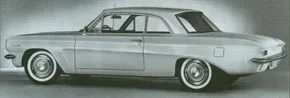

The engine is bolted down, but this doesn’t match the physical realities of a big four-cylinder engine running smoothly. The Tilt-Four project was a financial success. Its competitiveness is comparable to its competitors. Development costs are kept low. Consistency with the 389 V-8 facilitates parts inventory management. However, the equipment was faulty. Engine weight is 557 lbs. There are inherent secondary vertical crash forces that can tear the car apart.
Mac McKellar, a former Pontiac engineer who was involved in the entire development process, remembers the noise and vibration well. He calls it a “travel fatigue machine.” The 195cc engine was too big for the four-cylinder arrangement and could not survive without assistance. Without a balance shaft, the vibration is very high. Almost all accessory mounts require reinforcement to withstand constant vibration.
“And at 195cc, it was too big for a four-cylinder engine without a balance shaft. We often called it a ‘travel fatigue machine.’
But when you drive, this contradiction becomes real. Road tests at the time showed that the car felt smooth. When driving, you can’t tell it’s a 4-cylinder engine. The secret is not magic. This is a special combination of curved drive shaft, torque tube and special motor mount.
The curved drive shaft serves two purposes. Keep the floor level and secure the interior space. It also eliminates the balancing steps required for rigid axles. This curvature, combined with the rubber bushing of the torque tube housing, absorbs energy. The last piece is a set of soft rubber “doughnut” fasteners in the front. They are large enough to absorb most vibrations. The rear part is held in place by the transmission bracket and torsion tube.
This is not foolproof. McKellar pointed out that if the spark plug was dirty (as was common with leaded gasoline at the time), the mount would not withstand additional impacts. You might not notice it in the V-8, but the vibration in the Tilt 4 is undeniable.
Behind the motor is a bell housing that connects to the torque tube. In manual cars, the switch is in the standard position. The transmission, coil springs and pivot axle rear suspension were borrowed from the Corvair. Pontiac modified them to include a torque tube. A 3-speed manual transmission came as standard. A two-speed automatic transmission called TempesTorque, based on the Powerglide, was optional.
The front of the engine is tilted up to align with the driveshaft. It is mounted on a heavy-duty box section frame that also has front suspension. This is a separate assembly. coil spring. The upper and lower control arms are of different lengths. ball joint. Recycle ball control box.
The entire assembly (power transmission and suspension) forms an independent unit. This is a masterpiece of production. This allowed Pontiac to build the Tempest on the same production line as the full-size model. They used a method called “body drop”. Fisher’s body was lowered onto the completed ring frame.
Engineers care about appearance as much as mechanical structure. Appearance styles are explained in the next section.
More information about the car is below.
-
a classic car
-
muscle car
-
sports car
-
Search for a new car
-
Search for used cars
1961 Pontiac Tempest Design
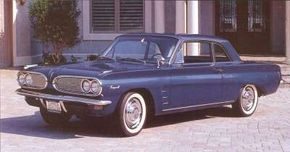

Jack Humbert does more than just draw lines on paper. He made a statement. The 1961 Pontiac Tempest was a triumph of style and mechanical innovation. It returns to the bold spirit of the ’59 Pontiac while venturing into new territory. Definitely the front end. Quad headlights are placed behind a bright horizontal grille. The flashy Hood badge screams Pontiac.
Design the tongue and body outline
Humbert’s designs are more than superficial. It inherits the Y-body DNA that defined the small car segment at the time. The Tempest shares the door skin with its cousin, but the details are completely different. The waist line is a character line and goes around the whole body. It’s not a straight line. It ends in a small molded fin at the top of the rear quarter panel.
Just below that fin is a small oval tail light. A simple blade bumper that wraps around the front and rear reduces visual weight. But the real trick is the accent line. It starts at the front fender, goes through the door and goes deep around the rear wheel well. This profile gives the Tempest a muscular, twisted look that could not be achieved with panels alone.
Dimensions: Premium Compact
Tempest is at the top of the compact class. There’s a reason Pontiac calls this a “premium compact.” It’s larger than the competition, but more compact than midsize sedans. The wheelbase is 112 inches. That’s a lot for a small car.
The overall length is 189.3 inches. The width is 72.2 inches. Height is 56.8 inches for coupes and sedans and 57.1 inches for wagons. The track width matches the front and rear height, both are 56.8 inches. These numbers are more than just statistics. They determine the existence of internal spaces and channels.
Internal layout and visibility
When you enter, the first thing you notice is the open atmosphere. The large glass area offers 360-degree views. In the days of thick pillars and small windows, this was a big selling point. Although the dashboard shares roots with Buick and Oldsmobile, Pontiac created something unique.
The instrument cluster has a bar-shaped speedometer in a horizontal housing. It sits next to the usual standard gauges. In automatic transmission models, the gear selector moves to the dashboard to the right of the driver. For manual cars, place the gear lever on the floor.
A bench is standard equipment. front and back. This room can accommodate a maximum of 6 people. Thanks to the almost flat floor, there is plenty of legroom. The dashboard still has a small dent that needs cleaning, but it’s not a deal breaker. The cabin feels spacious. It feels important.
Features and options
Standard equipment is also included. Based on a double visor. Includes turn signals. Electric wipers are also available. The Tempest is equipped with 6.00 x 15 inch blackwall tires. Why choose these tires? The rear suspension changes the tilt significantly while driving. The tires have to compensate for this wide range of motion.
The selection is expanding rapidly. Power steering is the first choice of many buyers. Air conditioning is available for those who need it. The menu includes reverse lights, power brakes (wait, no) and various trim groups. Interestingly, power brakes were never offered. It’s not even an option. You can use the brakes with your muscles or buy the brake discs later.
Model changes and market impact
The Tempest is available in two body styles. 4-door sedan. 4-door station wagon. Both are very practical. Both sold well. But Pontiac saw an opportunity. A coupe was added later in the model year. This is more than just a roofless sedan. It’s more sporty. More fashionable.
Next up is Le Mans. Premium version with bucket seats. This indicates a change in intentions. The Tempest are no longer just a means of transportation. This is a statement.
When Tempest hit showrooms, there was an immediate reaction. Sales increased. Enthusiasts noticed. This project will stand the test of time. I have aged well in appearance. The market agreed.
More information about the car is below.
- a classic car
- muscle car
- sports car
- Search for a new car
- Search for used cars
1961 Pontiac Tempest hit
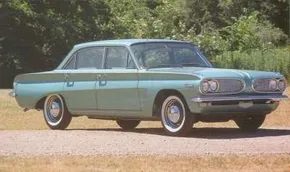
The 1961 Pontiac Tempest just didn’t show up. It announced itself. The car was introduced on October 6, 1960, alongside the full-size Pontiac, and received an immediate positive response from road testers. They raved about the packaging. They liked flexibility. The Slant 4 has plenty of power, but there’s a problem. Reviewers actually preferred the automatic transmission. Why? The transmission is quieter and the camshafts of cars equipped with it heat up, squeezing out extra performance.
However, it’s not all sunshine. Critics were disappointed with the power steering. It’s very slow. I feel like I’m dead. Road feel is zero. The bigger problem is the suspension. The soft spring rocker shaft design creates nasty quirks at grip limits. Push hard and the rear wheel tilts to positive camber. No more tread contact. I lost my grip.
Despite some handling issues, the pros outweigh the cons. Motor Trend presents the Car of the Year award. This is the second time in the past three years that Pontiac has received such an honor. Journalist Don Warner managed to achieve this goal in March 1961.
“The new Pontiac Tempest started many new trends and was undoubtedly the prototype for American cars in the 60s.”
Werner believes that “Tempest” shows clear improvement. It’s all about balance. efficiency. Remove unnecessary mass. Enthusiasts embraced this vision and believed it to be the beginning of a new era in American automotive design.
The people also agreed. Pontiac produced 100,783 Tempests. This is a solid number. While not as good as the Corvair, Falcon, and Valiant, it has overtaken the GM Y-frame lineup in terms of orders. Depending on the engine you choose, a different variant will emerge. Slant 4 is a niche choice. Only 2,004 cars were produced with the inline four-cylinder engine. Only three of these were equipped with a manual transmission. Most buyers look for functionality and ease of use.
In 1962, Pontiac continued to innovate. Minor updates. The collection includes a convertible, which is available in Tempest and Le Mans trims. The front gets a facelift. The split grille is gone. It features a three-piece design with Pontiac’s “Arrow” badge in the center. The hood-shaped “waterfall” flows directly into the center of the grille.
Behind the scenes, the changes are subtle but meaningful. The four-barrel Slant-4 engine got a new intake manifold. Power was increased by 11 horsepower. The engine produces 166 horsepower at 4800 rpm. The torque remains unchanged. The manual transmission “87Z” engine has a 4-bolt main bearing for increased durability.
But the real variant is the NASCAR-inspired engine. Pontiac offers special competitive technical blocks through its parts network. It’s mated to a 4-bolt 87Z block and 389 Super Duty V-8 head. McKellar’s No. 8 mechanical lift camshaft is a four-cylinder configuration. The aluminum four-barrel intake manifold includes a large Carter AFB carburetor.
Pontiac officially rates this beast at 184 horsepower at 5,600 rpm. Real-world ratings tell a different variant. Power can be close to 240 horsepower at 6500 rpm. The pulse of the intake manifold plays an important role.
The 215 V-8 has also been improved. There is an increase of 30 horsepower compared to the previous year, or a total of 185 horsepower. However, there are gaps. The power of the low-pressure four-cylinder engine with automatic transmission has been reduced to 115 horsepower.
The 1961 model proved the validity of this concept. The 1962 iteration improved on this. Pontiac has a winner. they know it.
More information about the car is below.
-
a classic car
-
muscle car
-
sports car
-
Search for a new car
-
Search for used cars
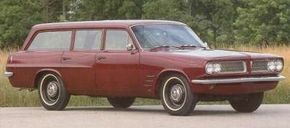

The operating philosophy of the 1962 Pontiac Tempest was “If it ain’t broke, don’t fix it.” Pontiac continued to borrow the frame from the Corvair, making only minor changes to accommodate the torque tube and curved driveshaft. Sales increased that year. Total Tempest and Le Mans production was 143,193 units. This growth is likely due to an expanded model lineup and buyers finally getting used to the controversial front-engine, rear-wheel-drive layout.
1963 model redesign and engine upgrade
1963 brought significant changes to Pontiac’s premium compact car. All sheet metal below the belt line is new. The goal was to create a luxurious look. The split grill theme is back, this time with an egg carton mesh. The body sits more evenly. The rear has been extended to add 5 inches to the overall length. The rear lights have also been changed. A normal Tempest has two small round lenses on each side. Le Mans Coupes and Cabrioles feature slim rectangular lenses with a grooved stainless steel rim between the lenses.
V8 is made and erased behind the scenes. The aluminum V8 is gone. Cast iron was replaced. It was replaced by a smaller version of the 389 with a displacement of 326 cubic inches.
The aluminum V-8 is V8. It was replaced by a small-bore version of the cast-iron 389 with a displacement of 326 cubic inches.
The basic power comes from a 115 horsepower four-cylinder engine, which is equipped with a new cylinder head. The twin-barrel carburetor 326 V-8 engine produced 260 horsepower at 4,800 rpm. Torque is 352 lb-ft at 2,800 rpm. Later in the model year, a high-powered version appeared. The Carter AFB four-barrel carburetor produced 280 horsepower at 4,800 rpm and 355 lb-ft of torque at 3,200 rpm.
The four-speed manual transmission can’t handle the V-8’s torque capacity. 326 Not yet available, regardless of configuration.
Transmission and suspension improvements
The automatic transmission has been renewed. Slant 4 and V-8 were installed on certain versions. The difference is the size of the torque converter and the number of components in the clutch. The shift lever has been added to the “park” position. The Le Mans models have their own floor shifter.
The rear suspension received the biggest mechanical overhaul. The pivot shaft mechanism was discontinued in the ’61 and ’62 models. Replaced with a new rear arm design. This layout is similar to the 1963 Chevrolet Corvette. Both ends of the shaft have U-joints. This allows the shaft to maintain a constant lean angle while riding.
The operation of the rear wheel is more independent. Oversteerability is significantly reduced. Tempests become more stable.
Eventually, the production of the Pontiac Tempest had to be discontinued. The technology that defines it is outdated. Due to market changes, Pontiac also had to withdraw. The compact segment continues to grow. Even if things change, the Tempest cannot stay the same.
More information about the car is below.
-
a classic car
-
muscle car
-
sports car
-
Search for a new car
-
Search for used cars
End of the Pontiac Tempest production line
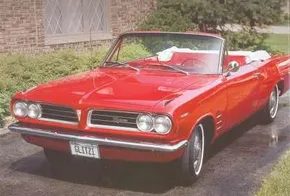

By 1963, the Pontiac Tempest was slowly losing ground. The market has changed. Buyers are not rushing to the compact car segment with the same enthusiasm as a year ago. The sales figures speak for themselves. GM produced 69,832 Tempest models and 61,658 Le Mans models. Cumulative total 131,490 units. This is not enough.
The upholstery at Le Mans is constantly evolving. It has given up the shadow of the entry level and established itself in the mid-size competition. Road testers praised the ’63 model’s fit, looks, interior and new V-8 power. But the criticism was widespread. Transmission noise. Slow turning. The brakes struggle to keep up with the V-8’s acceleration.
Product designers saw the writing on the wall. The small parts become more and more congested. Production costs are too high. The Transaxle Tempest production line is coming to an end.
Design risk and real reliability
Tempest faced many problems between 1961 and 1963. Transmission durability problems plagued early models. The Twin-I-Beam engine has a fault in the timing chain. But bent drive shafts, the most innovative technology, rarely cause problems.
Critics thought the car was too experimental. Not so proven. They felt that while the gearbox design was ahead of its time, it was too risky for mainstream buyers. result? A footnote in the history of the automotive industry, not a trailblazer.
Ironically, the heirs to Tempest’s legacy are the trendsetters. It gave rise to the muscle car phenomenon. The GTO option package changed everything. As the saying goes, the rest is history.
What is unique about the Pontiac Tempest?
Tempest is more than just a compact. This is an attempt to bring cutting-edge technology to a field dominated by traditional design. The transmission layout offers weight distribution advantages not found in the competition. The curved driveshaft solved the driveline vibration problem in a way that no other American car of the time could.
However, innovation alone is not always enough. Buyers want authenticity. They want a proven platform. In the eyes of the average consumer, Tempest offers neither.
The storm is an interesting footnote. A car that has done its best to bring cutting-edge technology to the compact segment. There is no doubt that these were one of the most innovative vehicles of the 60s.
Almost a Pontiac Tempest Cabriolet
The story does not end with sedans and coupes. There is a convertible version. Or rather almost.
There are already plans for a Pontiac Tempest Cabriolet. However, they were never commercialized. What is the reason? Potential costs. It can get complicated. The priorities of GM’s product designers may have changed.
If you’re looking for a rare opportunity, the Tempest Cabriolet remains a ghost. It’s a reminder of what could have happened if the market had reacted differently to the gearbox design.
More information about these cars can be found in our Classic Cars, Muscle Cars and Sports Cars sections. If you’re looking for a survivor, look for a new or used model. It is rare. Underrated. Waiting to be found.
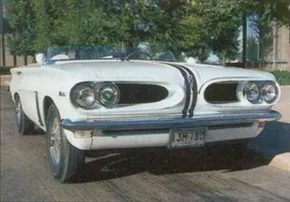

Ever since the Bonneville Special made headlines at GM Motorama in 1954, Pontiac has strived to develop a true two-seater. However, Chevrolet fiercely protected the Corvette from internal competition and blocked this move. Until the Fiero was introduced in 1984, Pontiac had to settle for one-off cars. The 1961-1962 Tempest Monte Carlo is distinguished by the fact that it was built on a production chassis. This wasn’t just a dream. The prototype showed that the concept works.
Design a 2-seater convertible
Engineers began with the 1962 Tempest convertible prototype. They cut a 15 inch section of the body between the door and the rear wheel. The two halves were then welded back together. The result is a sports car with a wheelbase of 97 inches. Overall length 175 inches.
Design tips are quite radical. The front grille is recessed and has a custom egg carton interior. The original windshield has disappeared and has been replaced with a Plexiglas windshield that curves towards the door. A fiberglass tonneau covers the rear deck and has two headrest covers.
Inside, the focus is on functionality. The cabin is equipped with blue leather seats with custom side bolsters. For safety, retractable seat belts are installed. Custom console includes shifter and manifold vacuum gauge. Aftermarket gauges fill gaps in the dashboard.
Big power in a small package
Under the hood sits a heavily modified 195-cid Pontiac inline-four. Pontiac installed a Mickey Thompson supercharger system. This unit uses a GMC 3-71 blower. Carter AFB’s four-barrel carburetor gets its blower power through a special 90-degree angle.
The engine compartment is finished with chrome and polished aluminum. Power is transmitted via the Tempest’s unique curved driveshaft to a rear-mounted four-speed gearbox. This is in the classic show car tradition: small but big power.
Show car paint and rims
Pontiac painted the Monte Carlo pearl white. Double blue racing stripes run across the hood and deck. In the 1961 season, the car was equipped with Halibrand replica rims and Firestone Super Sport tires.
When the car returned in 1962, the shoes were changed. Instead, it was fitted with wire replicas and Goodyear blue stripe tires.
From the racetrack to the governor’s garage
Monte Carlo lapped the circuit in a Chevrolet Corvair Sebring Spyder. After the season, Pontiac no longer needed it. Instead of scrapping it, they gave it to former GM VP Ed Cole.
Before Cole took delivery, Pontiac Engineering made changes at his request. They replaced the loud supercharged four-cylinder engine with a lighter 215 CID aluminum V-8. They also replaced the Plexiglas with a production windshield and added a small convertible cover.
Cole drove the car until his death in a plane crash in 1977. His widow donated the car to the Transportation Museum in San Antonio, Texas. It had been in storage for many years.
High prices at Pebble Beach
In 1994, the Texas Science Center’s car collection was closed. Christie’s has auctioned off the warehouse. The Tempest Monte Carlo sold for around $60,000 at the famous Pebble Beach auction. The buyer remains anonymous.
This is not the last development of the Tempest story. Next, let’s look at lightweight supercars.
More information about the car is below.
-
a classic car
-
muscle car
-
sports car
-
Search for a new car
-
Search for used cars
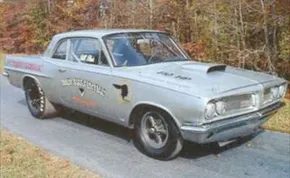

Pontiac spared no effort to penetrate every corner of the car market. After solving the weight problem of full-size racing cars, engineers turned to compact cars to preserve the factory honor. The result is the Tempest Lightweight Super Duty, a pull-string weapon designed to combat the growing threat of Dodge and Plymouth’s 426-cid wedge-headed monsters.
By 1963, Super Stock racing had become serious business. Manufacturers have to prove who makes the Fastest Cars. Pontiac had a good decade with Super Duty parts and the factory Catalina, but Chrysler also made progress. The light frame and powerful engine attracted attention. To solve this problem, Pontiac first tried to reduce weight. They added aluminum body panels and drilled holes in the Catalina frame. Auto journalist Roger Huntington called it “Swiss cheese.” My nickname stuck. This is a desperate measure.
Unfortunately, it didn’t work. The frame is broken. These cars are still too heavy compared to Mopars which also have aluminum components. Some radical measures must be taken. The storm was chosen to protect Pontiac’s honor.
Powershift Transaxle Solutions
The idea of putting a 421-cid Super Duty engine in a Tempest chassis has been around since 1962. Competitors such as Mickey Thompson and dealer Royal Pontiac have experimented with the switch. Uses a standard transmission. Pontiac wanted to be different. Their goal was to keep the rear-mounted transmission. This adds weight to the drive wheels. This was a necessary compromise due to the poor tire technology at the time.
The stock transmission cannot handle the 421’s power. Engineers created “Power Shift”. Neither traditional manual nor automatic. This is essentially two Corvair Powerglide two-speed automatic transmissions installed in a series. This creates four forward speeds. The project includes a combination of off-the-shelf parts and more than 200 new components. They were cast in unique boxes to hold them together.
Powershift is durable, but not bulletproof. Offers racers a choice of clutch or torque converter. The main reduction ratio is only 3.90:1. Pontiac built only 14 of them. One per vehicle. Spare parts are not manufactured. It would be a big problem if even one of them broke.
Engine and chassis tuning
After figuring out the transmission, I turned my attention to the engine. Engineers created a low-profile, dual-quad intake manifold that fits under the hood of the Tempest. The crankshaft end flange has six additional holes with the curved drive shaft. This version of the 421 Super Duty has a compression ratio of 12:1. The maximum power was 405 horsepower. The actual strength figure is probably closer to 500.
Light weight is very important. A compact machine head made entirely of aluminum. Removed inner door support. The production volume is small. Two Tempest Coupe prototypes. There are six Le Mans Coupes. There are also six Tempest farmers. The idea of a horse drawn carriage is simple physics. More weight on the rear wheel improves traction. Losing power on Catalina Island is also difficult. These ultra-active compacts claim all the benefits.
End of factory competition
All difficulties disappeared overnight. On January 24, 1963, General Motors ended all factory-sponsored competition. They are concerned about the Justice Department’s antitrust lawsuit. The “make profit on Sunday, sell on Monday” philosophy works very well. GM is approaching the 60 percent market share threshold that would trigger a federal investigation. The super mission plan was cancelled.
The team jumped into Chrysler and Ford. The few 1963 Super Dutys that got away became private treasures. they are very rare. Currently, only four coupes and one station wagon are known to survive. Here you will only find coupes and wagons that have been restored to their original condition.
Union Park Horse Carriages
The van in question was originally called “Instant”. Harold Ramsey drove. It was named after its sponsor, Union Park Pontiac, and was often referred to as the “Union Park Wagon”. It is currently owned by Randy and Gene Williams of Columbia, Indiana. The restoration was handled by Scott Tiemann of Supercar Specialties in Portland, Michigan.
The structure is faithful to the factory settings. It retains the accurate 405 horsepower 421 Super Duty V-8. The rear-mounted four-speed powershift remains. The restoration took almost 20 years to collect the parts. It requires dedicated research and quality work.
The restored wagon debuted at the 1999 Ames Performance Pontiac Nationals in Norwalk, Ohio. It was driven by legendary racing driver Ernie “Farmer” Besic. He ran the race in 12.4 seconds at just over 112 mph. He did this with the original tires. Randy Williams was in the passenger seat. Beswick estimates that the car’s travel time is 11.5 seconds.
The Union Park Carriage is currently on display at the Williams Pontiac Museum in Columbia. Along with several other original Super Duty race cars. Valuable historical works are preserved.
Classic Muscle Car and Sports Car Reference
The links below are more than just breadcrumbs. They are guidelines. Choose a lane that suits your current preferences.
- Classic Cars : If you are looking for patina, originality or the smell of 1970s rubber.
- Muscle Car : High displacement. A straight line. A car that scares pedestrians.
- Sports : More topics are covered here. Discounting power. Aerodynamics. Something that glues you to the asphalt.
- Searching for a new car : Are you ready to spend a lot of money? See what’s on the lot.
- Used car search : more dangerous. cheaper. For the brave.


