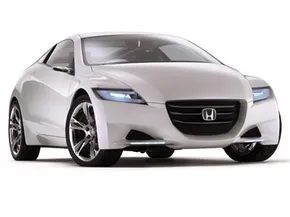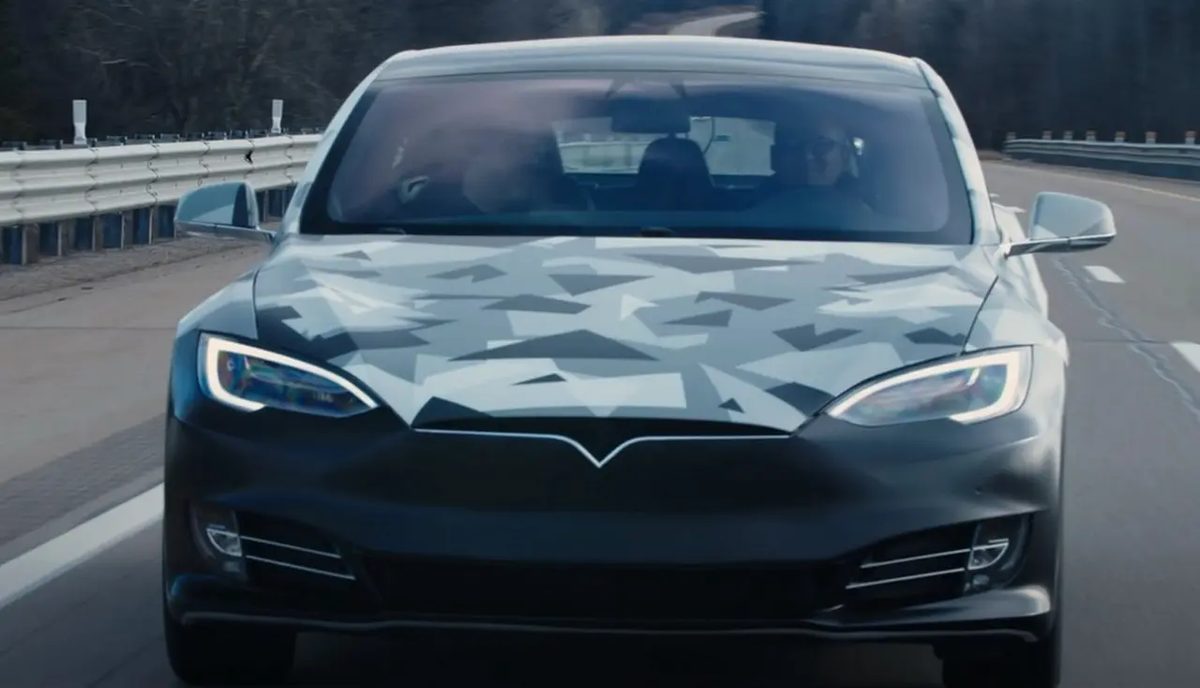
Mercedes may have wowed CES 2022 with its Vision EQXX concept, promising over 1,000 km of range. But in Las Vegas, One Energy Next (ONE) stepped up to the plate with a hard number that actually matters. They installed their experimental Gemini 001 battery into a Tesla Model S. The result? A staggering 1,210 km on a single charge. The test ran at a steady average speed of 88.5 km/h.
This isn’t just theoretical engineering. It’s a demonstrable, record-breaking reality.
The Specs Behind the Range
ONE claims their new battery pack holds 203.7 kWh of energy. More importantly, it delivers an energy density of 416 Wh/L. That metric is what really counts for future vehicle design.
Compare that to the competition. The Mercedes Vision EQXX uses a 100 kWh battery with an energy density of 400 Wh/L. It barely clears the 1,000 km mark. The standard Tesla Model S you see on roads today? It’s equipped with roughly 103 kWh of capacity. Its energy density sits around 245 Wh/L.
The jump in density is massive. ONE’s pack is nearly double the volumetric efficiency of the current Tesla baseline.
Weight and Composition
Here is where things get complicated. To get these numbers, ONE didn’t just tweak the chemistry. They built a pack with a Nickel-Cobalt-Manganese cathode and a graphite anode. They also added 331 kg of extra weight to the vehicle.
Is 331 kg a dealbreaker for a consumer car? Probably. It’s a heavy burden for efficiency in daily driving. But for a proof of concept? It’s a necessary evil to prove the chemistry works.
ONE also ran the Tesla on a dynamometer test bench. In that controlled environment, the car covered 1,419 km. The average speed remained identical at 88.5 km/h. No wind resistance. No traffic. Just raw energy consumption data.
Commercial Viability Questions
So, can you buy this battery tomorrow? No.
One Energy Next has to prove this technology can scale beyond a one-off installation in a Model S. The current configuration proves the chemistry is viable. It shows high energy density is possible with existing materials like nickel, cobalt, and manganese.
But the weight penalty is significant. And the cost of producing a 200+ kWh pack with such high density remains unknown.
The record is set. The chemistry is proven. Now the industry has to figure out how to make it practical.