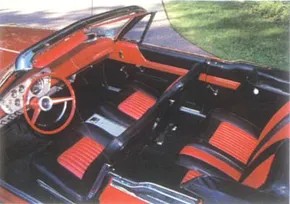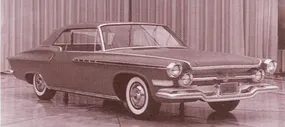
The DeSoto nameplate didn’t explode. It faded. On November 18, 1960, after thirty-two years of largely successful car production, the marque quietly ceased production. The culprit wasn’t a lack of style—Chrysler had a rack of stunning ’60s concepts—but ruthless economics. The company’s losses were mounting, and the development costs of the new Valiant small car are bleeding the division dry.
The last vehicle DeSoto rolled off the assembly line was none other than the 1961 Chrysler Windsor. A branded pair of luxury hardtops from 1961, of which only 3,034 were produced. For a marque that had moved over 125,000 vehicles as recently as 1957, this was a death sentence. But as the production lines were winding down, the designers at Highland Park styling studios hid something in the clay.
S-Series Overhaul
All of Chrysler’s full-size vehicles were slated for a complete, top-to-bottom redesign for 1962. Internal documents refer to this as the “S Series” program. It was the idea of Virgil Exner, who was responsible for the design of Chrysler, who shook up the aesthetics of cars.
Exner was inspired by his own XNR show car, which was under development at the time. The philosophy was simple. It has a long hood, short deck and prominent blade-type fender lines. These elements first appeared on the 1960 Valiant, but the real revolution came with the full-size lineup.
By the end of 1958, the S series began to take shape. Exner’s team started with 3/8 scale models and then moved on to serious “themed” clay. By May 1959, the clay model was brought under the styling dome. It was modeled as a DeSoto convertible and signaling a drastic departure from everything before it.
New direction
This concept was not an evolution. It was a rejection of the status quo.
Contemporary Ford and GM cars were all about the tail. They were long-tailed, finned, and ostentatious. Exner’s DeSoto concept was the antithesis. It was smaller in profile. It was dramatically altered. It was completely finless. The rear deck was truncated, clean, and sharp.
“A surprising new direction…completely ribless with a chopped rear deck that is in stark contrast to the modern Ford and GM long tails.”
In the end, only Dodge and Plymouth got the S-Series treatment, but even then their production models drastically changed from these original, aggressive plans. DeSoto stalled, reduced to clay models and radical ideas that never made it onto showroom floors.
The story of the 1962 DeSoto concept is one such story. The company was on the verge of bankruptcy due to its clean and modern design. It was a testament to Exner’s vision, even if that vision was buried with the brand.
Chrysler dominated the visual landscape from 1955 to 1957 thanks to its huge rear wing. But Virgil Exner, author of “Forward Look,” saw the writing on the wall. The fins were already yesterday’s news. he decided to flip the script for our upcoming S series project. literally. The focus of the design shifts from the back to the front, creating a bold new image for the brand.
A complete change in design philosophy
The May model shows a vehicle testing the new package. Emphasizing the back is no longer so. Instead, Exner introduced a V-shaped bumper to give the front end a sharper and more aggressive look. The side profile has a subtle but important treatment. The waistline behind the door is slightly raised. This small detail adds visual weight to the center section without cluttering the lines.
There is also a trailing fin in the middle. It was a nod to the brand’s recent history, but it didn’t last long. This design survives only in the 1962 Plymouth, making the S-Series Prototype a unique footnote in Chrysler history.
Glass is also an area of innovation. The S-Series featured curved side glass, a technology pioneered by Chrysler with the 1957 Imperial. Together with the steeply tilted windshield, you get the feeling that the cockpit is being pulled forward even before you start the engine. The fenders are long and sharp, reminiscent of the exotic XNR concept, but they stop abruptly before the B-pillar. This is a radical break and a visual cue that the body ends where the roof begins.
Aerodynamics and geometry
If you look at the back of the S-Series, you’ll see a tall, concave diamond shape. It tapers smoothly to the rear following the contours of the stern deck. This is not just about aesthetics. This creates a uniform silhouette from the sharp front end to the rounded tail.
Design is a study of contrasts. A sharp corner meets a gentle curve. Smooth transitions soften aggressive lines. Exner pushes the boundaries and sees how far he can go before the “fun” becomes too much.
Why this is important for hobbyists
For car lovers, the S series is more than just a concept. Here you can get a glimpse into the brain of a designer who refuses to stand still. The 1959 model year wasn’t just a development, it was progress. These are revolution at the forefront. V-shaped bumpers and curved glass set new standards for the decade.
If you like 1950s concept cars this is a must see. The S Series represents a pivotal moment for Chrysler as it moves away from its fin-heavy image and embraces its more modern, forward-thinking aesthetic. It’s a reminder that design trends are cyclical, but good design is timeless.
“Exner knows they’re obsolete. With the S Series, he literally created the next ‘Forward Look’ thing.”
The S-series models have curved side glass and high-angled windshield, which marks a change in the brand. It’s a fascinating look
The Impossible Path to 1962 Design
It made no sense on paper, but Chrysler management in the late 1950s was exceptionally enthusiastic about greenlight dramatic, unproven styling mockups with dramatic, unproven styling. These weren’t just sketches; they were the heart of the DeSoto and Chrysler S Series concept cars. Opting for these radical concepts over the studio’s safer, more traditional clay models (one of which closely resembled Mercury), the directors threw a massive wrench into the works. Product designers had to adapt to evolving the 1962 models from this unexpected source of high risk.
collaboration became mandatory when the S-series concept becomes the new North Star. Chrysler and DeSoto traditionally shared body shells and large exterior panels, so the studios had to be in sync. DeSoto studio head Don Kopka worked closely with Chrysler studio head Fred Reynolds to bridge the gap between conceptual fantasy and manufacturing reality.
As a result, the handling of the rear of the target vehicle evolution of the theme car’s rear-quarter treatment. The designers quickly changed the shape to better blend in with the new tapered deck. Junior stylists, perhaps sarcastically or simply observing, called the resulting protrusions “”the chicken wing.””. This became the defining visual mark of the era.
Front end styling followed suit by specific executive orders rather than pure aesthetics. The front bumper had a dropped center sections because Chrysler design chief Virgil Exner had a explicit aversion to straight bars. He wanted something with character, something to break up the monotony.
The lighting system told the final story about differences. DeSoto’s designers looked to the past to bring back the brand’s signature triple-taillight motif from 1956-1959. However, they flipped the script and placed it horizontally instead of vertically. Respecting tradition, it has been updated to match modern bumper heights. Chrysler, on the other hand, chose a different path. It was given a larger, large, single wraparound units that created a wider and more integrated light signature that set it apart from its DeSoto siblings.
The arrangement of four headlights didn’t just stay; it evolved. It has evolved. Each lens is housed in its own chrome frame, split into angled vertical pairs, mimicking the final 1961 production car. But the real drama happens above them. At the top of the grille is a bright horizontal molding that flares up and out, flares back over the hood and blends into the beltline accents. It’s not just decoration. It adds weight to the front and pushes the eyes forward.
Grill Wars: DeSoto vs. Chrysler
DeSoto’s stylists worked hard on this piece. They tried countless grille themes and repeated them until they were exhausted. The result? An undistinguished mix of thick horizontal bars and thin horizontal bars. A large center emblem didn’t save the day. It felt safe. It’s even boring.
Chrysler chose another path. They stuck to the inverted trapezoid shape that defined its look in 1960-1961. The inserts have been modified to identify the specific series, but the shape remains the same. The proposed letter-series 300 maintains the “cross bar” theme. This model has been in use since 1957. It is a familiar anchor in the sea of change.
The Imperial S-Series: A Classic Throwback
The S-series Imperial is a completely different beast. It’s not as extreme as DeSoto or Chrysler’s main line, but it’s different. Its face mirrored as the 1961 model, but the execution was sharper. Beneath the wide, chromed header is a fine-grained grille. Big block letters spelled out IMPERIAL at the top.
There are twin sets of headlights next to the nameplate. These are not recessed units. These sit on individual chrome pods suspended from protruding fenders. This is a “Classic” throwback. Raymond Loewy’s rival Virgil Exner still found this appealing.
The ensemble looked crisp. tight. The 1961 treatment had a reputation for being terrible, but this concept refined it.
The bladed front fenders imitate those of the lesser S-series models. Simple. clean. The rear fenders told a different story. It has a single short blade that ends in a bulged fender tips.
Gunsight Taillights and Final Thoughts
Each tip is equipped with a “gunsight” taillamp. This iconic Imperial feature has been in place since 1955. It anchored for a rear end design that provides continuity across the entire lineup that was otherwise pushing boundaries.
Of all the senior S-series proposals, the Imperial is arguably the handsomest. Desoto? The least attractive. It lacked the soul of the Imperial and the boldness of Chrysler. It just feels like it’s there.
To understand how these concepts influenced the final product, we need to look at other players in the Chrysler empire. The Dodge and Plymouth versions of the S-series concept tell the other side of the story. Their design is more restrained. More practical. However, they share the same genetic code.
Read more about the Concept Cars and its expected production model below.
- Concept Cars
-Future Cars
- Consumer guide
Plymouth Supersport and S-Series Shift
The early Dodge and Plymouth S-series concept cars were very similar to the “downsized” production models that were in showrooms in 1962, but had longer wheelbases and better proportions than the showroom vehicles. This extra length gave them a stance that is not present in the final product.
The most interesting of these is the Plymouth “Supersport” coupe, whose roofline features elements of future General Motors vehicles. The doors (1970-1991 Chevrolet Camaro/Pontiac Firebird) had a single side window cut into the roof (similar to the 1963 Corvette Stingray Coupe), and a wide, backward-sloping B-pillar led to a huge wraparound rear window that was V-shaped in plan (forecasting the 1967 Cadillac Eldorado).
While this treatment was less effective in the 1964-1966 Barracuda, it was more effective in this stillborn Super Sport. Another S-Series Plymouth creation seen in surviving “documentary” photos is a more traditional semi-fastback hardtop coupe with a back panel very similar to the 1960 Pontiac.
The final design model of the S series was completed in February 1960, but the a scandal that shook Chrysler soon overshadowed the program. On April 28, William C. Newberg, a 27-year veteran of the company, was elected president. Just two months later, on June 30, the company’s board fired him for an alleged conflict of interest stemming from his holdings in several Chrysler suppliers. Other officials were also removed from their posts and their “resignations” made headlines.
Despite his short tenure as president, Mr. Newberg was able to make significant changes to the Series S program. In 1962, amid rumors that Chevrolet would downsize the full-size Impala (which turned out to be false), he immediately ordered the approved Dodge/Plymouth wheelbase shortened from 118 inches to 116 inches.
The design studio fell into chaos. The staff spent long hours fitting square pegs into round holes to make Virgil Exner’s original look work on the new platform. The result is a compromise. Side glass with elegant curves? Away. What is another distinguishing feature that Exner mentions? Scraped off in the name of production reality.
The last 1962 Plymouth and Dodge certainly looked conventional, but they were also downright awkward. They look more like a Valiant on steroids than a different car. The people also agreed. The reception was very cold. So cold, in fact that not only did it hurt Chrysler sales, but Virgil Exner lost his job. Elwood Engel, who left Ford, is at the helm.
But the rot went deeper than bad styling.
L.L. “Tex” Colbert, the engineer who masterminded Chrysler’s miraculous survival in the mid-1950s, returned as president. He saw firsthand the disastrous sales figures between 1958 and 1960. He looked at the 1962 “Newburgh” plan, a shrunken and cumbersome interim plan, and had different thoughts.
It was too late to kill the Plymouth and Dodge shrinks. The tooling was already cutting metal. But Colbert had one major lever left: the S-series.
These were chunky luxury models designed for DeSoto and Chrysler. Colbert pulled the plug. He canceled the S series completely. He commissioned a major facelift for the existing 1960 and 1961 models. what the industry called “definning”, but “clumsy fix” might be more accurate. He hoped this would stop the bleeding.
Then he did the unthinkable. He killed DeSoto.
The logic is cruel, but clear. DeSoto didn’t just lose out to Ford and General Motors. It is pressed from both sides. The lesser Chryslers were eating its lunch in the lower end, the larger Dodge attracts high-end customers. This brand is not in the selection. This is unnecessary. So Colbert buried it in history.
Is it effective?
the “finless” Chrysler and Imperial models were actually slightly better in 1962. The panic-buying of previous years had settled into a strange calm. But the real salvation of the brand is the new “300” series. It replaces the mid-level Windsor trim and offers the “style” of the famous Alphabet line of performance cars, but without the performance or the price tag. This is a wise move. If you buy the looks, you don’t have to pay for the horsepower.
But as Chrysler struggles to save itself, something gets lost in the chaos. The final model was a concept that was supposed to be a production star, but slipped onto DeSoto’s production line. You can find out what happened to it next.
Read more about the concept car and its expected production model below.
-
Concept Cars
-
Future Cars
-
Consumer Guide auto show reports
-
Classic Cars
The Last DeSoto
Chrysler didn’t kill the DeSoto brand quite as cleanly as history remembers. While the 1961 model year was widely seen as the end of the faltering brand, internal records reveal a more complicated final chapter. The planned 1962 DeSoto S-series was technically not the last vehicle to bear this name. Before the axe fell completely, Chrysler’s engineering department briefly considered the idea of creating a clone of the discontinued Chrysler Newport to keep the brand’s lights on for another year.
The evidence is tangible, if flimsy. There is a ornamentation drawing that shows a DeSoto that is almost identical to a Newport. The only difference is the grille emblems. For such a large corporate gambling company, or perhaps for corporate non-gaming, it is trivial.
The Press Cover-Up
Is this a serious attempt to save the brand? Very unlikely. Most automotive historians agree that Chrysler had no intention to build a car. The drawing was likely a prop—a piece of bureaucratic theater designed to silence the press.
Since 1959, journalists have been circling the Chrysler corporation, asking pointed questions about DeSoto’s future as sales cratered. Drafting allows engineers to note “work in progress” and issue vague prohibitions. In this way, management can tell reporters that they are actively developing new models, even if they only exist on paper or in the minds of PR officials.
Rumors of a Compact Shift
The narrative surrounding DeSoto’s death was messy. In early 1960, there were rumors in the major auto magazines that DeSoto would change completely and introduce only small cars in 1962. This speculation suggested that the new small car would be based on the Valiant platform and not an all-new design.
This is not completely unfounded. Dodge was concurrently preparing the 1961 Dodge Lancer, a Valiant clone designed to capture the growing compact market. It’s easy to see how rumors got tangled. DeSoto insiders may have discussing the Valiant-based strategy, and the media, hungry for a scoop on the dying brand, conflated the two. It’s unclear if DeSoto is seriously considering a compact future or if this is just an industry gossip
The Grotesque Prototype
Fred Reynolds, who worked at Chrysler at the time, provided a damning retrospective of the actual S-series prototype. He recalled inspecting the finished metal model six months after the program was officially killed.
His assessment was cruel. The car looked “strange”. It was clunky, unbalanced, and outdated even before it hit the production line. For a brand that prides itself on its unique style, the S-series seems like a flashy and unwanted afterthought.
Signs of failure
Reynolds admitted he was glad the company decided not to build. If he hates the S-Class, I’m sure he feels the same way about the discontinued Chrysler and Imperial versions that are in the same style family.
In retrospect, the cancellation may have been a mercy. The environment surrounding cars is changing rapidly. As the market reacted poorly to the 1962 Plymouth and Dodge models, confusingly outdated models were introduced.
The DeSoto nameplate is certainly not dead. I just lost my body. Less than a year after Chrysler eliminated its independent division, the identity was effectively restored back at Dodge. This is not an act of respect. This is a tactical emergency exercise.
The 1963 Dodge Custom 880 was introduced specifically to compensate for the poor sales of the downsized 1962 Dodge Standard model. Sales are declining. The market doesn’t buy small cars. So Chrysler went with the fastest and cheapest option. They bought the existing stock and changed the name.
Frankenstein’s car
The new Custom 880 is a mess, but it works. It combines a 1961 Dodge big front end with a 1962 Chrysler Newport rear end. This means that the reborn Dodge is essentially the same car as the 1960-1961 DeSoto, Chrysler, and full-size Dodge. They all have the same bones.
The builds are surprisingly effective as a quick fix:
*2 hardtop styles
* Hard-top wagon
* 4-door sedan
* open car
All models feature a large 1961 Dodge front end and a 1962 Newport front end. The shape is very traditional. Non-aggressive. security. This was exactly what the market needed at the time.
Price and performance
Two Custom 880 hard drives cost about the same as the previous DeSoto. Price parity is not impossible. The whole series sells well. Why? Because it looks familiar. I feel very satisfied. Customers don’t have to understand the new brand identity.
The Custom 880 brought Dodge huge profits throughout 1966. Because of this, some suspect that DeSoto’s rapid decline was not due to market changes, as was the case with the Edsel, but rather to its “underdog” image and increased competition with its sister divisions.
DeSoto’s rapid decline was not due to market changes, but to its “loser” image.
Brands didn’t fail because people didn’t want big cars anymore. It failed because it was a battle with my own family. If your sister section eats lunch, you don’t get a second chance. But what about Dodge? Dodge got a reprieve. For three years, DeSoto’s ghost kept the lights on.
Read more about the concept car and its expected production model below.
- concept car
-future car
-
Coverage of car shows in the consumer guide
-
a classic car