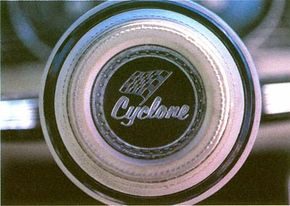
The 1966 Mercury Cyclone GT just didn’t show up. It replaced a philosophy. For years, the Mercury Comet has been a strange middle ground, larger than the economy Ford Falcon but smaller than the intermediate Ford Fairlane. A distinct body, a unique platform and distinct expenses. But by 1966, Ford Motor Company looked at its spreadsheets, realized that three separate “small” car bodies were costing millions of dollars to maintain, and decided to cut back. They followed General Motors’ example and began a relentless effort to improve the company’s efficiency. Comet has been cloned. It rides on the Fairlane’s newly redesigned 116-inch wheelbase, effectively merging two lines into one.
This is not a subtle update. This is a structural overhaul that redefined of Mercury. The new collection includes four models: the budget-oriented 202 (shorter and cheaper), the Capri, the Caliente and the high-end Cyclone. The latter three are 203 inches long. All wheelbases are fixed at 116 inches, which is 2 inches more than the previous generation.
The Cyclone itself is still a study in minimalism in body style. There were only two cars: a hardtop coupe and a convertible. Both are available in base trim or with performance-oriented GT badging. This is how the 1966 Mercury Cyclone GT earns its keep in muscle car history. There is no engine option. It provides one. The 390-cubic-inch V-8 engine produced 335 horsepower and featured a four-barrel carburetor and twin exhausts. This may sound familiar, and it should. This is the exact same powerplant as the Ford Fairlane GT. The only difference is the badge on the grille and the window price tag. Mercury’s ad says bluntly: “delivers go that can shove you right back into your bucket seat.”
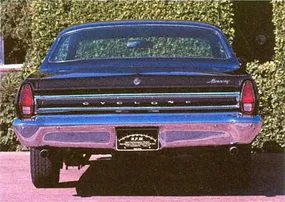
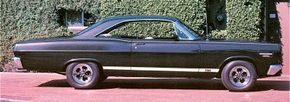
The bodywork screamed performance even where it is not needed. All Cyclones feature vertically stacked quad headlights embedded in a unique circular housing. The whole vehicle has a Dual pinstripes. The grille is two-part, with GT model-specific horizontal bars and a tiny checkerboard segment at one end. But the real drama is in the details that deceive the eye. A striking lower body racing stripe runs between the wheel openings. The front fender has a checkered flag badge. Two flat hood scoops protrude from the fiberglass hood. They have nowhere to go. These are purely for aesthetic purposes and are designed to make the car look hungry for air while the actual engine breathes through a standard air intake.
Under the skin, the upgrades were functional. The heavy-duty suspension is equipped with a large-diameter front stabilizer bar that keeps the heavier intermediate body level in corners. The interior of the cockpit is both practical and aggressive. The bucket seats are upholstered in pleated vinyl and are available in solid or two-tone. In front of the driver is a matte black dashboard, a raised instrument panel and a sporty two-spoke steering wheel. The GT comes standard with a console-mounted gearshift lever and is available with a four-speed manual or Sport Shift Merc-O-Matic automatic gearshift lever. The automatic are smart. You can manually control 1-2-3 shift points or relaxed cruising in Drive.
Wheelhouse specs is important for enthusiasts. The GT rides on 5.5-inch wheels and is wrapped in 7.75 x 14 whitewalls. The axle ratio is set at 3.25:1, which makes it a reasonable compromise for highway driving and off-the-line punch. The engine dress-up kit completes the package and ensures that the 390 looked as good under the hood as it sounded.
Why is this important? Since the death of the Mercury Meteor in 1963, there has been a gap in the brand’s mid-bulk portfolio. The expanded Comet derivative lineup fills that gap, appealing to a fresh set of buyers who want more presence than the Falcon but don’t need the bulk of a full-bulk Ford. The market responded. The 1966 Mercury Cyclone GT outsold the regular Cyclone nearly 2 to 1. Total GT sales were 15,970 units. This is a solid number. But the real big sellers are the cheaper Comets, especially the 202 series, which have sold around 64,000.
The 1966 model year established the template. The body was right. The engine is correct. The badge was heavy enough and deserve respect. But as the 1967 model year approached, the competition began to catch up and the landscape was shifting. The foundation has been laid, but the story isn’t over yet.
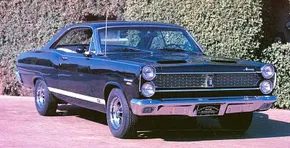
The 1967 Mercury Cyclone GT featured minor cosmetic improvements and significant power reductions. Under the hood, the power of the large 390-cubic-inch V-8 engine was reduced to 320 horsepower. For fans who prefer grunt over glamour, that number is significantly lower. The smaller, standard 289-cubic-inch V-8 engine makes 200 horsepower and has no performance gain over the base model.
Visually, the GT features a new one-piece horizontal grille with a Mercury badge in the center. The rear end received similar attention with new taillights and trim pieces. The Rally Stripe on the lower body still serves as the main identity, combined with the black grille to give the car a more fearless look.
For technical information, the 1967 Mercury Cyclone GT still includes a list of standard equipment. There are no major changes in the hardware. The double scoop hood remains an iconic feature. The engine compartment features bright, stylish components designed to draw attention. The suspension was firmed up for better handling, but it never quite matched the muscle car’s raw feel. Powerful front disc brakes are standard and offer better stopping power than drum brakes. Wide oval white-walled tires complete the look and add an elegant touch to the sporty stance.
Decrease in sales and production
1967 was a tough year for the Comet family. Sales figures tell a grim story. The Cyclone name was practically dropped from most body styles, and the badge restricted to the 202 base sedan. This branding confuses buyers and kills momentum.
Production decreased significantly. Total GT production fell sharply to 3,797 units. Convertibles fared even worse, with only 378 units rolling off the assembly line. Standard Cyclones saw even fewer builds. The market was changing and Mercury’s pony car was struggling to keep up.
The year 1967 marked the beginning of the end of the Cyclone badge.
For today’s collectors, these low production numbers are important. The 1967 GT makes it a niche interest. It doesn’t have the same reputation for big horsepower as its predecessor. But its clean lines and unusual specs give it a quiet charm. It wasn’t a fast car by modern standards, or even by 1967 benchmarks. But this is just a snapshot of a brand that is changing as the industry evolves.
Why did Mercury let the GT disappear so quietly? Perhaps the costs of updating an already aging platform outweigh the potential benefits. Or maybe the audience just wants something bigger, louder and more aggressive. Cyclone offers a refined and balanced package. This is not enough. The market demanded excess and Mercury gave them less.
The 378 convertible is particularly noteworthy. They are only a fraction of what they used to be. It’s hard to find one in good condition. Restoration projects are rare. Most of the survivors show their age. But that’s also part of their appeal. You can’t fake the patina of a car that has passed the mainstream.
What happens when a model becomes too unique? It stops being a car and starts turning into an artifact. The 19
Sales charts tell a different story than showroom hype. The midsize Mercury has yet to establish itself, and despite the Pace Car badge, it still lags behind the Ford Fairlane. Yes, that’s Benson Ford looking cool in a sign behind the wheel. Yes, it was named Performance Car of the Year by Super Stock magazine. None of it moved metal. Dealership lots stayed full.
Mercury’s engineering team isn’t ready to break up just yet. They know that next-generation intermediates will fix the disconnect between reputation for performance and actual buyer behavior. Before this change took place, the 1966 and 1967 Mercury Cyclone GTs were the final, sharp-edged attempt to conquer the muscle car market.
1966-1967 Mercury Cyclone GT Specifications
The information below describes the mechanical realities of the 1966-1967 Mercury Cyclone GT. These numbers explain why this car, while quick on paper, struggles to justify its price in a market increasingly dominated by cheaper, louder rivals.
Engine Options
* Standard: 352 CID V8 (2 Barrel Carburetor)
* Options: 390 CID V8 (4 Barrel Carburetor)
* High Performance: 428 CID Cobra Jet V8 (released late 1966/1967)
* Transmission: 3-speed manual or 3-speed automatic
** Dimensions & Weight
* Wheelbase: 112 inches
* Length: 206.8 inches
* Weight:** Approximately 3,400 – 3,700 lbs (depending on engine and equipment)
Performance Metrics (approximate)
* 0-60 mph: 7.5-8.5 seconds (390 cid)
* Quarter Mile: 15.5-16.5 seconds
* Top speed: 120–130 mph
The Mercury Cyclone GT is more than just a badge job. Although sharing a platform with the Ford Torino, Mercury lengthened the wheelbase slightly and added unique styling cues to set it apart. The interior is luxurious, designed to combine power and luxury in a way that Ford’s rawer approach could not.
But the market doesn’t care about luxury. It cared about horsepower per dollar. Its sibling, the Fairlane, was cheaper to make and easier to sell. The Cyclone GT is a awkward middle ground between being too expensive for budget-minded hot rodders and not luxurious enough for traditional Mercury buyers.
This positioning issue will determine Mercury’s future strategy. The next generation of intermediates must choose between price competition or double down on exclusivity. The Cyclone GT is the last gasp of a strategy that allowed style and tradition to win out over cold, hard economics.
Why the 1966-1967 Mercury Cyclone GT Matters Today
Restorers and collectors now see the these years as a turning point. In the 1966 model year, the Cyclone GT was introduced as a separate trim level from the standard Cycl.
1967 Mercury Cyclone GT: A Rare V-8 Muscle Machine
If you’re looking for mid-60s power, the Mercury Cyclone GT will do the trick. But when you look at the numbers, it’s clear that this is a car that peaked too late to appeal to the mass market. In 1966 the Cyclone was a hit. Almost 16,000 of them rolled off the line. By 1967, sales had dropped to less than 4,000 units.
Why did the crash? The market is changing. Mustangs are everywhere. Chevelles and Firebirds go on the offensive. The Cyclone found itself wedged between cheaper compacts and more aggressive purpose-built muscle cars. However, there are still goods under the hood.
What Was Under the Hood?
The 1966 and 1967 Mercury Cyclone GT had only one 390 cubic-inch V-8 engine. Ford’s big-block architecture is overbuilt, reliable and capable of moving heavy steel easily.
Here’s how to set up your transmission:
- Engine Type: OHV V-8, 390 cid (4.05 x 3.78 bore and stroke)
- Horsepower: In 1966 it was 335 hp. In 1967, it was lowered slightly to 320 horsepower.
- Torque: This engine easily moved over 3,000 lbs, although not specifically stated in the specs.
While the drop of horsepower may seem small, it reflects increasingly stringent emissions and safety regulations for U.S. vehicle design. The 1966 model was the raw, peak-performance version. The 1967 model was slightly subdued, but still powerful.
Transmissions and Drivetrain
There is no need to take the easy way out. Buyers can choose from several transmissions depending on the level of control they want.
- 3-speed manual – basic option. Simple. Excellent durability.
- 4 SpeedManual – Enthusiast’s choice. Closer ratios, more engagement.
- 3 Speed Merc-O-Matic – Automatic transmission available. Perfect for those looking for comfortable cruising without sacrificing the ability to manually downshift when needed.
Power is transmitted to the rear wheels. It’s the standard. There is no all-wheel drive nonsense here. Only rear wheel drive, manual steering and a heavy foot.
Chassis and Suspension
The Cyclone GT shares a platform with the Ford Galaxie 500, but Mercury has tuned it to perform better than a full-size sedan. It’s not a sports car, but it’s not a boat either.
Front Suspension:
Riippumaton. Upper A-arms. Strut-stabilized lower arms. Coil springs. There is a anti-sway bar that reduces the body roll when cornering. This setup was advanced for its time and offered better wheel control than the solid axles still used by some competitors.
Rear Suspension:
Live axle. Leaf springs. Simple. heavy. However, it is very efficient in handling torque and carrying passengers.
Brakes:
Dr.