The 1962-1964 Plymouth Sport Fury had a bad reputation. Most people call them “ugly” and “cheaply made”. This statement is only half true. Chrysler was deep in its of the rust belt. The style is polarizing. However, it would be wrong to say that these cars are bad. They hold up better than you think.
The size is right. It is well balanced. The long hood and short deck look was drawn years before the term “pony car” was coined. In the early 60s, Americans loved big cars. Buyers rejected the smaller standard Plymouths. Sales Turnaround tanked. Plymouth dropped from third place in 1960 to eighth in 1962, their worst ever performance.
Then came the Sport Fury.
Sales Turnaround
The same arguments that hurt the Dodge also helped Plymouth. From 1962 onwards, however, the Plymouth retained the 116-inch wheelbase. Dodge changed the wheelbase. Plymouth fared better in style too. The result? In 1963, Plymouth jumped to fourth place. Pontiac was still ahead. The compact Valiant helped. It pulled the Plymouth out of the hole.
Most of the criticisms of standard Dodge models also apply to the Plymouth. Never mind the rust talk for now. Look at the design. It was bold. To many, the 1962 Plymouth seemed strange. Things could have gotten even weirder.
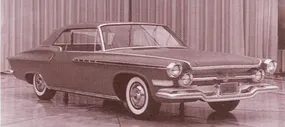
Pictures of the S-series design program exist. One shows a production-style model. It has a strange license plate frame. There is a small fin on the left side of the trunk lid This mirrors Virgil Exner’s 1960 XNR show car. Asymmetric design was in the air.
The second picture shows a full-size Plymouth. Looks like a Pontiac. It has the Super Sport badge. This suggests that Plymouth is planning a two-tier lineup. Let’s look at the difference between a dart and a custom 880. Dodge adopted this strategy in 1962, but Plymouth did not. This is unfortunate.
The Sport Fury Arrival
Finally, a sporty version of the downsized 1962 car arrived. It revived the Sport Fury name from 1959. Chevrolet has a Super Sport. Plymouth needed a different badge. The car was debuted mid-year. convertible and hardtop coupe.
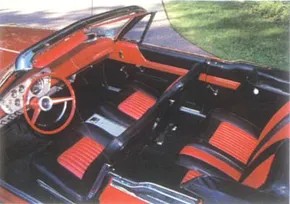
It mimicked the Chevy Corvair Monza. All-vinyl interior. Front bucket seats. center console. These features are very popular. From the outside, the Sport Fury stands out. Black grille accents. Special wheel covers. Belt molding extension. Above the rear panel is a thin strip of light with dummy air vents
Power was the real story. Lesser models got a Slant Six. Sport Furies were powered by a 361-cubic-inch Golden Commando V-8. Standard output was 305 horsepower. It’s strong. Options went higher. Pair of 383s. or a trio of 413 wedgeheads. The stamped intake kit increases the power to 410 horsepower.
The 1962 Plymouth was 7 inches shorter. They shed up to 400 pounds. Add a big V-8. Strong performers included. The front frame was changed to a monoframe structure. This ensures that the frame is firmly in place. difficult. Handling has been improved. Chrysler’s torsion bar suspension works better. The police bought a lot. They want reliable and fast cars.
The 1963 and 1964 models continued this trend. Even more power. More stylish. Is there less rust? Probably not. However, the driving experience remains sharp. These cars deserve more praise. These are not just marketing gimmicks. These are real performance machines.
The market has changed. The pony carriages are coming. Big cars have faded. However, the Sport Fury stayed put. This shows that Plymouth is still competitive. It’s not just about size. Mentally.
Who knows what would have happened if the two-tier plan had remained? The concept of a full-size Pontiac is interesting. It could have changed everything. Instead, we take what we have.
Sport Fury is still a niche market. Enthusiasts recognize its value. A casual observer sees the rags. Both can be true. It depends on what you are looking for.
Click here to learn more about classic and muscle cars. The consumer guide offers searches for new and used products. We help you find a car that fits your budget. Make some history.
These figures tell the story of the brand’s rise from the brink. Plymouth production in 1963 increased from a dismal 340,000 units to a much healthier 488,500 units. The catalyst? Intelligently and cost-effectively design existing platform standards to give them a completely new look without a complete design.
The 1963 Plymouth Sport Fury escaped early embarrassment. The previously scattered quad headlights now sit neatly inside a simplified grille. The sharp “edgy” fenders and flat side panels have been replaced with a more traditionally shaped silhouette that looks more like a genuine American car than a mid-century experiment. The coupe’s roofline is heavily borrowed from the stylishly raked rear of the Ford Thunderbird. Practicality has also been improved, as the extra 3-inch rear overhang squeezes more luggage space into the model.
Engine updates and visuals
Visual distinction is still a priority in the Sport Fury trim. Special wheel covers and three-color badges distinguish it from the basic Belvedere model. Mechanically, the base is the same as last year, but the top option changes everything. The optional 413cc V-8 engine was discontinued and replaced with a bored-out 426 cubic-inch “wedgehead” engine.
This new 426 produces up to 425 horsepower. For enthusiasts keeping track of 1963 Plymouth Sport Fury Horsepower, this number represents a significant increase in performance, producing the raw torque that defined the early muscle car era. Yes, the car looks sharper, but now you can back up the style with real speed.
1964: Handling, Transmission and NASCAR Glory
The underbody of the Plymouth Sport Fury was redesigned for 1964. The interior has moved to a more traditional dashboard layout. The coupe features a unique new roof treatment with V-shaped rear pillars and so-called “bubble” backlighting. The mechanical highlight, however, was the introduction of a four-speed manual transmission, available as an option with the V-8 engine. The Plymouth Sport Fury 4-speed manual option provided drivers with control unmatched by automatic transmissions of the time.
The handling has also been particularly improved. Popular Mechanics notes that the 2.5-inch wider rear track significantly reduces body roll. It’s not just linear speed. It offers better handling when cornering on uneven surfaces, making the car more confident for daily drivers and weekend canyon runners.
The 1964 model year proved that these mechanical adjustments were more than theory. Plymouth won the Daytona 500 with a 1-2-3 landslide. That win was powered by a recently revived Hemi V-8 engine that was brought back for competition use only. Leading the charge was Richard Petty, a young driver who later became the king of NASCAR.
Sales recovery and legacy
Winning at Daytona is more than just winning the trophy. it moved metal. Total Plymouth sales in 1964 rose to nearly 600,000 units.
Muscles that never die
If you thought the 1962-1964 Plymouth Sport Fury was a masterpiece of engineering or high fashion, you were wrong. It wasn’t the best Mopar of its time, and its styling was… well, let’s just say it had character rather than elegance. Yet here we are. These cars are still going and turning heads, proving that Detroit ingots have a longer shelf life than most modern sedans. They survived not because they were perfect, but because they were strong. So what happens behind the scenes? These are equipped with some of Chrysler’s most aggressive powertrains.
Engine compartment: big block and small vise
Let’s get down to it. Sport Fury is a motor car. All are V-8s with overhead valves. There’s no inline six or four to confuse things. Start with a small block of 318 cubic meters. The displacement was 318 cid (bore/stroke 3.91 x 3.31) and the power was 230 horsepower. This is the entry point. baseline. You will be impressed, but never forget your manners.
Updated to version 361. This is where things get interesting. The displacement jumped to 361 cid (4.12 x 3.38). Chrysler used a camshaft and carburetor here, giving you a choice of 265, 305, or 310 horsepower. It’s a reliable daily driver that delivers explosive speed when you need it.
This is followed by 383. Mopar was king by the middle of the decade. 383 Sid (4.25 x 3.38). This badass is available in 320, 325, 330 or 335 horsepower specifications. This is the essence of the 1962-1964 Plymouth Sport Fury specification. This torque-responsive engine defines the muscle car genre for many enthusiasts.
If you want to show off, check out Main Street. 413 didn’t arrive until 1962. 413 cid (4.19 x 3.75). Choose from 365, 380 or 410 horsepower. It’s huge. The prices are very expensive. By 1963 it was gone. Why? Chrysler refines its strategy to increase displacement.
Enter 426. From 1963 to 1964 it was a top predator. 426 Sid (4.25 x 3.75). Power figures increased to 365, 370, 375 and 415 up to the legendary 425 horsepower. It’s not just about speed. A statement piece sculpted from cast iron and aluminum.
Power transmission and chassis
It’s meaningless if it can’t deliver power on paved roads. The gear selection is simple. 3-speed manual is standard equipment. In 1964, Chrysler finally introduced a 4-speed manual transmission and offered a gearhead.