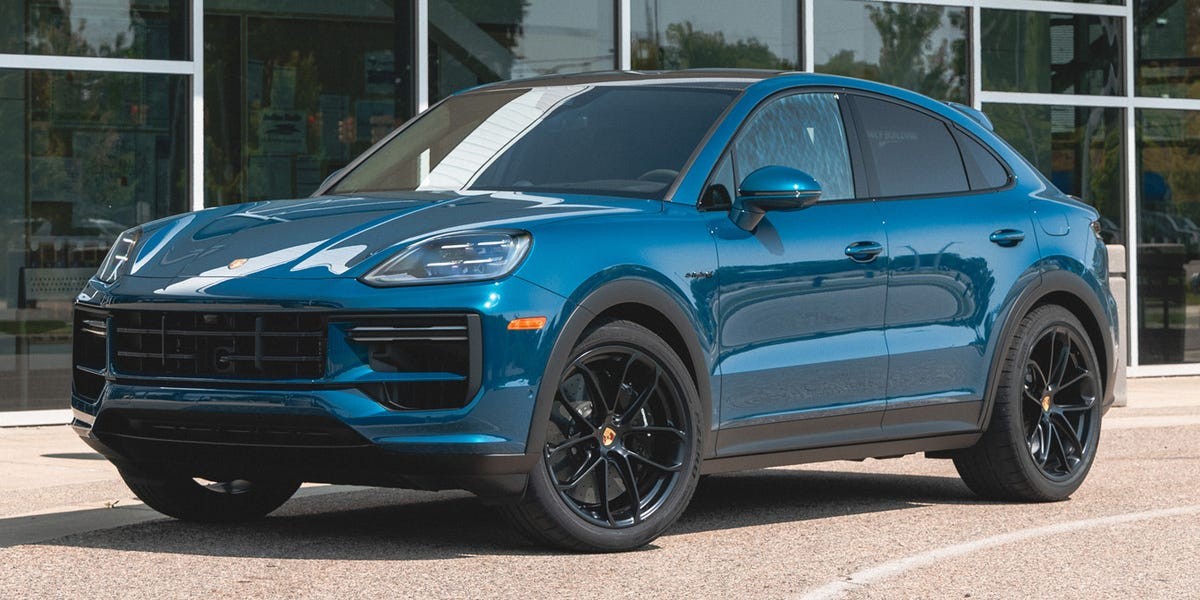
Porsches are supposed to feel like Porsches. It is a simple rule that becomes complicated when you strap a heavy plug-in hybrid battery to an SUV frame. Yet, here we are with the 2027 Cayenne E-Hybrid, and it somehow pulls off the trick.
Yes, it is heavier than its gasoline-only sibling. But Porsche has managed to inject that same joy into the driving dynamics. The electric motor is just the garnish. The steak is still there.
What Changed
Not much. The Cayenne Hybrid enters 2027 largely untouched. You won’t see a facelift. No radical redesign. It’s business as usual.
So, which one should you actually buy? We still favor the base E-Hybrid. Sure, the “S” model gives you another 49 horsepower and a fancy air suspension setup. But here is the trick. You can spec the base model with the air springs and still have change left in your pocket for the options. Always keep change for options. If speed is the only metric that matters to you, then buy the Turbo. It gets the big V-8.
Under the Hood
Three flavors of power. They all drive all wheels. They all use an 8-speed automatic. But the internals differ significantly.
Base and S Models share the same turbocharged 3.0-liter inline-6 (note: previous sources often misidentify this as a V6, but the modern platform uses a turbo inline-6) paired with an electric motor.
* Base: 463 combined hp
* S: 512 combined hp
The Turbo switches gears. It grabs the twin-turbo 4.1-liter V-8. When paired with the electric motor, that equals 729 combined hp.
Here is where things get weird. In everyday traffic, the default EV-focused drive mode feels sluggish. Less responsive than you want for a car with this pedigree. Switch to Hybrid or Sport mode. Keep the gas engine on. The power delivery smoothes out.
We noticed the transmission hunting in the S model during low-speed maneuvers. Discombobulated? Maybe. It’s just the nature of the beast. The adaptive suspension works hard to mask the 5,000+ lb weight, keeping it agile. It remains possible to drop the kids at soccer and chase sunsets on Angeles Crest Highway before dinner.
Performance Benchmarks:
– Base 0-60: 4.6 seconds
– Turbo Coupe 0-60: 3.1 seconds
For context, the BMW X5 xDrive50ie gets there in 3.9 seconds for significantly less money. The Turbo Cayenne Coupe remains one of the fastest hybrid SUVs tested, however.
Efficiency and Towing
Don’t confuse it with a Prius. But it is a plug-in.
The 21.8 kWh battery packs give you between 24 and 29 miles of EPA-rated electric range, depending on the trim. We tested the Turbo Coupe and saw it hit 39 miles on our specific highway test. Not bad.
Fuel economy is flat across the board: 21 city / 23 highway. Real-world highway testing landed the Turbo at 22 mpg.
When it comes to pulling things, the Base and S models tow up to 7,716 lbs. The Turbo? Slightly less. 6,614 lbs. Make sure your hitch is properly rated.
Inside the Cabin
Climb in, and you might feel a sense of déjà vu. The layout mimics the electric Taycan sedan closely. That huge 12.6-inch driver cluster? That’s from the electric line. The toggle shifter? Same family.
Seats and Space
– Front: Base models get faux leather and 8-way adjustment. Turbo buyers get 18-way sport seats with leather trim.
– Rear: Adult-sized space is adequate. The “Coupe” fastback version loses headroom. Expect tight squeezes for taller passengers in the rear.
– Cargo: 16 cubic feet behind the rear seats. Fold them down and it expands to 55 cubic feet. We fit eight carry-ons easily. With seats folded, we packed in 22.
Tech
A 12.3-inch screen sits center stage. Thank heavens they left the volume button.
Front-seat passengers can argue over a 10.9″ touchscreen with streaming video if they order it. Alexa works here too.
Audio options range from a 10-speaker base setup to a 21-speaker Dolby Atmos Burmester system. Pick wisely.
Safety and Warranty
Standard gear includes forward collision warning, parking sensors, lane-keeping, and blind-spot monitoring. You can add adaptive cruise or night vision via infrared camera.
The warranty covers the basics: four years/50,000 for limited and powertrain. Hybrid components stretch to eight years/100,000. Maintenance coverage stops at one year/10,000, which trails behind competitors like Volvo and BMW who throw in more complimentary service intervals.
Is it the cheapest hybrid SUV on the market? No. Is it the most comprehensive in every category? Perhaps not. But when it’s moving fast, the physics seem to bend around it.