The idea of driving from the Atlantic to the Pacific on a single fill-up sounds like science fiction. It is, until you look at what Aptera Motors is building. Since Nicholas Otto built the first gasoline engine in the 1870s and Rudolph Diesel followed with his compression-ignition design in the 1890s, we’ve been tweaking efficiency. The progress has been fitful.
Climate concerns are finally forcing hands. The European Union keeps tightening emission standards. Ultracompact cars like the Smart Car, MINI Cooper, and Toyota iQ are gaining traction for their tiny footprints and energy savings. In the U.S., the political will was there too. President George W. Bush signed an energy bill on Dec. 19, 2007. It pushed automakers to raise the industry average to 35 mpg by 2020.
That’s a goal. It’s not the finish line.
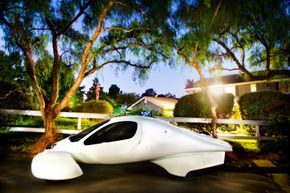
Aptera Motors, a San Diego-based private company, is aiming higher. They aren’t just trying to meet standards. They are trying to break them. The Aptera is a three-wheel, two-passenger prototype targeting 300 miles per gallon. Steve Fambro and Chris Anthony founded the company in 2006. They didn’t come from traditional auto backgrounds. Their resumes spanned composites, biotechnology, aerodynamics, and finance.
That mix created something odd. The vehicle looks like a dolphin mated with a helicopter. Technically, it is classified as a motorcycle. That legal loophole matters. It means the initial production models will only be available to California residents. If it sells well, Aptera will expand nationally and internationally.
The early prototype already delivered 230 mpg. That is 195 mpg above the standard set by the 2007 bill. The engineers still have work to do. They expect the car to be ready for Californians in late 2008.
But there are questions. How fast does it actually go? What happens if you hit something? Since it’s a “motorcycle,” where is the safety cage?
Aptera Specs
The Aptera is not just a concept. It is a meticulously engineered response to the 35 mpg mandate. The design prioritizes aerodynamics over everything else.
The Powertrain
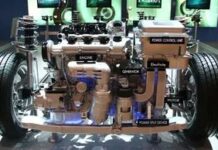
Aptera is not betting on a single technology. They are building a hybrid system that maximizes energy recovery.
- Electric Drive: The primary propulsion comes from electric motors. This ensures zero emissions in urban driving.
- Range Extender: A small internal combustion engine acts as a generator. It charges the battery pack while you drive. It does not turn the wheels directly.
- Solar Charging: The body panels are integrated with solar cells. This adds miles without plugging in.
Performance Numbers
The target is 300 mpg. The prototype achieved 230 mpg.
| Metric | Target | Prototype Result |
|---|---|---|
| Fuel Economy | 300 mpg | 230 mpg |
| Passengers | 2 | 2 |
| Wheels | 3 | 3 |
| Classification | Motorcycle | Motorcycle |
Design and Safety
The shape is teardrop-shaped. This reduces drag coefficient significantly. The low center of gravity improves handling. But the motorcycle classification raises safety concerns.
“If the Aptera sells well, AC hopes to offer its vehicle to national and international markets.”
The company relies on rider vigilance. There are no
You want to know how the Aptera squeezes out such absurd fuel economy. The answer isn’t just one thing. It’s a combination of factors, but Aptera Motors’ real superpower is composites.
People toss that word around in engineering circles, but what does it actually mean? And why does it matter for your garage?
A composite material combines two or more distinct substances. They don’t fuse into a new chemical identity. Instead, they sit together, leveraging their individual strengths. The result is something stronger, lighter, and easier to mold than either component alone.
Nature does this all the time. Wood is a composite. Cellulose fibers provide tensile strength. Lignin acts as the binder. It’s light but tough. Concrete is another. Aggregate stones mixed with cement create a solid slab.
Automotive and aerospace industries rely on these materials for performance. Carbon fiber composites are standard in high-end sports cars. Think Aston Martin Rapide or the Lamborghini Reventon. Weight savings translate directly to speed and handling. Fiberglass offers incredible strength for boats, planes, and even home insulation.
Aptera didn’t just buy off-the-shelf carbon fiber. They developed their own patented method: Panelized Automated Composite Construction (PAC2). This process shapes the body into that distinctive, teardrop form.
“The Aptera uses its own patented process called ‘Panelized Automated Composite Construction (PAC2)’ for its body design, which gives the vehicle its unique, aerodynamic shape.”
Aerodynamics isn’t just about looks. It’s about survival at speed.
Initially, the plan involved a diesel engine. That didn’t work. California emissions testing is notoriously strict. Shrink a diesel engine down enough to fit this footprint, and you fail the test. So the team pivoted.
Now it’s either a pure electric drivetrain or a plug-in hybrid.
Top speed is rated above 85 mph. Expect an electronic limiter at 95 mph. Why stop there?
Lightweight cars struggle with stability at high velocities. Air resistance becomes a dominant force. It’s not about horsepower. It’s about physics.
Picture throwing a light paper airplane. You push it hard. It zips forward. Then it wobbles. The air catches it. It veers off course.
That’s what happens to a light car at highway speeds. Without careful design, airflow destabilizes the chassis. The Aptera’s shape manages that airflow. The speed limit is a safety buffer, not a performance cap.
But limiting speed isn’t the only move.
Aptera Safety
How the tadpole configuration solves the rollover risk in three-wheel vehicles
Motorcycle classifications usually trigger immediate anxiety. They imply two wheels, no cage, and a high probability of ending up on the asphalt. Aptera Motors faced this exact hurdle. By engineering a three-wheeled vehicle, they initially landed in a legal category that carries a stigma of instability. The fear isn’t unfounded. History is littered with delta-design attempts that flipped at the first hard turn.
The delta formation puts one wheel in the front and two in the rear. It looks stable until physics intervenes. Every moving object has a velocity vector. Drive straight north, the vector points north. Turn left, the vector shifts. If that shift moves too far outside your wheelbase, the torque flips the vehicle. A delta car is wide at the back but narrow at the front. It’s a balancing act that fails under lateral G-force.
Aptera chose a tadpole formation. Two wheels up front. One in the back.
This geometry forces the velocity vector to remain trapped between the two front tires. The weight distribution naturally keeps the center of gravity low and centered. Roll over? Unlikely. The geometry resists it. Add in a low center of gravity and aggressive traction control, and the rollover risk vanishes. Race cars use low centers of gravity for the same reason: to overcome the lateral force of cornering at speed. SUVs sit high and tip easily. The Aptera sits low and sticks.
Crash testing backed up the theory. The vehicle exceeded strength requirements for both frontal impacts and rollovers. The front safety cage draws direct inspiration from Formula One race cars. Those machines hit 200 mph. They need structures that don’t crumple into the cockpit. Aptera’s frame borrows that logic. It’s not just a sun-powered commuter pod. It’s a structure built to survive high-energy events.
Aptera’s Eyes Forward System
The safety cage keeps you intact. The Eyes Forward System keeps you from hitting the cage.
This suite of sensors and cameras isn’t just for lane keeping. It’s a proactive defense layer. The system monitors the road ahead with a range of lidar and radar inputs. It reads traffic patterns. It detects pedestrians. It anticipates the brake lights of the car in front before you even see them.
Traditional ADAS features react. Eyes Forward predicts.
The hardware is hidden behind the aerodynamic glasshouse. No bulky bumpers. No protruding sensors to catch wind. The cameras are flush-mounted. The lidar is embedded. This maintains the vehicle’s drag coefficient while providing 360-degree awareness.
In testing, the system reduced hard braking events by significant margins. It adjusts speed gradually. It warns the driver early. It takes over steering inputs when the lane drifts are subtle but dangerous. For a vehicle that prioritizes efficiency, stopping distance matters. Less hard braking means less energy waste. It also means less wear on the tires.
The integration is key. Most EVs bolt on autonomous features as an afterthought. The Eyes Forward System is woven into the vehicle’s core architecture. It speaks directly to the motor controllers. It talks to the battery management system. When it decides to slow down, the regen brakes engage first. The friction brakes come
Safety Through Sight
The bodywork only does half the work when it comes to keeping you safe. Aptera Motors leans heavily on its “Eyes Forward” vision system. A video display sits right in front of the driver. It offers a 180-degree view behind the vehicle. That’s not a gimmick. The Aptera’s teardrop shape blocks the rear window entirely. You can’t see behind you with your own eyes. The camera feed is mandatory for basic driving.
A GPS unit on the center console adds another layer of confidence. It tells you where you are. At least you won’t drive off a cliff by accident.
Practicality Over Tradition
It is a “two plus one” concept. Two adults fit comfortably up front. A removable third seat sits in the back for infants. Take that seat out and you get cargo space. Aptera claims it can hold 15 bags of groceries. That is decent for a vehicle this small.
Driving down the California coast doesn’t require a helmet. You might expect one. The Aptera is classified as a motorcycle. But it is an enclosed motorcycle. You don’t need a motorcycle license. You don’t need protective headgear. The classification actually helps California residents. They can use HOV lanes. Even with only one person inside.
The Broader Landscape
Curious about what else is out there? The landscape of alternative automobiles is shifting fast. Check the links on the next page to see how other manufacturers are tackling efficiency and safety.