Hybrids aren’t just for commuting to work with a clear conscience. They can also snap your neck back into the seat if you floor it. We tend to think of these cars as eco-friendly appliances, but that label ignores the raw power lurking under the hood. It’s not just about saving gas anymore. It’s about efficiency meeting performance.
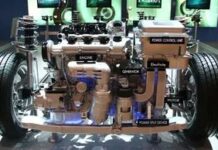
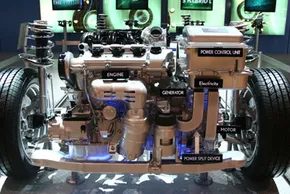
To understand how a small engine can punch above its weight, you need to look at the mechanics. A hybrid engine blends two distinct power sources. You have the traditional internal combustion engine burning gasoline. Then you have an electric motor drawing juice from a battery pack. They work in tandem. The gasoline engine in a hybrid is usually smaller than what you’d find in a standard car. It’s lighter. It’s more efficient. But does that small footprint mean weak performance? Not necessarily.
The secret lies in upgrading the components. Battery technology is shifting. The third-generation Toyota Prius proved this with a more efficient battery pack. It delivered higher power output than its predecessors. The second generation battery was rated at 28 horsepower. The third generation jumped to 36 horsepower. That’s a small gain. But it points toward lithium-ion batteries. These units pack a bigger punch in less space. Lithium has higher energy density than the nickel-metal hydride batteries that dominated earlier hybrids. They also weigh less. Expect to see these lighter, stronger packs in hybrids soon.
Voltage plays a role too. Raising the voltage in the electric motor boosts power. The 2010 Prius moved from a 500-volt system to a 650-volt system. More voltage means more immediate torque. Combine that with a robust combustion engine. The result is a hybrid that can stare down traditional gas guzzlers.
High-Performance Hybrid Concepts
You might picture hybrids as slow, boxy sedans. Manufacturers are changing that image. The Fisker Karma is a plug-in sport sedan. It hits zero to 60 mph in under six seconds. It can drive 50 miles on lithium-ion batteries alone. The price tag is around $88,000. That’s not cheap. But it offers sports car performance.
Honda and Toyota are also entering the arena. Honda’s CR-Z focuses on high torque in a compact package. Toyota’s FT-HS concept uses a 3.5-liter engine paired with an electric motor. The output is 400 horsepower. Toyota claims this beast goes zero to 60 in about four seconds. That kind of speed forces you to rethink what a green car can do.
Infiniti isn’t far behind. Their Essence concept couples a twin-turbocharged 3.7-liter direct injection engine with a compact lithium-ion battery pack. The combined output hits 592 horsepower. It’s still a concept. But it proves hybrids can match conventional powerplants.
The potential is there. Hybrids can produce more power than traditional engines in some scenarios. But they still need the engineering refinements that traditional cars have had for decades.
The Scuderi Split-Cycle Engine
There’s another way to squeeze power out of combustion. The Scuderi split-cycle engine reimagines the traditional four-stroke process. It places the system over two paired cylinders. One cylinder handles intake and compression. The other handles power and exhaust. Firing occurs just after top-dead center. This is a more efficient way to produce power.
The cycle takes only one crankshaft revolution. Traditional engines take two. The result is up to 80 percent less toxin output. Fuel efficiency goes up. Torque increases. It opens up new possibilities for green driving.
Hybrid performance is evolving rapidly. Battery density improves. Voltage systems get stronger. Engine designs become more efficient. The line between eco-friendly and high-performance is blurring. What happens when these technologies mature completely?
The Source of the Data
The details behind these efficiency claims don’t come from thin air. They’re grounded in specific engineering reports and editorial evaluations from the mid-2000s.
Take the debate around gasoline direct injection (GDI). It wasn’t just hype. Csaba Csere broke it down in Car and Driver back in June 2004, asking if the technology would finally cross the finish line. His skepticism was rooted in real-world performance hurdles that early adopters faced.
Then there’s the hardware itself. We looked at the Scuderi Group’s split-cycle engine concept, unveiled in April 2009. It promised a new internal combustion process, challenging the four-stroke norm. Meanwhile, Toyota was quietly refining the 2010 Prius specifications, tweaking the battery pack to squeeze out better range without sacrificing the familiar hybrid drivetrain.
Concept Cars vs. Reality
Not every idea makes it to the showroom. The Toyota FT-HS concept hinted at where hybrid performance could go, blending sports car aesthetics with electrified efficiency. It was a glimpse of the future. The Honda CR-Z took that hint and turned it into a production reality, aiming for a lower center of gravity and a more driver-focused experience than the Prius ever offered.
Fisker Automotive was playing a different game with the Karma. It wasn’t just a hybrid. It was a range-extended electric vehicle with a distinct design language that ignored the typical hybrid silhouette.
Infiniti tried to bridge the gap between luxury and eco-consciousness. Their March 2009 news release outlined strategies for integrating hybrid tech into their premium lineup, proving that efficiency wasn’t just for compact sedans.
Supporting Technologies
These vehicles didn’t exist in a vacuum. They relied on a growing infrastructure of alternative fuel stations and smart technologies. The SmartWay designation became a benchmark for EPA-certified efficiency, guiding buyers toward models that actually delivered on their promises.
The Ford Fusion hybrid showed that mid-size sedans could compete with smaller cars on gas mileage, while the Toyota Prius continued to dominate the segment with its proven hybrid battery pack longevity.
Jerry Garrett noted in the New York Times that the hybrid sector was shining brighter than ever in 2009. It wasn’t just about saving penners at the pump. It was about a shift in how automakers approached powertrains entirely. The Venturi Astrolab concept, though less mainstream, explored urban mobility solutions that prioritized low emissions and high agility.
The Bottom Line
The data points to a clear trend. By 2009, the automotive industry was moving past the novelty of hybrids. They were integrating them into every segment. From the Scuderi split-cycle engine prototypes to the refined specs of the next-gen Prius, the focus was on efficiency without compromise.
The sources listed here—ranging from technical specs to editorial reviews—form the backbone of that transition. They document a moment when efficiency stopped being a niche interest and became a central pillar of automotive design.