The utility vehicle that defined American military logistics in World War II didn’t wait for the U.S. entry into the conflict to prove its worth. Long before the Japanese struck Pearl Harbor on December 7, 1941, these rugged four-wheelers were already demonstrating their tactical value on battlefields across the globe.
Germany’s blitzkrieg was a shock to the system. Starting May 10, 1940, Nazi forces tore through Belgium, Holland, and Luxembourg with terrifying speed. They swept into northern France so fast that within just 16 days, British and French armies were pushed back to the coast. The evacuation at Dunkirk saved thousands from capture. By June 14, Paris had fallen. Eight days later, France surrendered. Britain stood alone against the Wehrmacht.
President Franklin D. Roosevelt knew the stakes were existential for America. On June 10, he declared the United States would act as the “Arsenal of Democracy,” pledging material resources to those fighting fascism. By March of the following year, Congress authorized the Lend-Lease program. This legislation let the President ship airplanes, tanks, trucks, food, and supplies to allies like Britain, China, and eventually the Soviet Union. The deal allowed for repayment in “kind or property,” though much of the $49 billion total was essentially a gift. The Allies returned about $8 million in “reverse Lend-Lease” support for U.S. troops.
Among all the hardware shipped overseas, one item stood out.
The Soviet Reaction to the Jeep
On September 19, 1941, American diplomat W. Averell Harriman and British Lord Beaverbrook met Stalin in Moscow. They were there to discuss expanding Lend-Lease aid for the USSR, which was locked in a desperate struggle against the German advance.
Stalin was cold. Curt. Almost rude. Harriman laid out the usual list of supplies. Stalin remained unimpressed. Then Harriman mentioned the jeeps. Five thousand units.
Stalin’s demeanor changed instantly.
“Good!” he reportedly said. His eyes lit up. “But I want more. This is a war of motors. It is impossible to have too many of them, and the side having the largest number of motors is bound to win.”
The Soviet military had found its preferred transport.
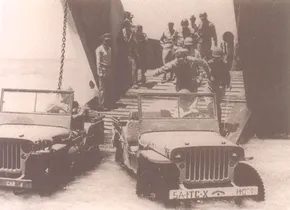
The demand for jeeps didn’t stop with the Americans and British. Everyone wanted one. The reason was simple. Versatility. For a while, “Uncle Joe” Stalin only got 5,000 units. Eventually, he received several thousand more.
Soviet propagandists tried to spin the narrative. They told their people these machines were built in secret Russian factories. A clever lie.
The soldiers knew better. In fact, they loved them too much to care about the origins. According to Doreen Canaday Spitzer, daughter of Willys-Overland Chairman Ward Canaday, the Red Army called the vehicle the “Ooeelees.” It was a phonetic nod to the maker.
Henry Cassidy, a correspondent on the Russian front, sent a cable that summed it up. “The American jeep has met the Russian mud and the situation is well in hand.”
Edward R. Stettinius Jr. wrote about this in Lend-Lease, Weapon for Victory. He was the Lend-Lease administrator at the time. Later, he became FDR’s secretary of state. His book contains a specific anecdote that explains the shift in Soviet preference.
“The Russians early learned the value of our jeeps…They had asked for motorcycle sidecars, but as I wrote Ambassador Litvinov late in January 1942, our own Army was using jeeps almost entirely instead of motorcycle sidecars…The Russians decided to try the jeeps and soon found that our Army had good reason to rely on them…”
They started with a request for sidecars. Then they saw what the US Army was doing. They switched.
The terrain in Russia was brutal. The jeeps handled the mire and rough going where other vehicles failed. The Red Army quickly asked for more. Thousands followed.
Stettinius recalled an Associated Press visit to a Soviet artillery regiment on the central front. The correspondent rode in a jeep through deep mud. Rough fields. Bumps. The driver navigated it all to reach regimental headquarters.
At one point, the correspondent asked the driver how he liked the car.
The answer was one word: “Zamechatelno!”
It translates to “swell.” Or “remarkable.” It wasn’t just politeness. It was genuine appreciation for a machine that didn’t get stuck.
Beyond the Eastern Front
The jeep’s reputation didn’t stay confined to the Soviet Union. It spread across every fighting front.
General Sir H. Maitland Wilson had the longest continuous service in His Majesty’s Army. He sent a jeep to Yugoslavia’s Marshal Josef Broz Tito.
Wilson later recalled the Marshal’s reaction. He was delighted. Amazement followed his first trip across Yugoslav roads. The roads there were very bad. The jeep didn’t complain.
On every front, the jeep proved its worth. Major General Courtney H. Hodges, chief of infantry, called it “the most useful motor vehicle we’ve ever had.”
It wasn’t just a toy. It was a multi-tool on wheels.
As a troop carrier, it took three men easily. Six in a pinch.
As a reconnaissance car, it could go anywhere a motorcycle could. And a lot more places besides.
Fitted with a .30- or .50-caliber gun in the back, it became a mobile anti-aircraft unit. Aack-ack.
Equipped with a two-way radio, C-rations, and blankets, it became a mobile command post.
No other vehicle did all that. No other vehicle was as small as that. Yet as capable.
That’s why the Russians said “Zamechatelno.” That’s why the British sent them to Tito. That’s why the Americans kept building them.
The mud doesn’t care who drives it. But the jeep handles it.
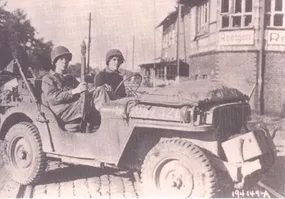
Medical Evacuation in the Pacific
The island-hopping campaign in the Pacific demanded vehicles that could ignore roads entirely. Standard ambulines failed here. The jeep changed that.
It ran supply convoys along bulldozed tracks. These paths went from coral beaches straight to the front line. An improvised platform turned the standard vehicle into a medevac unit. It slipped through enemy territory. Wounded soldiers were evacuated to forward aid stations. The low silhouette mattered. It allowed the jeep to operate closer to the front than a regular ambulance.
Tactical Roles and Night Ops
The machine did more than transport. It scattered clusters of planes. It hauled them away to revetments when alerts sounded.
It pulled a 37-mm antitank gun with ease. Night patrol work suited it perfectly.
The 75-mm Gun Rumor
Men talked. They whispered about mounting a 75-mm gun on the jeep. Logic said no. The quarter-tonner had a practical load limit of 800 pounds. The gun weighed 3,900 pounds. Carrying it was absurd.
The rumor spread anyway. It said something about the confidence soldiers placed in the sturdy little machine.
Next Steps
Find out more ways in which the jeep was used in the next section.
For more information on Jeeps, see:
- History of Jeep
- Consumer Guide New Jeep Prices and Reviews
- Consumer Guide Used Jeep Prices and Reviews
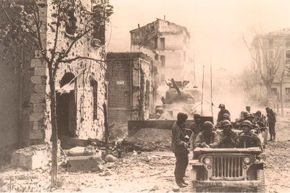
The utility of the vehicle was virtually limitless. You could prop the hood open and use it as an altar for a chaplain, or just a card table for guys who preferred poker to prayer. With the right rigging, that four-wheel-drive chassis became a mobile generator for everything from aircraft searchlights and shortwave radios to radar sets and welding gear. It handled field telephone exchanges, delivered rations to the front lines, and served as a makeshift first-aid station when a medevac wasn’t an option.
The logistics were just as impressive as the combat roles. Popular Mechanics highlighted a specific operation in Australia during the November 1942 issue. Soldiers needed to lay an underground cable at an aerodrome without halting active flight operations. Digging the trench by hand would have taken days. Instead, they hooked a plow to a jeep and tore through the earth at ten miles an hour. A second jeep followed, towing the cable reel, while a third trailed behind, pulling a roller to bury and flatten the ground. The whole job wrapped up in two hours while Australian observers watched in disbelief.
The Origin of the Name Jeep
Everyone assumes “jeep” comes from the military designation G.P., standing for General Purpose. But the etymology is messier than that. The word itself predates the famous vehicle. Army mechanics were using “jeep” to refer to newly tested vehicles as early as 1914. By 1937, the Army had started calling Minneapolis Moline tractors jeeps. Even the prototype for the B-17 bomber earned the nickname.
There were plenty of other names floating around for these four-wheel-drive light utility vehicles. The printable list includes Bantam, Blitz Buggy, Bub, Gnat, Quad, Pygmy, Midget, and Peep. Joe Frazer, who served as president of Willys-Overland from 1939 to 1944, claimed he coined the term by slurring the initials G.P. But others disagree. John Christy, writing in Motor Trend in December 1973, recalled an assistant professor of military science in 1941 who insisted the Dodge half-ton command car was a jeep, while the quarter-ton model was merely a peep.
Then there’s the pop culture angle. “Eugene, the Jeep” appeared in the Popeye comic strip in September 1936. Created by E.C. Segar, this creature hailing from the darkest part of Africa was a fourth-dimensional animal surviving on a diet of orchids. It could shift between dimensions at will, rendering it invisible to three-dimensional humans. Test driver Red Hausmann might have been channeling this elusive, hard-to-grasp nature when he first used the moniker. The small vehicle could navigate terrain that seemed impassable, becoming practically invisible to the enemy.
Who Popularized the Term?
Whoever coined the word, Katharine Hillyer, a staff writer for the Washington Daily News, is the one who cemented it in the public consciousness. In February 1941, she went for a demonstration ride with Hausmann through Washington’s Rock Creek Park.
Hausmann didn’t just drive the vehicle; he put it through its paces. He watched it claw up steep hills, wade through streams, and bounce over rough terrain with ease. When he finally brought the little machine to a halt, someone from the crowd shouted a question: “What’s the name of that thing, mister?”
Hausmann kept his hands on the wheel and replied, “It’s a jeep.”
Hillyer typed the word into her story. The photographer included it in the caption. When the feature ran on February 19, 1941, the name stuck. It wasn’t just a military designation anymore; it was a brand.
War Feats of the Jeep
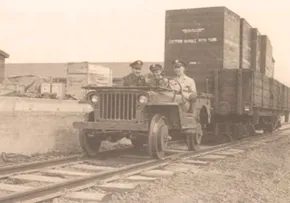
Railroads and Rough Terrain: The Jeep’s Versatility
The half-ton utility vehicle didn’t just drive on roads. It ran on tracks. Fitted with flanged steel wheels, jeeps became essential components of military logistics across every theater of World War II.
In the Philippines, a quarter-ton jeep pulled a 52-ton supply train. It covered 19 miles. Speed averaged 22 mph. That is heavy pulling for a light vehicle.
France saw jeeps operating along main rail lines. Australia used them as switch engines. These tasks required reliability. They demanded torque at low speeds. The Jeep provided both.
Transport was another advantage. Amphibious landing craft carried them. Air drops deployed them. They arrived where trucks could not.
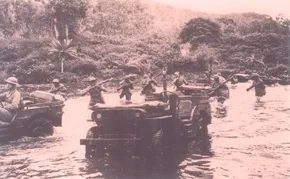
India’s new route replaced the Burma Road. The terrain was steep. The jungle was dense. A Jeep became the first motor vehicle to conquer this path. It proved the platform’s extreme durability.
The Jeep’s War of Attrition in Burma
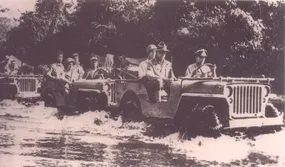
The docks at Rangoon were a graveyard of potential. As the Japanese front pushed closer, hundreds of jeeps sat idle, their engines cold, waiting to cross into China for Generalissimo Chiang Kai-shek. But giving up the hardware wasn’t an option. Commanders made a desperate call to offload the vehicles to British troops and any available driver willing to head north. The result wasn’t just logistics. It was survival.
A. Wade Wells captured the chaos in his accounts. These vehicles didn’t just drive; they struggled. They slogged through rice paddies so thick they felt like glue. Liaison missions turned into recovery operations, with jeeps yanking stalled trucks and artillery guns out of muddy ditches. They ferried machine gunners to the front lines, returning to base bodies pockmarked by sniper fire. When panic erupted, these same rugged trucks became lifelines, ferrying terrified women and children to safety zones. They didn’t just transport goods. They made history.
The performance of the Willys MB and Ford GPW was borderline supernatural. One high-ranking Army officer put it bluntly: the quarter-tonner could do anything except swim or climb a greased pole. It wasn’t hyperbole. War correspondent Ernie Pyle, watching from the sidelines, noted the sheer reliability of the vehicle.
“It does everything. It goes everywhere. It’s as faithful as a dog, as strong as a mule, and as agile as a goat.”
Pyle observed that jeeps constantly carried twice their designed load. They kept moving. The ride was brutal, sure. But once you got used to the bone-jarring suspension, it was bearable.
This reputation cemented the jeep in American folklore long after the ink dried on the surrender documents. The legend wasn’t built on specs alone. It was built on stories like the one from 1944. During the Battle of the Bulge, a Belgian sentry at a checkpoint waved down a jeep. Three men inside wore U.S. Army uniforms. The sentry spoke German. He demanded their immediate surrender.
How did he know they were impostors? The Belgian’s logic was simple. The colonel was riding in the back seat. The aide was driving. Real American colonels drove. Real aides rode next to them. And certainly, an American colonel never sat in the back. It gave him hemorrhoids. The sentry knew his hierarchy. He knew his jeep.
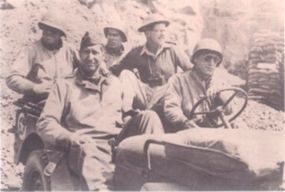
The war in the Pacific wasn’t just about open battles. It was about sudden violence in the jungle, and one specific incident captured that terror better than any report. Homer Bogart, writing for the New York Herald Tribune, was embedded with General Douglas MacArthur’s forces as they pushed toward Manila. He wasn’t just observing; he was riding in the thick of it.
The column was a formidable looking thing. One light tank led the way, supported by six jeeps mounting .30 caliber machine guns. A half-track brought up the rear. They were moving south on the Manila Road, aiming for Angeles, a town 48 miles away. Bogart rode in the half-track, sandwiched between the tank ahead and the rest of the jeeps behind. They had already passed the Mavalacat airfield, its ground littered with the twisted wreckage of Japanese planes. Now, they were speeding across no-man’s land—dried rice paddies and sparse grass huts.
Corporal Bob Lucked, a St. Louis native riding in a lead jeep, shouted over the engine roar. “O.K.! From here on it’s all Nips! Shoot anything that pops out!”
Then the world narrowed to a curve.
The Roadblock at Quail
The road bent gently near Quail. Around that bend, the lead tank slammed to a halt. Dust billowed. The radio crackled with a terse message from the tank commander: “Roadblock 200 feet ahead.”
A stout, red-faced second lieutenant hopped into the half-track’s radio compartment. He snatched the mouthpiece, his face flushing darker with anger. “That block wasn’t there yesterday,” he growled. “Send jeep five ahead to investigate.”
Jeep five, a soft-skinned vehicle with no armor, was ordered into the kill zone.
What happened next defied logic. The tank suddenly lurched. A cloud of black smoke and dust engulfed it. Then, the radio went dead.
Silence lasted less than a second before chaos erupted. Snipers opened fire from every thicket and shed on both sides of the road. Grenades detonated nearby. A mortar shell burst just 100 feet behind the half-track, shaking the vehicle to its core. It was a classic ambush. The column was pinned.
Indecision in the Face of Fire
For a frantic moment, command broke down. The red-faced lieutenant wanted to pull back, to bring up mortars and level the position. Sergeant Ralph Nyquist, the radio operator from Marquette, Michigan, disagreed. He argued for rushing forward to save the trapped tank crew.
The lieutenant didn’t wait for consensus. He looked at Jeep five—the unarmored vehicle ordered to scout the road—and waved frantically.
“Well, hell,” he shouted, his voice cutting through the noise. “Get that No. 5 jeep up there. It’s their job!”
He was ordering three men in an open jeep, with no protection, to drive straight into a pre-sighted kill zone. It was suicidal. It was also necessary.
The Miracle at the Bend
Bogart’s account doesn’t end in tragedy. That’s the part that still surprises you.
The other jeeps in the column didn’t freeze. They laid down a curtain of machine-gun fire, suppressing the enemy positions. The half-track, under heavy fire, managed to inch forward toward the stricken tank. The tank crew, trapped by the debris and smoke, was pulled to safety.
The entire crew of the lead tank survived.
It was a close call. A brush with death measured in feet and seconds. But it highlighted a hard truth about the vehicle that would define modern warfare. The jeep was versatile. It was brave. It had performed amazing feats across continents. But it was also soft.
Despite its heroics at Quail, the jeep had serious shortcomings. You can read about those flaws on the next page.
For more information
The Reality of the Ride
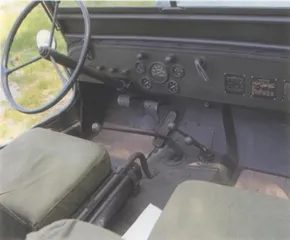
Comfort was never on the list. The hand brake barely functioned, and sitting in the thing was an exercise in torture. Ernie Pyle might have called it a divine instrument, but your back wouldn’t agree. You had two options: sit bolt upright or slouch until your spine hit the middle. Both positions guaranteed hemorrhoids. Army medics had a name for it. “Jeep disease.”
Performance was a different story. The vehicle was lively. Maneuverable. Dangerous.
Bill Mauldin captured this in a * Willie and Joe* cartoon. Two GIs stare at a junkyard of twisted metal. The caption? “I’ll be darned! Here’s one wot wuz wrecked in combat.”
It happened. Soldiers pushed it beyond sane limits. Experienced troops knew it went where mules wouldn’t. A mule bails if the rider loses judgment. A jeep just keeps going.
The Enemy Tries to Copy
Predictably, the Germans saw the utility. They built the Kubelwagen. It was a militarized Volkswagen. It looked similar. It failed.
It lacked four-wheel drive. The engine produced a fraction of the power found in the Willys “Go-Devil.” It was never a serious threat to the original.
Lightning Strikes in the Desert
The war in North Africa turned these small trucks into weapons of chaos. Major David Sterling led some of the most audacious raids.
One target: a German airfield.
Sterling assembled 18 jeeps and their crews. They slipped through the desert undetected. Then they struck. Flying wedge formation. Machine guns blazing. The Germans didn’t see them coming.
Seconds later, the jeeps vanished back into the sands. The airfield was wrecked. 25 aircraft destroyed. 12 more damaged beyond repair.
Montgomery’s Fuel Ambush
Major General Bernard Montgomery knew how to use the jeep. He credited it for breaking Erwin Rommel’s forces.
The plan was simple. Cut the fuel.
Montgomery sent a fleet of jeeps behind enemy lines under cover of darkness. They waited during the day. They moved at night. They found a Nazi supply artery. The target: fuel tanks carrying gasoline for Rommel’s tanks.
The convoy approached. The jeeps accelerated.
They wove through the trucks. High speed. Chaos. The line of vehicles erupted in flames. Before German forces could react, the jeeps were gone into the night.
The Turning Point
The next morning, Rommel’s tanks arrived. They expected fuel. They found nothing.
The shortage was so severe that retreat was impossible. The Allied advance was unchecked. Germany lost the Battle of El Alamein. It was the critical turning point in the North African campaign.
Two and a half weeks later, King George VI knighted Montgomery.
A Divine Instrument
The jeep was squat. Stubby. Ugly. Almost cute.
It was the product of Karl Probst, Barney Roos, and countless unnamed contributors. Ernie Pyle called it a “divine instrument of wartime locomotion.” Lieutenant Colonel Manuel Conley summarized it better: “Versatile, reliable, and virtually indestructible… one of World War II’s most enduring legends.”
They didn’t know it then. But the wartime success was just the beginning.
Next: the Seep Jeep. Built for the sea.
For more information on Jeeps, see:
-
History of Jeep
-
Consumer Guide New Jeep Prices and Reviews
-
Consumer Guide Used Jeep Prices and Reviews
1942 Seep Jeep
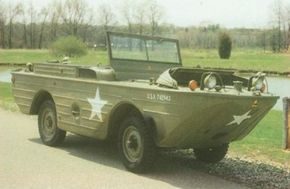
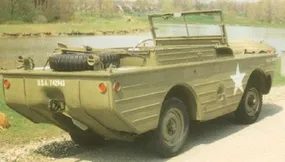
The idea was seductive. A Jeep that didn’t just crawl through mud but actually swam through it. The Army had toyed with the concept of an amphibious utility vehicle for years. But then came the war. Suddenly, prototypes were hitting the water. Among them was the GP-A: General Purpose-Amphibious. Or, as it became known to history, the 1942 Seep Jeep.
Design Flaws and Missing Blueprints
Marmon-Herrington led the design charge. They partnered with the legendary marine architecture firm Sparkman and Stephens. Their canvas? The Ford GPW. The backbone of the famous WWII Jeep.
The hulls went through paces. Scale models first. Then full-size versions. But here is the kicker: there was no actual Jeep on hand for the experiments. The engineers worked from a table of specifications. Those specs were wrong. They underestimated the vehicle’s weight by roughly 30 percent.
This error wasn’t a minor typo. It crippled the final product’s performance. The hull was too small for the actual mass of the vehicle.
Political Pressure Over Engineering Rigor
Testing took place in the Huron River near Dearborn. Service officers watched. They offered comments. But let’s be clear: proper endurance tests had never been conducted. Nobody knew if the thing would hold together over a long haul. Some officers worried. They saw the standardization of the design as premature. Risky.
But time was not on their side. It was February 1942. Two months had passed since Pearl Harbor. The clock was ticking. Field generals, including General George Marshall, declared the need for water-going Jeeps urgent. Desperate times call for desperate measures.
Ford added fuel to the fire. The automaker pressured the government for a contract. Their argument? If the project didn’t start immediately, production facilities might vanish. Or be reallocated. The threat of lost capacity worked.
A Promising Concept with a Heavy Foot
The potential looked huge. Popular Science described the Seep as “essentially a specially equipped jeep with a steel hull built around it.” The magazine noted the transition was seamless. The driver could move from land to water with a single minor adjustment. The car didn’t even have to stop.
“Its possibilities as a reconnaissance vehicle are startling.”
Imagine the tactical advantage. An advance patrol creeping down back roads to a river. Scouting the shore. Then crossing at any point to investigate enemy territory. They could race back with intelligence. Speeds upwards of 60 mph on good roads.
The logistics were staggering. Twenty of these amphibious Jeeps could ferry 100 fully armed men across water. They could strike the enemy from the rear before they even knew the tide had turned.
It sounded perfect on paper. In the water, it was a different story.
The GP-A’s Fatal Flaws and a Global Detour
The cockpit layout mirrored the standard land-based jeeps, but with two critical additions positioned just aft of the transmission shifter. One lever controlled the propeller for aquatic thrust; the other ran the bilge pump. It was a clever, if cramped, solution for a vehicle trying to live two lives.
The Army moved fast. An April 11, 1942 letter of intent triggered an initial production run of 5,000 units. But the line stopped abruptly after 12,778 vehicles rolled off the assembly floor. Why? The German Schwimmwagen was holding its own in the mud and water, even if their Kubelwagen was underpowered nonsense. The failure wasn’t mechanical incompetence. It was bureaucratic negligence.
According to a 1971 Army Materiel Command pamphlet cited by Denfield and Fry, the project collapsed due to a cascade of administrative errors: insufficient testing of early models, lax inspection, no continuing development plan, inadequate training, and, most damningly, a failure to consult the troops who would actually use them before mass production began. The military rejected the GP-A as a technical and tactical failure.
Civilians saw something else entirely. They saw potential.
Ben Carlin, an Australian engineer, was one of them. He first spotted the GP-A while stationed in India. His assessment was simple: “You know, with a bit of titivation you could go round the world in one of those things.”
After demobilization, Carlin crossed the Atlantic to buy a GP-A from an Army surplus sale. He named it Half Safe. After extensive modifications, he and his American wife launched from Halifax, Nova Scotia, in July 1950.
The route was audacious. They sailed the Atlantic, stopping at Madeira and Cap Juby in Spanish Sahara. From there, they drove and sailed through Gibraltar and eight Western European nations to London. The vehicle sat in a garage for two years while Carlin rebuilt it for the second leg: London to India, Australia, Japan, San Francisco, and finally New York.
The human element didn’t survive the journey as well as the vehicle. Elinore Carlin jumped ship in India and returned to the U.S. to file for divorce. Ben flew home to Perth to recruit a young yachtsman. The voyage continued, but Carlin’s irascible temper drove his crew away. His first helper left in Kagoshima, Japan, in late 1956.
Boye Lafayette DeMente, an American, took the helm in early 1957. Four months later, Half Safe reached Anchorage, Alaska. DeMente, sick of Carlin’s hostility, flew home to Phoenix. Later reports confirmed Carlin had finished the tour alone, arriving in New York.
Carlin eventually retired to Perth, working at a yacht harbor until his death, often lecturing about Half Safe.
The GP-A was a compromise that satisfied neither domain. Too small and slow for serious boating, too large and clumsy for effective jeep duty. It represented the worst of both worlds. One has to wonder if standard development and testing protocols might have saved it. Or if it was doomed from the start.
For more information on Jeeps, see:
-
History of Jeep
-
Consumer Guide New Jeep Prices and Reviews
-
Consumer Guide Used Jeep Prices and Reviews