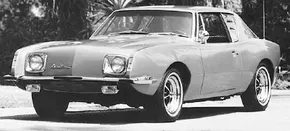
Studebaker packed up and headed to Canada in late 1963. They gave up on the auto business entirely by 1966. But before the South Bend, Indiana plant went completely dark, Leo Newman and Nathan Altman had already moved in to save the brand’s most intriguing creation: the Avanti.
Raymond Loewy’s design team had crafted a car that failed in the showroom but succeeded with enthusiasts. It was the only Studebaker in two generations to spark that kind of fever. Before Studebaker left the mainstream market, the Avanti had shattered nearly every major United States Auto Club speed record.
Newman and Altman owned one of South Bend’s oldest Studebaker dealerships. They knew the Avanti was too special to die. So, they bought the name. They bought the production rights. They bought the tooling. They even secured a portion of the century-old plant where the cars were originally born. By 1965, they were rolling out the Avanti II.
Their goal was 300 units a year. They never hit that number. But the output was steady. Enough to keep the lights on. Enough to build a legend.
The Commercial Shift
The original Avanti was a disaster for Studebaker. The Avanti II was a commercial success. Why? The fiberglass body eliminated the need for expensive sheetmetal dies. Newman and Altman had always wanted exclusivity, something the mass-market Studebaker couldn’t offer. Now, they could build these things carefully. Largely by hand on a small assembly line. Every car became a tailor-made experience.
Well-heeled buyers easily pushed the $6,550 base price past $10,000.
The options list read like a gearhead’s wishlist:
* Hurst four-speed manual transmission
* Power steering and air conditioning
* Electric window lifts
* Tinted glass and AM/FM radio
* Eppe fog or driving lights
* Limited-slip differential
* Magnum 500 chrome wheels
* Firestone bias-ply or Michelin radial tires
Interiors started with vinyl. But for $200 extra, you could get textured “Raphael vinyl.” Genuine leather seat and door trim? That was $300. Full leather interior ran $500. Paint colors? Anything you wanted. Interior trims later followed suit. Sure, some combinations looked bizarre. But that “custom-built” aura helped sales.
Mechanicals and Handling
Early Avanti IIs used the original Avanti’s modified Lark convertible frame. Studebaker’s own V-8s were gone by then, so Newman and Altman did what Studebaker had done before them. They swapped in a 327-cubic-inch Chevrolet small-block. Tuned to 300 horsepower, just like the Corvette.
When Chevy introduced the 350-cid engine in 1969, the Avanti got it too. Rated power stayed the same. Transmissions were either a fully synchronized Borg-Warner four-speed manual or a “Power-Shift” automatic. This automatic allowed manual hold of first and second gears. A nice touch for enthusiasts.
Visually, the body remained almost identical to the original. The differences were subtle but important:
* A more level stance. Altman’s customers hated the original’s marked front-end rake.
* Avanti logos now carried Roman numeral IIs.
* Reduced-radius wheel openings.
Corvette power meant fine performance in a sleek four-place package. An automatic car could hit 0-60 mph in under nine seconds. Top speed? 125 mph with a 3.54:1 rear axle.
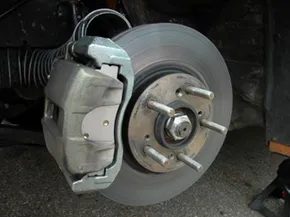
The Chevy engines were lighter than the old Studebaker V-8s. This shifted the front/rear weight balance from 59/41 percent to 57/43 percent. Better balance. Better handling. Power front-disc/rear-drum brakes resisted fade. They provided quick deceleration of nearly 1g in 80-mph panic stops. Newman and Altman cared about safety as much as straight-line speed.
Personal Luxury
Because they were custom-built, the Avanti II cost more than Studebaker’s version. It competed in Cadillac Eldorado territory. Not Chrysler country, like the $4,445 original. Newman and Altman realized this meant a change in market orientation. They pitched the II more on “personal-luxury” than raw performance.
And indeed, the car shined on the open road. Magazine testers praised its safety. Its quietness. Structural rigidity. A firm but comfortable ride.
“In this day of great concern over automotive safety,” wrote John R. Bond in 1966, “the Avanti II should make new friends, for obviously there was more thought given to safety in its conception than in most American cars … It’s a better car than it was three years ago.”
The Avanti II had found its niche. But selling custom luxury cars to a small group of enthusiasts was a fragile business model. It worked for a while. But keeping the lights on required more than just a great car. It required volume. And volume was something Newman and Altman couldn’t quite capture on their own.
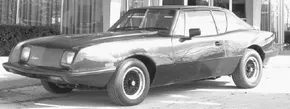
The 1970s were a slow bleed for the Avanti II. The car itself barely changed, forced only to adapt to the crushing weight of federal safety and emissions mandates. The most visible casualty was the bumper. To satisfy the 1973 standard requiring bumpers to survive a five-mile-per-hour impact without damage, the sleek front end was grafted with a massive, rubber-tipped “cow catcher.” It destroyed the car’s lines. It looked ugly. It was depressing.
The Avanti Motor Corporation was small enough to dodge other requirements, specifically the 2.5-mph side-impact door beam mandate. But the engine bay told a darker story. For 1973, GM swapped in the detoxed 400 cubic-inch V-8. By 1974, with net horsepower ratings in effect, that big block produced a measly 180 SAE net horsepower. The figure was anemic compared to its 245 gross rating. The 350 small block returned in 1977 and stayed standard well into the early 80s.
Nate Altman’s death in 1976 left a vacuum. Without his relentless drive, the company seemed to lose its soul. Workmanship slipped. Prices soared, fueled by inflation that broke $12,000 in 1976 and pushed past $23,000 by 1982.
Federal mandates forced interior changes, mostly to the switchgear. These updates felt rushed, lacking professional engineering care. On the bright side, Avanti slashed its endless options for paint and trim. Fewer choices meant lower inventory costs and better build quality. But little effort went into updating the concept itself. The car survived. The company limped along. Neither was thriving.
Then came Stephen Blake.
Blake was a young construction tycoon from Washington, D.C. He had been trying to buy Avanti for years, but the Altman family and the board kept rebuffing him. Finally, they agreed to talk. Just days later, Altman died. Negotiations stalled. It took another seven years before Blake officially took over as owner, president, and CEO in October 1982.
He arrived in South Bend like a storm. Blake tore into the crumbling remains of the old Studebaker plant. He reorganized workflows for efficiency. He fought the UAW. He fired many traditional dealers, replacing them with established Cadillac stores in major markets. It was a businesslike, aggressive move.
Recruiting new engineering talent brought tangible improvements. They switched to premium DuPont Imron paint, the same stuff used on Indy cars. They integrated more GM components. Body-color bumpers became an option. Black trim replaced the chrome clutter. Square headlights replaced the round ones. The interior got a revamp. Minor chassis tweaks improved handling. Buyers could even opt for a 190-horsepower 305-cid V-8 from the Chevy Camaro Z28, a significant jump from the standard 155-horsepower unit.
The name lost its Roman numeral. It was just Avanti again.
These changes culminated in a special 20th Anniversary coupe for 1983. It came in solid black, white, red, or silver. It was the most complete Avanti in years.
Blake wanted more. He unveiled a prototype for the first Avanti convertible in late 1983. He hired Herb Adams to design a new drop-floor chassis with independent rear suspension. He even entered an Avanti “GT” in the 1983 Pepsi Challenge 24-hour endurance race at Daytona. It finished 27th out of 30 finishers, starting from a field of 79. Barely competitive, but the fact that it raced at all suggested the brand was waking up.
But Blake moved too fast. The race-car paint he used started peeling. Fixing it cost a fortune. By early 1985, he was deep in a credit crunch. His primary lender, a local South Bend bank, tightened the noose. Blake had spent himself out. He was forced to sell.
For more on defunct American cars, see:
-
AMC
-
Duesenberg
-
Oldsmobile
-
Plymouth
-
Studebaker
-
Tucker
Avanti Changes Hands
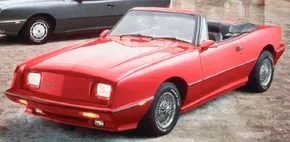
Michael Kelly didn’t just save the Avanti; he bought it for pennies on the dollar. In April 1985, the 36-year-old Texas ethanol magnate snapped up R.J. Blake’s failing interests for a staggering $725,000. This wasn’t a rescue mission born of nostalgia—it was a business acquisition. Operating under the banner of the New Avanti Motor Corporation, Kelly hit the ground running. By 1987, he was rolling out both the classic coupe and a new convertible variant, though 1986 saw zero production as the transition took its toll.
The cars themselves got a refresh. New seats. A “cockpit” style dashboard. Redesigned bumpers. Better cooling and climate control systems. The price tag for the coupe hovered around $30,000. The convertible? A premium $10,000 on top of that.
Kelly wasn’t satisfied with keeping the flame alive in South Bend. He wanted scale. He wanted modernity. So, in August 1987, he moved operations to a new plant in Youngstown, Ohio. It was the final breath of the Studebaker factory era. The Avantis were still largely hand-built, but the new facility promised quality control and volume leaps Kelly boldly projected would hit 1,000 units annually.
To get there, he stretched the Avanti lineup beyond recognition. The original design was so iconic, in fact, that purists were appalled when Kelly introduced three new body styles: a Luxury Sport Coupe with a 117-inch wheelbase, a four-door Luxury Touring Sedan on a 123-inch chassis, and a massive limousine stretching 174 inches.
Loewy, who had mocked up similar sedan concepts for Studebaker in the mid-60s, was dead by late 1987, so he couldn’t argue. The Luxury Sport Coupe (LSC) at least retained the aesthetic integrity of the original coupe. It looked right. It felt right.
But the real flash was the 1988 Silver Anniversary edition. Forty LSCs and fifty commemorative coupes were built to mark the Avanti’s 25th birthday. These weren’t just badge jobs. They came with Paxton superchargers from the Granatelli brothers, boosting the Chevy 305 V-8 from a pedestrian 170 bhp to a muscular 250 bhp. Painted in pearl silver with black or red leather interiors, these cars were loaded to the gills: TV entertainment centers, compact disc players, cellular phones, power moonroofs, and fortified suspensions with fat tires on alloy wheels. Front spoilers, rocker-panel skirts, and reshaped bumpers completed the look.
Production actually exceeded Kelly’s initial projections. New Avanti built 300 cars in 1987, beating the 50% growth target Blake had dreamed of but never achieved. Kelly, however, had a habit of overreaching. Legal headaches with former backers and the sheer weight of his ambitions forced his hand. In August 1988, he sold the company to his principal partner, J.J. Cafaro, a shopping-mall developer who rebranded the operation as Avanti Automotive Corporation.
Cafaro dropped the LSC and the limo but resurrected the four-door Touring Sedan for 1990. The wheelbase was trimmer at 116 inches, and the backstory was pure marketing fiction: Cafaro claimed the body was molded directly from original Loewy sedan mockups that had been rotting in a South Bend attic, gathering dust and pigeon droppings for decades. Whether true or not, the resulting four-door was undeniably better built than its predecessors, even if it lacked the coupe’s timeless allure.
Materials were where the real innovation lay. High-tech composites replaced steel for the roof and door beams. Kevlar substituted for fiberglass in the floorpan, bumpers, and body mounts. It was a shift toward durability that the fiberglass-heavy earlier models desperately needed.
Under Cafaro, production stabilized at 150 units in 1988 and climbed to roughly 350 in 1989. Most were still the standard coupe. The 1990 target was 500, but reality set in. The plans for 1991 were audacious: a switch to the 245-bhp Corvette L98 engine, a new Callaway Technologies-engineered chassis, all-independent suspension, and four-wheel disc brakes borrowed from the Ford Thunderbird Super Coupe.
Then the recession hit. Hard. Industry-wide sales plummeted. Avanti Automotive Corporation didn’t just miss its 1,000-car goal for 1991; it collapsed. The company filed for bankruptcy, producing only 15 cars that final year. Mostly convertibles. With minor cosmetic tweaks and material swaps. The end wasn’t a bang. It was a whisper.
For more on defunct American cars, see:
-
AMC
-
Duesenberg
-
Oldsmobile
-
Plymouth
-
Studebaker
-
Tucker
The Avanti Experimental AVX
Robert Lucarell didn’t walk away. While the Cafaro bankruptcy papers were being signed, he stayed put in the Youngstown plant. He became a caretaker of sorts, selling handfuls of leftover parts to die-hard owners who still believed in the badge. He insisted the company wasn’t dead. “Avanti is still a going business,” he told Automotive News in May 1994. “I am here selling parts and helping people fix their cars over the telephone every day.”
One of those people was Jim Bunting. A retired advertising executive from Lancaster, Pennsylvania, Bunting had bought his first Avanti in the mid-eighties. He wasn’t just a buyer; he was a fan. When he saw a two-seat Avanti concept drawn by Bob Andrews—a member of the original Loewy team—he didn’t just admire it. He decided to build one.
He didn’t want a crude replica. He wanted the real deal. So, he reached out to Tom Kellogg. Kellogg had handled the detail work and most of the renderings for the original project. Kellogg obliged with drawings for the two-seater but sent along a sketch with a playful note: “Let’s do this one next.”
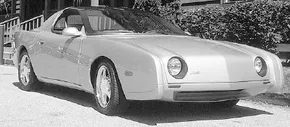
The sketch showed a modernized Avanti. It was the evolution Studebaker might have pursued if they hadn’t folded. Bunting loved this “Avanti for the ’90s.” He wanted it real.
To keep costs from spiraling, he chose a 1994 Pontiac Firebird as the donor. Smart move. The Firebird’s outer body panels were easy to swap for a new Avanti-look fiberglass skin custom-tailored by Kellogg. The transformation happened at Bill Lang’s shop in Harrisburg, Pennsylvania. It was finished in January 1996.
Other people saw the car. They wanted one too. Bunting showed it at a major swap meet. It was still in primer. It was rough. The favorable inquiries convinced him to offer copies.
After further tweaks by Kellogg, the finished car was unveiled in June 1997. The venue was the combined meet of the Studebaker and Avanti clubs. The name, however, was tricky. Rights to “Avanti” were in limbo. So, the car was christened AVX. Stands for AVanti eXperimental.
Bunting incorporated AVX Cars in Lancaster. He contracted with Lang’s Custom Auto to convert post-1992 Firebirds. The pace was two a month. The initial price was $33,900. Plus the donor coupe or convertible. Echoing Newman & Altman, AVX owners could have their car built any way they liked.
“Nothing is too outrageous,” Bunting told Collectible Automobile® magazine.
Several ready-made packages were contemplated. Two for brakes. Three for suspension. Four engine upgrades. One option was a Paxton-supercharged Corvette LS1 V-8. Output? 455 bhp. Up to an incredible 650.
The AVX arrived just in time for the late-1990s luxury-car sales boom. But running a car company, even a tiny one, was more than Bunting bargained for. After overseeing the build of three prototypes—a coupe, a T-top coupe, and a convertible—he sold AVX Cars to investor John Seaton.
Seaton didn’t stay solo for long. He teamed up with Michael Kelly. Kelly had never lost his enthusiasm for things Avanti. In August 1999, they formed a new Avanti Motor Corporation in Villa Rica, Georgia. Just west of Atlanta. Kelly was chairman. Seaton was CEO.
The new concern managed to acquire the assets of all the preceding Avanti companies. They even got artifacts from the Studebaker days. Title to the Avanti name and logo followed. It would soon grace converted Firebirds based on the AVX design.
For more on defunct American cars, see:
-
AMC
-
Duesenberg
-
Oldsmobile
-
Plymouth
-
Studebaker
-
Tucker
Michael Kelly Revives Avanti
The Avanti Revival: From Firebird Chassis to Ford Platforms
The new facility wasn’t small. Housed in a 74,000-square-foot former hosiery mill, the Kelly/Seaton operation kicked off production with 2001 model year Avantis. They didn’t start with a bang; they started with 52 units. Convertibles and T-top coupes, both moving under power from a 305-horsepower GM 350-cid V-8. Drivers could choose between a four-speed automatic or a five-speed manual. It wasn’t a complete ground-up redesign. Avanti kept the stock Firebird features, including antilock brakes.
The pricing was steep. $79,000 for the coupe. $83,000 for the convertible. But there was an option that changed the math entirely. A supercharger cost an extra $10,000. Add that to the base engine, and you were looking at 470 horsepower. That was a serious amount of push for a lightweight body.
General Motors pulled the plug on the Firebird after the 2002 model year. The Avanti team saw a lifeline. They stockpiled rolling chassis to keep the assembly lines moving for years. Production didn’t stop. It actually picked up steam.
Custom Car Craftsmanship
The 2005 model marked a fundamental shift. The Avanti was reengineered from the ground up, this time around the S197 Ford Mustang platform. Michael Kelly led the charge. His team was small—just 36 employees—but they were versatile. Accountants and craftspeople were cross-trained. Everyone pitched in.
The result? The new Avanti looked nearly identical to its Firebred-born predecessor. It was a testament to their skill. But the changes were mandated by law. A unique instrument panel with integrated airbags was necessary to meet new federal safety and emissions standards. Seaton had left the company in late 2001. Leonard Kelly, Michael’s father, took over as president.
Only a convertible was offered for 2005. Power came from the 300-horsepower 4.6-liter V-8 found in the Mustang. You could spec a manual or an automatic. Other highlights included all-wheel antilock disc brakes, traction control, and a Ford Traction-Lok limited-slip rear differential. The rolling stock sat on 17-inch polished wheels. Inside, leather and full power accessories were standard.
The price dropped to $63,000. It should have been a bargain. Yet, only 46 units sold. Why? The brand had become a whisper. Sales were still driven by word-of-mouth, direct from customer to factory. Many potential buyers simply didn’t know the car still existed.
Diversifying the Lineup
Sales manager Dan Schwartz had seen enough. They needed to reach a broader audience. For 2006, Avanti added a V-8 coupe. They also introduced a lower-priced entry point: a coupe and convertible powered by the base Mustang’s 210-horsepower 4.0-liter V-6. Prices ranged from roughly $65,000 to nearly $76,000 depending on spec.
The goal was aggressive. Avanti hoped to sell between 75 and 100 units total. They were also eyeing a special GT model for July 2006, potentially supercharged to around 390 bhp. But Michael Kelly knew a single model line wouldn’t sustain the company long-term. He needed history on its side.
He formed a division called SVO. The mandate? Create two “component cars.” These were sports racers modeled on the late ‘50s Lister-Jaguar and the early ‘60s Porsche 904. Chuck Beck, known for his high-quality Porsche Spyder replicas, handled the engineering.
The SVO cars used Avanti-fabricated frames. Suspension came from the Corvette C4. Powerplants were GM small-block V-8s. Being classified as “owner-assembled” was a strategic masterstroke. It exempted them from costly federal regulations, helping the bottom line. Production was limited to about 25 units per year. They were built for vintage racing but could be licensed for street use.
The Studebaker Legacy Returns
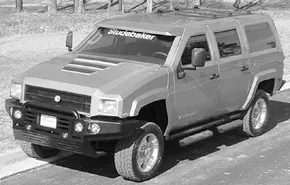
There was another twist in the tale. A sport-utility wagon reviving the historic Studebaker name. Planned for mid-2006 release, this Avanti Studebaker was based on the Ford Super Duty truck chassis. It was huge. Roughly the same size as the GM-marketed Hummer H2.
It looked the part too. Boxy. Purposeful. Military-inspired. The resemblance caused legal headaches when Avanti showed a concept in 2004. The wrangling settled, and the SUV went forward. Buyers could choose a gasoline V-10 or a turbodiesel V-8, both sourced from Ford.
The price tag? $75,000 to $80,000. High-end territory. But it fit the brand’s ethos. Avanti aimed to produce unique, handcrafted automobiles for discerning clients. The goal was the utmost expression of individuality.
Avanti survived into the twenty-first century. Its future looked brighter than it had since Leo Newman and Nate Altman picked up where Studebaker left off. Considering the hurdles, the near-deaths, and the pivots, that’s a remarkable achievement. The road ahead is long, but the cars are still rolling.