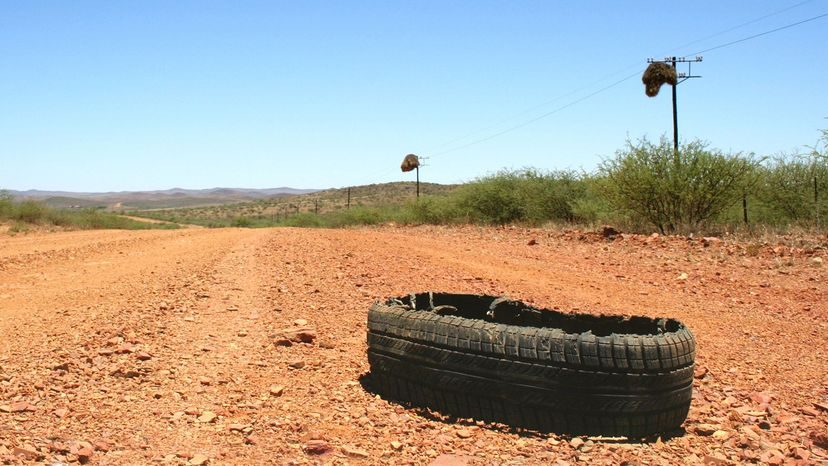
Tire shreds are common enough to be background noise on the interstate. But come May, highways transform into dumping grounds for shredded rubber. It’s a predictable cycle known as “blowout season.” The problem doesn’t start in June. It builds.
Heat and neglect don’t get along.
Garrett Townsend, public affairs director for AAA, explained the physics of this seasonal catastrophe. Driving on underinflated tires causes them to overheat. Combine that with asphalt temperatures exceeding 100 degrees, and you have a recipe for disaster. The bonds inside the tire break down. The sidewalls fail. The car becomes dangerous.
This isn’t just an inconvenience. The National Highway Traffic Safety Administration (NHTSA) estimates 11,000 tire-related crashes occur annually. In 2020 alone, 664 people died. Not every fatality involved a blowout. But the data is clear. Poor maintenance kills.
The Physics of Flex and Heat
When a vehicle moves, the tire sidewalls flex. They bend. They grab the asphalt. This friction generates heat.
If your pressure is correct, the heat is minimal. The structure holds.
Low pressure changes everything. The sidewalls must flex more to support the vehicle’s weight. More flex means more heat. Add summer sun. The internal heat rises until the structural integrity fails. You get a blowout.
You can prevent this. You just need to check your tires.
How to Properly Inflate and Check Tires
Most drivers guess. That’s a mistake. You need hard data.
AAA recommends these steps to avoid underinflation:
- Check the placard. Look at the driver’s doorjamb or the owner’s manual. This lists your vehicle’s specific recommended pressure.
- Inflate monthly. Tires lose about 1 psi per month. Pressure also drops 1 psi for every 10-degree Fahrenheit drop in air temperature.
- Use a gauge. Buy a quality tire gauge. Don’t trust the air station’s built-in meter. It’s often inaccurate.
- Carry a compressor. A portable compressor that plugs into your car’s power outlet is cheap insurance.
Check pressure when tires are cold. If you’ve driven for three hours, the heat inside the tire will give you a false reading. Wait. Check. Inflate.
The Warning Signs You Shouldn’t Ignore
Your dashboard might tell you something is wrong. Newer vehicles have a Tire Pressure Monitoring System (TPMS). It lights up when pressure drops 25% below the safe level.
Don’t wait for that light.
By the time the warning illuminates, your tires are already dangerously low. You should be checking manually.
Inspect the tread. Look for bulges. Check for abrasions. Look for cuts. Impact damage from potholes or curbs weakens the structure. If you see any of these, replace the tire.
What to Do If You Blow Out
It happens. The steering wheel shakes. The car pulls hard to one side.
Panic makes it worse. Stay calm.
“Maintain a firm grip on the steering wheel and straight a course,” Townsend advised. Don’t slam the brakes. Let the vehicle coast. Try to drop speed to 25 mph. Then, pull over to a safe spot.
Keep at least 5 feet of clearance from the roadway. Park. Engage emergency flashers. Get everyone out of the car. Move to a safe location. Call for assistance.
Is Your Tread Still Good?
Blowouts aren’t the only threat. Worn tread causes loss of control.
Firestone suggests a simple penny test. Insert a penny upside down into the tread groove. Look at Lincoln’s head.
If you can see all of his head, your tread is too low. It’s time for new tires. If his hair is covered, you’re likely okay.
Summer heat exposes every weakness in your tires. Don’t let negligence put you in the grave. Check the pressure. Inspect the tread. Drive safe.