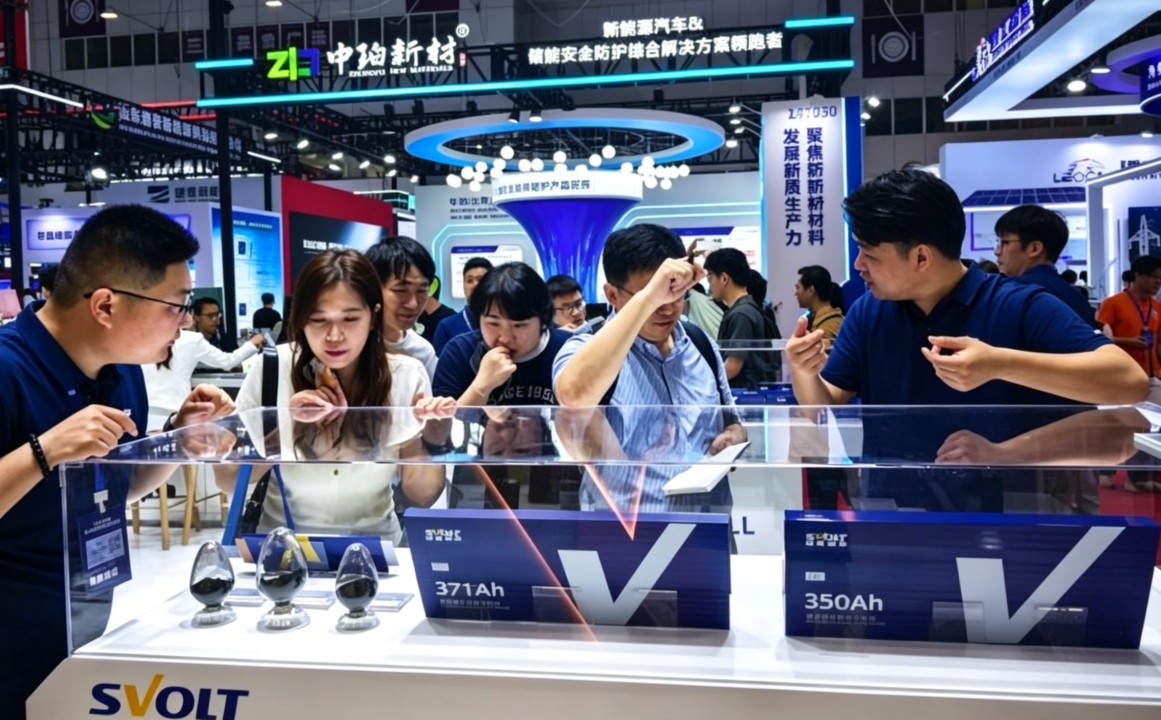
The show floors at the China International Battery Fair were packed. Not with flashy promises, but with people. 350,00 of them, technically. They swarmed through the Shenzhen World Exhibition & Conventioncentre between May 13 and 15, ignoring the glossy brochures for the machinery that actually keeps the lights on.
Sure, CATL and BYD were there. Obviously. Their booths drew the crowds like always. But the real story? It wasn’t about the cells. It wasn’t about hype.
It was about the tools. The supply chain. The mid-tier firms selling the industrial guts that make batteries possible.
The industry shifted from price wars to production scaling, certification, and manufacturing standards.
No more shouting matches over cents-per-watt. The mood was different in 2026. Or was it? Let’s stick to the facts. The talk was about delivery schedules. About compliance for overseas markets. About making stuff at a scale that doesn’t collapse under its own weight.
Solid-state needs solid tools
Two hundred companies showed up talking solid-state batteries. Sounds impressive until you look past the glass cases holding the prototypes.
The real money is in the dry rooms. The gloveboxes. The dispersing equipment. Microna, Hosong Group,GaoNeng ShuZuo — these names don’t get headlines. They sell the dry-electrode machinery needed for sulfide and halide lines. Why? Because everyone wants to build 400 Wh/kg batteries.
Gotion High-Tech brought out a 161 kWh pack. Weilan and China National Cell showed 400 Wh/kg samples meant for robots and flying drones.
Chemistry isn’t converging, either. Oxide, sulfide, halide — everyone is running parallel tracks.
There was a startup called Pure Lithium New Energy that stole some glances. They cut their battery. It kept working. They’re planning 500 MWh capacity. Ambitious.
Energy storage is getting standardized
If the EV battery aisle felt familiar, the energy storage section was a war zone. Or at least a tight oligopoly.
587 Ah. 588 Ah. The industry picked numbers and stuck to them.
CATL and Haisen are delivering the 587 Ah cells now. CALB, Rept Batero, Sunwoda — they’re aligning with the 588 Ah platform for 2026 launches.
BYD played its own game, pushing 2,715 Ah Blade batteries into grid projects. Huge.
Some smaller players tried to do something else. Changzhou Changseng pushed all-tab cylindrical designs. Zhongqi Xineng mixed in lithium-rich manganese.
Did you see the teardown?
Just after the show closed, someone pulled apart a BYD Blade pack. They froze it for forty hours. Then they took it apart. The disassemblers defended their eight-hour process against internet critics. It’s weird, right? Public durability tests are basically marketing now.
Sodium finds its corner
Sodium-ion batteries grew up a little.
Last cycle, everyone wanted them to kill LFP. This year? CATL, Pengwei, Na-Bat Group realized nobody’s replacing the lion king overnight. So they went where the lions weren’t looking. Two-wheelers. Starter lights. Small storage apps.
Density hovered above 100 Wh kg. Practical. Boring, even.
Meanwhile, carbon nanotube sellers partied while fast charging evolved.
Who won in April 2025? According to EV DataTracker, CATL still rules the roost. 29.04 GWh installed. 47.2 market share. BYD took second place with 10.2 GWh, sitting at 17.0%. Gotion, CALB, Evenergy, Rept Batero,Zengety, EnerG, Sunwoda and Swolt finished the top ten.
So what did CIBF tell us?
No magic bullet chemistry.
Just infrastructure. Chinese suppliers are selling the production tools to foreign automakers who are still debating the long game. They aren’t waiting. They’re building the machines that will build the machines.
Maybe that’s enough. Maybe it isn’t. The factories keep spinning regardless.