We have all been there. Lugging a mountain of grocery bags across the driveway, milk sloshing, fruit getting crushed. Or maybe it’s a stack of books that strains your back. Human bodies have limits. We aren’t built to haul infinite weight indefinitely.
Cars face the same hard physics. When you overload a vehicle, you aren’t just making the drive awkward. You are stressing the engine, transmission, brakes, and suspension. An overloaded truck puts everyone on the road at risk. It is a safety issue, not just a convenience one.
The key is understanding payload capacity. This term refers to the total weight a vehicle can carry. It includes cargo, but it also includes passengers. If you ignore the people in the seats, you will miscalculate your limits every time. Knowing this number prevents damage to your machine and keeps you alive.
But how do you find that specific number for your car? You cannot just guess. You need to look at the engineering limits.
The Math Behind the Load
To figure out how much your vehicle can actually handle, you need two numbers. They are usually found on a sticker inside the driver’s side door jamb or in the owner’s manual.
- Gross Vehicle Weight Rating (GVWR) : This is the maximum safe weight of the entire vehicle. This includes the vehicle itself, all fluids, fuel, passengers, and cargo.
- Curb Weight : This is the weight of the vehicle with standard equipment and full fluids, but without passengers or cargo.
The difference between these two numbers is your available payload.
Payload = GVWR – Curb Weight
This calculation gives you a baseline. However, it is not a suggestion. It is a hard limit. Exceeding it compromises braking distance and handling.
Why Passengers Count as Payload
Many drivers forget that the people in the car are part of the weight equation. A full tank of gas adds weight. A pet in the back adds weight. Every person adds significant weight.
If you are carrying five adults and a full load of camping gear, you might exceed the payload capacity even if the cargo itself seems light. The passengers are payload. Always factor them in before loading the trunk.
Where to Look for Your Numbers
You do not need a degree in engineering to find these figures.
- Door Jamb Sticker : Open the driver’s door. Look for a yellow or white sticker. It lists the maximum weight the vehicle can safely carry.
- Owner’s Manual : The technical section will detail the GVWR and curb weight for your specific trim level.
- Tire Sidewall : This shows the maximum load each tire can handle. It is a secondary check, not the primary limit.
The Danger of Overloading
Why does this matter? Physics does not care about your intentions.
- Braking : Heavier vehicles take longer to stop.
- Suspension : Overloaded springs sag. This changes the alignment and reduces tire contact with the road.
- Tires : Overloading tires causes them to heat up. Heat leads to blowouts.
- Transmission : The transmission works harder to move the extra weight. It overheats. It fails.
You might think you can squeeze a little
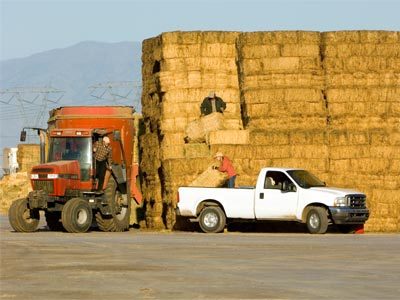
Two numbers are needed to determine how much you can carry. There are only two of them. The first is the Gross Vehicle Weight Rating (GVWR). The second is your curb weight. that’s it. This is not rocket science. It’s arithmetic. But get it wrong, you’re looking at blown tires, a sagging suspension, or a vehicle that handles like a boat in a hurricane.
Let’s take a closer look at what these terms actually mean.
What is the Gross Vehicle Weight Rating (GVWR)?
Think of GVWR as a hard ceiling. This is the maximum permissible weight of a complete vehicle ready to drive. It’s not just a metal case. It includes the car itself, all the fluids needed to run it (petrol, diesel, oil, coolant, brake fluid), and every passenger, luggage and tools in the bed or back seat.
Manufacturers calculate this limit based on the strength of the frame, brakes and suspension. You can find this number in three places. Usually, it’s in your owner’s manual. Often, it’s on a sticker on the driver’s side door frame right near the latch. In some cases, it may even be listed in an online car database. Don’t guess. Look it up.
什么是整备重量?
整备重量更简单。 这是车辆在四个轮胎上、没有货物、没有乘客的情况下的重量。 但问题是:它确实 包括一整箱燃油和所有必要的工作液。 这是汽车在陈列室地板上的重量减去实际驾驶者的重量。
Math is easy
Payload capacity is the difference between these two numbers. This is the weight that can be added to the vehicle after filling the tank and fluid.
**GVWR minus vehicle weight equals payload. **
Let’s look at a concrete example. Consider a vehicle with a gross vehicle weight of 3,500 lb (1,588 kg). Curb weight is 3,000 lbs (1,361 kg).
3500 – 3000 = £500
That’s it. Load capacity is 500 lbs (227 kg). If you put five 100-pound people on top of it and throw a toolbox at it, you’ll hit your limit. Add a dog. That’s it!
Have you noticed changes in your body?
You may be wondering if you should consider driving a car, SUV, or pickup truck. The math remains the same. Regardless of your body type, the formula remains the same. However, it is very important to choose “how” the payload is distributed and what goes into the payload capacity. A car that carries 500 pounds in the back seat is not the same as a truck that carries 500 pounds in the back seat.
Truck loading information
When we talk about trucks, things get a little more nuanced. The same calculations apply, but the meaning is different. Pickup trucks tend to have a higher GVWR, but they also have a higher vehicle weight. You may be carrying heavier items such as tools or equipment.
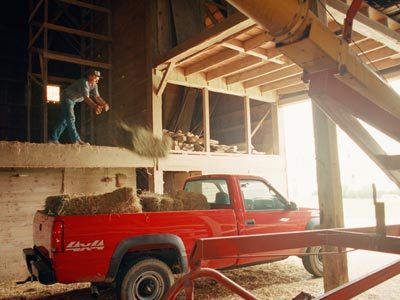
The cargo capacity of a pick-up truck is completely different from that of an SUV or a sedan. No need to haul six feet of plywood in a pickup truck for a home renovation. Conversely, you don’t need a powerful heavy-duty machine to haul a few bags of groceries from the store.
Trucks tend to handle heavier loads. To find out what you’re actually transporting, you need to look at the Gross Vehicle Weight Rating (GVWR). The US government classifies these ratings into eight specific weight classes. It’s more than just a number. It’s a spectrum.
Here is how the DOT breaks it down:
- Class 1: Up to 6,000 lbs (2,722 kg)
- Class 2: Up to 10,000 lbs (4,536 kg)
- Class 3: Up to 14,000 lbs (6,350 kg)
- Class 4: Up to 16,000 lbs (7,258 kg)
- Class 5: Up to 19,500 lbs (8,845 kg)
- Class 6: Up to 26,000 lbs (11,793 kg)
- Class 7: Up to 33,000 lbs (14,969 kg)
- Class 8: Over 33,000 lbs.
The Ministry of Transport divides these into three broad categories. Class 1 and 2 are light-duty. Class 3 through 5 are medium-duty. Class 6 and above? That’s heavy-duty territory. When you know where your truck falls in this hierarchy, you know exactly how much payload it can legally and safely handle without damaging the suspension or breaking the rules.
But trucks aren’t the only vehicles with limits.
Car Payload
So, how much can a passenger car actually carry? The math changes when you aren’t dealing with commercial axles and heavy-duty frames.
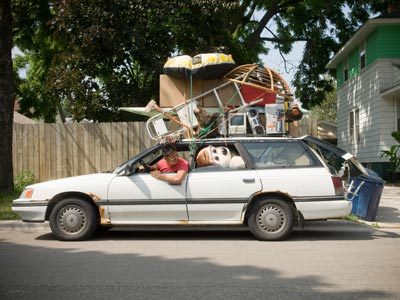
Most drivers think of payload as an abstract concept. If you drive a pickup truck, you’re going to live by the numbers. sedan drivers may assume the car can take it. However, this assumption is dangerous. One father kept asking, “Do we have what we need for this expedition?” Fastening my wife and children and my bag. And he left. This is usually good.
The loading limit for passenger cars is lower than for trucks. Period. In any case, heavy items loaded into the sedan may not fit in the trunk. Before your weight legally limited you, your body limited space. But space is not the only limitation. When you jump into the car, several dynamics change the car’s handling.
Passengers are counted as payload. Not just the gear. You.
Manufacturers typically estimate a weight of 150 pounds (68 kg) per seat. This is the starting point. This is a standardized weight that you can use to calculate what you can actually stuff into the rest of the vehicle. Think of each empty seat as a 150-pound weight waiting to be filled. With the rear seats designed for three people and currently empty, the axle alone has a “free” load capacity of 450 pounds (204 kg). When the seats are filled, the buffer zone disappears. The rest can be luggage, cargo or anything else you want to pack.
Once you cross that line, things get unstable. In addition to unstable drivability, there are also problems with the suspension bottoming out, brake fade, and tire stress. It’s not just about fitting the stuff. What matters is whether the platform can actually support it without compromising safety.
The SUV promises more. It looks big. They feel more capable. They invite you to load them up like a rolling storage unit. However, the fact that the external dimensions have increased does not automatically mean that the carrying capacity is unlimited. Yes, SUVs can carry more weight than compact cars. But the ceiling is still hard. And that cap is often lower than owners expect.
How SUV load limits really work
The calculation doesn’t change just because it’s in crossover. 150 pounds per person. The maximum allowed weight is indicated on the sticker attached to the door frame. But the way the SUV distributes its weight is a game changer.
The car has an engine mounted on the front axle. The back is almost empty. We load it into the trunk and push the rear axle down. Steering is affected, but the center of gravity remains relatively low. An SUV? It’s taller. Heavier. The center of gravity is already higher. You can transfer more weight by adding a payload to the roof rack or by filling the trunk.
result? body roll. The stopping distance increases. Reactions during emergency training are difficult to predict.
Payload is more than just a number in the specs. This is a dynamic balance. When you fill those empty seats, you’re using up your allowance. The remaining capacity is used for cargo. But if you ignore the distribution, you’re messing with physics that isn’t taken into account.
An SUV can carry far more weight than a car, right? Technically yes. But “much more” is relative. A mid-size SUV might have
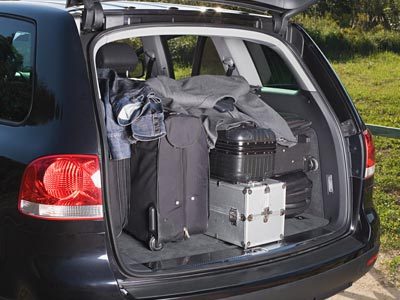
You might think of an SUV as the ultimate hybrid, combining the appeal of a pickup truck with the comfort and seating of a sedan. However, this is a bit of a myth. In fact, the cargo capacity of this SUV falls right in the middle. It’s certainly better than a regular car, but not as good as a real truck.
The trunk offers flexibility. Folding down the rear seats offers enormous space for large items. It can hold a kayak, a snow blower or a week’s camping equipment. Since an SUV has a roof, you can’t stack luggage in the air like a open-bed truck. There are physical limitations. Next, there are safety limits.
Most people think of SUVs as light trucks, but this is a dangerous way to go. The center of gravity of an SUV is significantly higher than that of a sedan. If you charge too much, you’re playing Russian roulette with rollover physics. For this reason, manufacturers have added electronic stability control over the years. They know the risks. The government agrees. Since September 2004, the National Highway Traffic Safety Administration (NHTSA) has required placards to be installed on the door frames of all vehicles with a gross vehicle weight rating (GVWR) of less than 10,000 pounds. This sticker indicates the combined weight of all passengers and cargo. Ignore it at your peril.
But what if I need to move more weight? Can you adjust the numbers?
Can You Increase Payload Capacity?
Knowing your vehicle’s payload capacity is the baseline. But what happens when that baseline isn’t enough? You have a specific truck in mind. It looks perfect. The payload number on the sticker falls short. Is it possible to carry more?
Truck manufacturers almost always offer optional towing packages. The contents vary by brand. But the goal is the same. These packages boost the tow vehicle’s performance. They add tools for better towing. For instance, you might get a trailer wiring harness. A heavy-duty hitch might be included. Safety chains are standard.
The manufacturer might install a bigger engine. Stronger brakes are a given. A better cooling system helps with overall performance. This isn’t just about towing. It’s about handling the load safely.
Overloading a vehicle is dangerous. It harms you, your passengers, and other drivers.
If a police officer pulls you over, they might ticket you. The charge is unsafely loading a vehicle. No one enjoys that. It’s not worth the risk.
Payload List
Depending on the make and model year, you may find your vehicle’s payload on the following chart.
Browse by Make
– Acura
-
Audi
-
BMW
-
Buick
-
Cadillac
-
Chevrolet
-
Chrysler
-
Dodge
-
Ford
-
GMC
-
Honda
-
HUMMER
-
Hyundai
-
Infiniti
-
Isuzu
-
Jaguar
-
Jeep
-
Kia
-
Land Rover
-
Lexus
-
Lincoln
-
Mazda
-
Mercedes-Benz
-
Mercury
-
MINI
-
Mitsubishi
-
Nissan
-
Pontiac
-
Porsche
-
Saab
-
Saturn
-
Scion
-
smart
-
Subaru
-
Suzuki
-
Toyota
-
Volkswagen
-
Volvo
Acura Payload
| Year | Model | Max Payload (lbs) |
|---|---|---|
| 2006 | MDX | – |
| 2006 | RL | – |
| 2006 | RSX | – |
| 2006 | TL | – |
| 2006 | TSX | – |
| 2007 | MDX | 1158 |
| 2007 | RL | – |
| 2007 | RDX | 870 |
| 2007 | TL | – |
| 2007 | TSX | 850 |
| 2008 | MDX | 1158 |
| 2008 | RL | – |
| 2008 | RSX | 870 |
| 2008 | TL | – |
| 2008 | TSX | 850 |
| 2009 | MDX | 1158 |
| 2009 | RL | – |
| 2009 | RSX | 870 |
| 2009 | TSX | 850 |
More Acura Specs:
-
Acura GVWR
-
Acura GAWR
-
Acura GCWR
-
Acura Cargo Carrying Capacity
-
Acura Curb Weight
-
Acura Towing Capacity
Audi Payload
| Year | Model | Max Payload (lbs) |
|---|---|---|
| 2006 | A3 | – |
| 2006 | A4 | – |
| 2006 | A6 | – |
| 2006 | A8 | 1213 |
| 2006 | S4 | – |
| 2006 | TT | 728 |
| 2007 | A3 | – |
| 2007 | A4 | – |
| 2007 | A6 | – |
| 2007 | A8 | – |
| 2007 | Q7 | – |
| 2007 | RS4 | – |
| 2007 | S4 | – |
| 2007 | S6 | – |
| 2007 | S8 | 1213 |
| 2008 | A3 | – |
| 2008 | A4 | – |
| 2008 | A5 | – |
| 2008 | A6 | – |
| 2008 | A8 | – |
| 2008 | Q7 | – |
| 2008 | R8 | – |
| 2008 | RS4 | – |
| 2008 | S4 | – |
| 2008 | S5 | – |
| 2008 | S6 | – |
| 2008 | S8 | – |
| 2008 | TT | – |
| 2009 | A3 | – |
| 2009 | A4 | – |
| 2009 | A5 | – |
| 2009 | A8 | – |
| 2009 | Q7 | – |
| 2009 | R8 | – |
| 2009 | S4 | – |
| 2009 | S5 | – |
| 2009 | S8 | – |
| 2009 | TT | – |
More Audi Specs:
-
Audi GVWR
-
Audi GAWR
-
Audi GCWR
-
Audi Cargo Carrying Capacity
-
Audi Curb Weight
-
Audi Towing Capacity
BMW Payload
| Year | Model | Max Payload (lbs) |
|---|---|---|
| 2006 | 325 | 1058 |
| 2006 | 330 | 1058 |
| 2006 | 525 | 1102 |
| 2006 | 530 | 1102 |
| 2006 | 550 | 1102 |
| 2006 | 650 | 838 |
| 2006 | 750 | 1058 |
| 2006 | 760 | – |
| 2006 | M3 | – |
| 2006 | M5 | 1058 |
| 2006 | M6 | 94 |
Chevrolet model year load limits
Although the brand is the same, the numbers change slightly from year to year. In 2006, the Chevrolet Avalanche 1500 could carry 1,387 lbs. Upgrade to the Avalanche 2500 for a 2,072-pound payload capacity. Colorado weighed 1,532 pounds. The big boys of the Silverado lineup rule here. 1500 weighs 1913 pounds. The 1500 Hybrid drops to 1,162. The 1500 SS is just 1,253. But go heavy. The Silverado 1500 HD pulls 3,129 pounds. The 2500 HD tops out at 3,606. The 3500 HD maxes out at 5,169 lbs. Suburban 1500 carries 1,731. Suburban 2500 jumps to 2,828. Tahoe is 1,522. TrailBlazer holds 1,194. The EXT version of the TrailBlazer scored 1,429 points. The Express van is sturdy at 2,306. The HHR is even tighter at 900 pounds.
2007 sees some tweaks. The Avalanche 1500 weighs 1,258 pounds. Colorado rose slightly to 1,316. Express stays put at 2,306. HHR and HHR Panel remain at 900. Silverado 1500 loses some grunt, down to 1,658. The Classic version keeps the old numbers. The 1500 Classic is 1,913, the 1500 Hybrid Classic is 1,162, the 1500 SS Classic is 1,253, and the 1500 HD Classic is 3,129. The 2500 HD Classic is 3,606, while the non-Classic 2500 HD drops to 3,458. Silverado 3500 Classic still hits 5,169. Suburban 1500 falls to 1,593. The 2,500 inhabitants of the suburbs further decreased to 2,561. Tahoe gains weight capacity, rising to 1,835. The TrailBlazer stayed at 1,194.
By 2008, Avalanche 1500 climbs back to 1,444. Colorado is still at 1,316. Express was steady at 2,306. The HHR version remains at 900. The Silverado 1500 is at 1,652. The 2500 HD is at 3,458. The 3500 HD jumped to 3,621. The Suburban 1500 is 1,593. The Suburban 2500 is 2,561. Tahoe is 1,835. The Tahoe Hybrid is only 1,830. TrailBlazer remains 1,194.
2009 brought new changes. Avalanche 1500 settles at 1,333. Colorado’s number dropped to 1,250. Express splits into three The 1500 has 2306 units, the 2500 has 3262 units and the 3500 has 4147 units. HHR models stay at 900. 1,652 Silverado 1500s. 2500 HD is 3,480. 3500 HD is 3,873. Suburban 1500 is 1,593. Suburban 2500 is 2,561. Lake Tahoe is 1,835. Tahoe Hybrid is 1,830. Blazers had 1,194.
Check Chrysler’s production capacity
There were very few Chryslers in the early days. No 300, 300C, Crossfire, Pacifica, PT Cruiser, Sebring or Town & Country payloads are listed for 2006.
2007 filled some gaps. The Aspen has a weight capacity of 1,600 pounds. PT Cruiser jumped to 1,907 points. Pacifica got 889 points and Town & Country 1,200 points. No data yet displayed 300, 300C, Crossfire and Sebring.
In 2008, the Aspen index was 1,600 points. Pacifica fell slightly to 865. PT Cruiser fell to 889. Town & Country remains at 1,200. The load capacity data for these sedans has not yet been listed.
The Aspen index remained at 1,600 points in 2009. The Aspen Hybrid number dropped to 1,500. No data available for PT Cruisers and Sebrings. Cities and villages are empty. 300 and 300C are still empty.
Dodge Payload Specifications
Dodge has you covered for vans and trucks. The 2006 Caravan weighs 1,682 lbs. The price of the charger is 1,270 euros. Dakota has 1,750 cases. The point against the Durango was 1750. The Grand Caravan is 1700. The Magnum is 1270. The Rams 1500 is 1750. The Rams 2500 jumped to 3020. Ram 3500 reaches 4,660. Sprinter Van 2500 is 3,950. Sprinter Van 3500 is also 3,950. 4,824 Sprinter Wagon 2500 units. Stratus and Viper are empty.
Caliber (no data) and Nitro were added in 2007. Nitro has 1150. Caliber is empty. The caravan stopped in 1682. The alternator is 1270. The Dakota dropped a bit to 1,710. Durango is 1,750. Grand Caravan is 1,700. Magnum is 1,270. Rams 1500 is 1,750. Ram 2500 goes up to 3,130. Ram 3500 reaches 4,780. Sprinter vans: 2,500 units → 3,766 units. Sprinter Van 3500 sales increased to 4,350 units. Sprinter Wagon sales decreased by 2,500 units to 3,074 units.
In 2008, the Avenger (blank) and the Challenger (blank) were released. The caliber is left blank. The Chargers had just 1,270. Dakota dropped to 1,630. Durango rose to 1,780. The caravan was empty. Magnum is 1270. Nitro is 1150. Ram 1500 jumps to 1810. RAM 2500 is 3,210. Ram 3500 reaches 4,870. 3,766 Sprinter Van 2500 units. Sprinter van 3500 is 4530. 3,074 Sprinter Wagon 2500 units. Viper drew a blank.
For 2009, the Avenger, Challenger, Caliber, Grand Caravan, Journey and Viper are empty. The Charger is 1270. The Dakota is 1630. The Durango is 1780. The Durango Hybrid drops to 1500. Nitro is 1150. Ram 1500 drops significantly to 1490. RAM 2500 is 3260. RAM 3500 dropped to 3560. 3,766 Sprinter Van 2500 units. Sprinter van 3500 is 4530. 3,074 Sprinter Wagon 2500 units.
Ford payload information
Ford’s product range is dominated by trucks and vans. 2006 Crown Victoria, Five Hundred, Freestyle, Fusion, GT, Mustang, Taurus are empty. The E 150 takes 1,930. The E 250 requires 3,435. The E 350 Super Duty has a massive 4,165. The Escape is 960. 1,040 for the Escape Hybrid. Explorer was 1,414. F150 is 1,640. F250 is 3,100. F350 is 4,000. Focus is 990. Freestar is 1,200. Ranger is 1,260.
Edge was added in 2007. Edge carried 1,011. Crown Victoria, Five Hundred, Focus, Freestyle, Fusion, Mustang are empty. B1
Honda Payload Limits: 2006-2009
The Honda’s cargo capacity varies greatly depending on whether you’re hauling furniture in the Odyssey or trying to fit two adults in your S2000. The numbers below show how much weight each model can carry before things get unstable.
2006
The Odyssey is a workhorse and can carry 1349lbs. The Ridgeline holds 1549 lbs. The Insight is lightweight, weighing in at 400 lbs. The rest of the lineup (Accord, Civic, CR-V, Element, Pilot, S2000) has not announced specific payloads this year.
2007
The Civic weighs 385 lbs. The element holds 675 lbs. The pilot can carry 1322 lbs. Ridgeline settled at 1549 lbs. The Odyssey has a weight capacity of 1349 lbs. There is no data for Fit, Accord and S2000.
2008
The Civic remains at 385 lbs. The element holds 675 lbs. The pilot steered 1322 lbs. The Ridgeline is still 1549 lbs. The Odyssey has a weight capacity of 1349 lbs. Data is not available for Accord, Fit and S2000.
2009
The Odyssey has a weight capacity of 1349 lbs. The pilot steered 1322 lbs. Information is not available for the Civic, Civic Hybrid, or Fit.
Key Insight: If you need to move heavy equipment, go for the Odyssey or Ridgeline. Sports cars and compact cars are not built to carry cargo.
HUMMER Payload Capacity: 2006-2009
Hummer trucks and SUVs have respectable payloads, but the H2 and H3 are very different. H3T joined in 2009.
2006
The H1 Alpha can handle 3087 lbs. The H3 weighs 1150 lbs. H2 has no data.
2007
The H3 can handle 1150 lbs. H2 has no data.
2008
The H2 jumps to 2200lbs. The H3 stays at 1150lbs.
2009
The H2 weighs 2200 lbs. The H3 grows to 1312 lbs. The H3T is a pickup truck with a payload of 1090 lbs.
Hyundai Payload Ratings: 2006-2009
Hyundai’s mid-priced range is a combination of sedans and SUVs. Payload data for most sedans is missing, probably because sedans are not classified as heavy loads.
2006
Payload information for the Accent, Azera, Elantra, Santa Fe, Sonata, Tiburon or Tucson is not listed.
2007
Payload information for the Accent, Azera, Elantra, Entourage, Santa Fe, Sonata, Tiburon, Tucson and Veracruz is not listed.
2008
Payload information for the Accent, Azera, Elantra, Entourage, Santa Fe, Sonata, Tiburon, Tucson and Veracruz is not listed.
2009
Accent, Azera, Genesis or Sonata payload information is not listed.
Infiniti Payload Specs: 2006-2009
Infiniti luxury SUVs and sedans offer different cargo capacities. The QX56 always has the heaviest payload, but the G-Class sedan is light.
2006
The FX35 can handle 1183 lbs. The FX45 can handle 1091 lbs. The G35 managed 886 lbs. The weight capacity of the Q45 is 979 lbs. The weight capacity of the QX56 is 1440 lbs. No information is available for M35 and M45.
2007
The FX35 remains at 1183 lbs. The weight capacity of the FX45 is 1091 lbs. There is no information for QX56. Information is not available for G35, M35 and M45.
2008
The weight capacity of the FX35 is 1183 lbs. The FX45 can handle 1091 lbs. The G37 can handle 1040 lbs. The M35 has a load capacity of 996 lbs. The M45 can handle 1010 lbs. The QX56 jumps to 1553 lbs. EX35 No data available.
2009
The FX35 grows to 1213 lbs. The FX50 can handle 1185 lbs. The QX56 stays at 1553 lbs.
Isuzu Payload Capacity: 2006-2009
From 2007 to 2008, the SUV and light truck capacities of Isuzu’s i-series trucks decreased.
2006
The weight capacity of the Ascender is 1133 lbs. The i-280 holds 1532 lbs. The i-350 can handle 1190 lbs.
2007
The Ascender remains at 1133 lbs. The i-290 has a load capacity of 1532 lbs. The i-370 took 1516 lbs.
2008
The Ascender remains at 1133 lbs. The i-290 weighs in at 1512 lbs. The i-370 weighs in at 1260 lbs.
Jaguar Payload Rating: 2006-2009
Jaguar’s product range has moved on from the days of the XKR/XK8 to the launch of the XF. The X-Type is the only sedan with matching numbers. Sports cars are light.
2006
The X-Type can handle 1058 lbs. Information is not available for S-types, XJ8, XJR, XK8 and XKR.
2007
The X-Type has a capacity of 1058 lbs. No information available for S-Type, XJ8, XJR, XK and XKR models.
2008
The X-Type is still 1058 lbs. The XK 815 lbs. The XKR can handle 772 lbs. There is no information for S-Type, XJ8 and XJR.
2009
The XKR weighs 772 lbs. The XK Coupe weighs 815 lbs. There is no information for XF and XJ8.
Jeep Payload Capacity: 2006-2009
The off-road version of the Jeep has modest payload limitations compared to its size. Commander and Grand Cherokee carry the most weight. The Wrangler is surprisingly light.
2006
Commander carries 1620 lbs. The Grand Cherokee 1100 lbs. The Liberty has a weight capacity of 1150 lbs. The weight capacity of the Wrangler is 800 lbs.
2007
The Commander weighs in at 1310 lbs. The compass holds 925 lbs. The Grand Cherokee 1050 lbs. Liberty is still 1150lbs. The Wrangler goes up to 1000lbs. The Patriot don’t have the numbers.
2008
The Commander fell to 1300lbs. The Compass is still 925 lbs. The Grand Cherokee goes up to 1180 lbs. The Liberty has a weight capacity of 1150 lbs. The Patriot carried 925 lbs. Both the Wrangler and Wrangler Unlimited can handle 1000lbs.
2009
Commander stays at 1300lbs. The compass holds 925 lbs. The Grand Cherokee weighs 1180 lbs. The Liberty has a weight capacity of 1150 lbs. The Patriot carried 925 lbs. The Wrangler weighs 1000 lbs. The Wrangler Unlimited grows to 1150 lbs.
Kia Payload Specs: 2006-2009
Kia SUVs usually surpass sedans in terms of cargo capacity. The Rondo and Sedona are big trucks. Borrego was released in 2009 to excellent reviews.
2006
The weight capacity of the Rio is 1273 lbs. The Rio 5 holds 1200 lbs. The Sorento weighed 1202 pounds. The Sportage can handle 1195 lbs. Information is not available for Amanti, Optima, Sedona, Spectra and Spectra 5.
2007
The Rio is still 1273 lbs. The Rio 5 holds 1200 lbs. Sedona jumped to 1532 lbs. The Sorento went up to 1318lbs. Sportage
Mazda Payload Limits (2006-2009)
The numbers don’t lie. When you load a Mazda vehicle, you must adhere to some of the tightest tolerances in the industry. Mazda 3? Although no data is available for this era, this usually means that it is a passenger car with negligible practical purposes. However, if you have to transport large loads, B series trucks will help you.
The B3000 is the heavy lifter here. From 2006 to 2008, its maximum payload was always 1680 lbs. That’s a lot of capacity for a small truck. The B2300 and B4000 held steady at 1,260 lbs for several years, but by 2009 the B4000 had dropped slightly to 1,200 lbs.
SUVs and crossovers create a more versatile image. The CX-9 started strongly in 2007 1493 lbs but disappeared from the data set in 2008 and 2009. Why? It could be a change in the way capacity is measured or a model year gap in the report. Mazda5 Minibuses are very reliable and stay between 1191 and 1239 lbs all the time.
This affects sports cars. The MX-5 (Miata) maxed out at just 637 lbs in 2007 and 2008, but dropped to 633 lbs in 2009. The RX-8 had slightly better performance in its early days (779 lbs in 2006, but had dropped 754 lbs. The MazdaSpeed6 is especially tough, weighing in at just 963 lbs in 2006 and 2007. If you’re going to put an entire team of riders and their gear in there, check your math.
Mercedes-Benz payload data (2006-2009)
Mercedes balances luxury and strict structural practicality. Most sedans (C-Class, S-Class, CLK, CLS ) do not show payload data for years. This is not an omission. This is a statement. These are not work vehicles.
Trucks and SUVs do heavy lifting. The ML350 has been steady, starting at 1616 lbs in 2006, going up to 1635 lbs in 2007 and holding the line at 1635 lbs in 2009. The ML500 was strong in its early days (at 149) and gained 6lbs. ML350 in 2006. 1620 lbs, flatbed 1620 lbs in 2007 and 2008 and 1620 lbs** in 2009.
The GL450 and GL550 are very durable and can handle up to 1620 lbs since 2007. The G-Class offers incredible practicality. The G500 jumped from 1289 lbs in 2007 to 1764 lbs in 2008. That’s a significant increase. The 2008 G55 weighed 1433 lbs. The performance ML63 AMG has dropped from 1257 lbs in 2007 to 1300 lbs in 2009, reducing the weight capacity of the powerful hardware.
R-Class Indicates volatility. In 2006 the weight was 2000 lbs which dropped to 1635 lbs in 2007 and further down to 1365 lbs in 2009. The SLR McLaren is a supercar not a truck. Payload dropped from 626 lbs in 2007 to 342 lbs in 2008. It barely holds a passenger and a light jacket.
Mercury Payload Breakdown (2006-2009)
Ford and Mercury share a common platform, and their payload numbers reflect their shared DNA. Mariner and Mariner Hybrid are consistent, with 2006 and 2007 capacities of 1075 lbs and 920 lbs. By 2008 and 2009, the standard Mariner had dropped slightly to 1059 lbs, while the Hybrid remained at 920 lbs.
Climbers are the main force. It started in 2006 at 1549 lbs and leveled off at 1,443 lbs in 2007-2009. This consistency is reassuring when transporting wood and tools.
The Monterey Van weighs in at 1320 lbs for both 2006 and 2007. Information is not available for sedans such as the Grand Marquis, Milan , and Montego . These are passenger carriers, not payload platforms. Sable * returned in 2008 and 2009, but capacity was not announced. Once again, silence spoke louder.
MINI Payload Capacity (2006-2009)
MINI is all about style, but the numbers show a pragmatic approach to space. The Cooper Hardtop is the entry level and held steady at 816 lbs from 2006-2008. The Cooper Convertible is lighter with a capped of 771 lbs.
In 2008, the Cooper Clubman entered the fray with the same 816 lb limit as the hardtop. By 2009, a performance-oriented John Cooper Works version appeared. The JCW Hardtop and JCW Clubman are both limited to 816 lbs.
It’s impressive that such a small car can carry over 800 pounds. However, remember that this includes the driver, passengers and cargo. Three adults in the Clubman quickly eat the 816 lbs weight limit.
Mitsubishi payload data (2006-2009)
Mitsubishi offers several options, from economical sedans to durable trucks. Raider is clearly the payload king. It started at 1590 lbs in 2006 and dropped slightly to 1580 lbs in 2007 and 2008. It disappeared from the list in 2009, probably due to discontinuation.
In Outlander there is a big difference. It started at 904 lbs in 2006, went up to 1538 lbs in 2007, and returned to 1169 lbs in 2008. This variation indicates a change in trim level or standards. Endeavour remained stable at 1055 lbs from 2006 to 2008.
The sedan is more frugal. The Galant dropped from 969 lbs in 2006 to 937 lbs in 2007 and 2008 and increased to 981 lbs in 2009. The Lancer debuted in 2006 at 981 lbs and jumps to 1157 lbs in 2008, and holds that mark in 2009. The Eclipse remained unchanged for three years at 794 lbs and rose to 827 lbs in 2009.
Nissan Payload Limits (2006-2009)
Nissan has the largest payload in the small and mid-size segments. Titan The truck is a beast. In 2006 it weighed 1549 lbs, dropped to 1490 lbs in 2007, and increased to 2063 lbs in 2008 and 2009. A jump of over 200 lbs for a full-size pickup truck is huge.
The Armada SUV is also very capable. In 2006 and 2007 the weight was 1693 lbs, and in 2008 it was dropped to 1453 lbs.
Payload capacity is a strict upper limit to what can actually be transported. It’s not just about how much weight the suspension can handle. This is a calculation that includes the weight of the vehicle, the gross vehicle weight (GVWR) and the number of people seated. One wrong move and the braking performance is reduced, premature tire wear or legal problems.
Here’s a detailed breakdown of late 2000s models, from struggling Detroit models to well-engineered European models.
Saturn payload
Saturn was bleeding out 2000-luvun lopulla. You can tell by reading the information. While the competitors improved, the payload stagnated or decreased. The Relay minibus is a workhorse, but even at full weight it weighs around 1,350 lbs.
2006
* ION: Tietoja ei saatavilla
* Relay: 1,350 lbs.
* VUE: 1,331 lbs.
2007
* HALO: £1,009
* Aura Hybrid: Information not available
* ION: Tietoja ei saatavilla
* Outlook: £1,678.
* Relay: 1,354 lbs.
* Sky: No data available
* VUE: 1,331 lbs
* VUE Hybrid: 1,511 lbs.
2008
* Astra: £893.
* HALO: £1,009
* Aura Hybrid: Tietoja ei saatavilla
* Outlook: £1,678.
* Sky: Tietoja ei saatavilla
* VUE: £1,000 (significantly less than last year)
* VUE-hybridi: 1 111 lbs.
2009
* Astra: Information not available
* HALO: £1,009
* Aura Hybrid: Information not available
* Outlook: 1,709 lbs.
* Sky: Tietoja ei saatavilla
* VUE: 1,000 lbs.
* VUE-hybridi: 1 111 lbs.
Related Information: Saturn GVWR | Saturn GAWR | Saturn GCWR | Saturn cargo capacity | Saturn vehicle weight | Saturn Towing Capacity
Scion Payload
Scion is Toyota’s young brand. Their cars are light and therefore their payload is large compared to their size. However, there is little information about this era. tC, xA, xB, and xD are common, but manufacturer specifications often leave these fields blank in early documents.
2006-2009 models:
tC: No data
* xA: No data
* xB: No data
xD: No data
Related Information: Scion GVWR | Scion GAWR | Scion GCWR | Scion cargo capacity | Scion own weight | Scion towing capacity
smart Payload
Smart Fortwo is a city microcar. The loading capacity is small. You, your passenger and maybe a backpack. that’s it. If you try to overload it, you will quickly cross the line.
2008
* fortwo: 463 lbs.
Related Information: Smart GVWR | Smart GAWR | Smart GCWR | smart Cargo Carrying Capacity | Smart Vehicle Weight | smart Towing Capacity
Subaru payload
Subaru still sticks to its all-wheel-drive roots. The Tribeca started well, but by 2008 its payload had dropped significantly, likely due to the increased weight. Thanks to its heavy performance hardware, the payload of the Impreza WRX STi is very low.
2006
* B9 Tribeca: 1,560 lbs.
* Baja: 1,070 lbs.
* Forester: 1060 lbs.
* Impreza Sedan: 955 lbs.
* Impreza Wagon: £995.
* Impreza Outback Sport: 1,132 lbs.
* Impreza WRX STi: 794 lbs.
* Legacy Sedan: 1,200 lbs.
* Legacy Wagon: 1,300 lbs.
* Outback: 1,245 lbs.
2007
* B9 Tribeca: 1,560 lbs.
* Forester: 1,010 lbs.
* Impreza Sedan: 955 lbs.
* Impreza Wagon: £995.
* Impreza Outback Sport: 1,132 lbs.
* Legacy Sedan: 1,055 lbs.
* Legacy Wagon: 1,290 lbs.
* Outback: 995 lbs.
2008
* Forester: 1,010 lbs.
* Impreza Wagon: 976 lbs.
* Impreza Sedan: 856 lbs.
* Impreza Outback Sport: 1,082 lbs.
* Impreza WRX STi: 1,080 lbs.
* Legacy: £1,055
* Outback: 1,085 lbs.
* Tribeca: £660 (dramatic drop)
2009
* Forester: 1,230 lbs.
* Legacy: £1,055
* Outback: 1,078 lbs.
* Tribeca: 660 lbs.
Related Information: Subaru GVWR | Subaru GAWR | Subaru GCWR | Subaru cargo capacity | Subaru vehicle weight | Subaru towing capacity
Suzuki payload
Suzuki withdraws from the US market. The XL7 was the company’s last large model in 2008 and 2009, with a payload of 1,626 pounds. The Forenza and Reno are compact options with payloads around 900 pounds. Aerio and Grand Vitara reports are inconsistent, with numbers not listed in some years.
2006
Aerio: £955.
* Forenza: £981.
* Grand Vitara: £1,175.
Reno: £941.
* Verona: Information not available
* XL7: 1,168 lbs.
2007
* Aerio: Information not available
* Forenza: Information not available
* Grand Vitara: Information not available
Reno: No information
* SX4: No data
* XL7: 1,626 lbs.
2008
* Forenza: £926.
* Grand Vitara: £1,178.
Reno: £926.
* SX4: 893 lbs.
* XL7: 1,626 lbs.
2009
* Equator: No data available
* Grand Vitara: Information not available
* SX4: 893 lbs.
* XL7: No data available
Related Information: Suzuki GVWR | Suzuki GAWR | Suzuki GCWR | Suzuki cargo capacity | Suzuki vehicle weight | Suzuki towing capacity
Toyota payload
Toyota dominates this segment. The 4Runner, Tacoma and Tundra offer powerful payloads. The Highlander has a cargo capacity of about 1,821 pounds. Hybrids like the Highlander Hybrid and Prius have a lower payload due to battery weight, a common trade-off with electrification.
2006
* 4Runner: 1,285 lbs.
* Avalon: £1,075.
* Camry: £1,059.
* Camry Solara: No information
* Corolla: 1,055 lbs.
* Highlander: 1,840 lbs.
* Highlander Hybrid: 1,605 lbs.
* Land Cruiser: 1500 lbs.
* Matrix: 1,166 lbs.