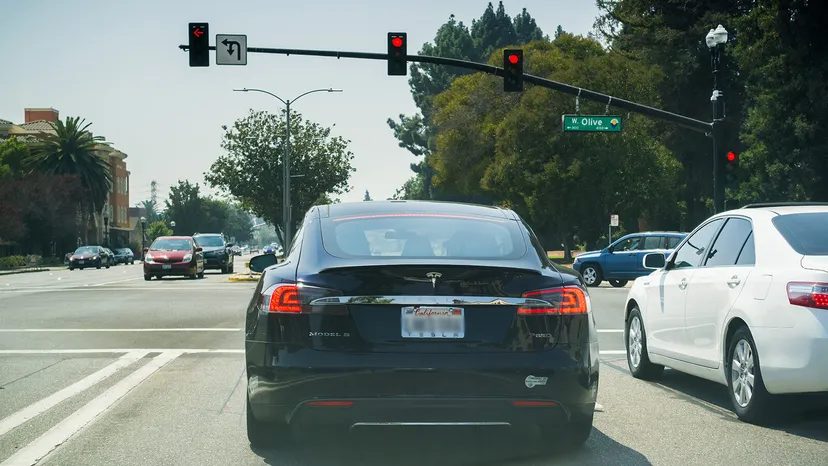
We’ve all been there. You are idling at a red light and a second later it turns green. Did the sensor detect you? Or have you ever sat at an intersection for ages, staring at a blank red sign as the intersection quiets down? The difference is usually in the structure of the infrastructure.
Traffic lights in densely populated city centers are often controlled by simple timers. It doesn’t matter if it’s 3 in the morning or rush hour; the lights cycle to match the continuous, heavy traffic. But if you go to the suburbs or the highways, you will find that detectors are the standard. These systems are smart. They are triggered when a vehicle arrives, when the queue gets too long (to prevent congestion) or when a car enters a certain turning lane to activate a protected green arrow.
How do they really “see” you? Most modern crossings are based on two main technologies: digital sensors mounted on the signal or induction loops buried under the asphalt. Both methods monitor stopped vehicles to ensure the flow of traffic, but are based on completely different principles.
Mechanics of induction loops
If you’ve been driving long enough, chances are you’ve seen them. Look down at the intersection. You’ll often notice large, rectangular cuts in the pavement sealed with a dark, rubbery substance. This is an induction loop.
Installation is a two-step process. The crew pours the asphalt, lets it harden, and then returns using a saw to cut a precise groove into the road surface. They lay a coiled wire in this groove and seal it with polyurethane compound. This loop acts as a single-turn primary winding of the transformer. When a car drives over it, the metal chassis acts as a secondary coil that changes the electrical inductance. The controller detects this frequency change, registers the presence of the vehicle and adjusts the light cycle accordingly.
Let’s start with the physics, because the technology is basically just a giant electromagnet buried in asphalt.
Induction loops do not “see” cars. They feel a change in inductance. To do this correctly, you need to understand inductance itself.
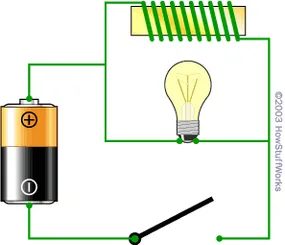
Imagine a simple circuit. You have a battery. Light bulb. Switch. And a coil of wire wrapped around an iron core. This coil? It is an inductor. It is also an electromagnet.
If you rip that coil out, you have a regular flashlight. Close the switch. The lamp lights up. Simply.
But leave the coil in. Now things get weird.
The lamp acts as a resistor. Coil wire? Hardly any resistance. So when you flip the switch, the current should bypass the bulb and flow through the low resistance loop. The bulb should stay dim.
It doesn’t.
When you close the switch, the lamp lights up brightly. Then it gets darker. Open the switch and the lamp will flares again before turning off.
Why? inductor.
Current can’t just flow instantly. The coil must first create a magnetic field. As this field increases, the coil fights the current. It inhibits the flow. As soon as the field is established, the normal current takes over.
Flip the switch off and the magic reverses. The collapsing magnetic field continues to push current through the coil. after the power is cut, the lamp lights up for a fraction of a second.
That’s the principle. Traffic lights use exactly this mechanism. The road loop constantly monitors its own inductance. When a car sits on top, the metal mass increases the inductance. The sensor notices the spike. It knows the car is waiting. It changes the light.
Why simplicity is a double-edged sword
Induction loops are everywhere because they’re dumb. You don’t need software updates. They don’t crash. Compared to high-tech digital sensors, they rarely break.
This simplicity is also a problem.
The coil only knows one thing: Is there heavy metal above it?
If you stop right before the line? The light does not change. The system doesn’t know you’re there. You have to wait for the timer, not the detection.
Motorcycles are another big pain point. Less metal means less magnetic interference. On quiet nights, the bike may not trigger the loop at all. Riders often resort to circling the block or tapping their brakes to fool older sensors, which is why you can sometimes see tiny magnets on a motorcycle helmet or handlebars.
Digital sensors solve these problems. They track volume. They log data. They help planners optimize route efficiency. However, the loop is still the workhorse of intersection control, relying more on raw physics than intelligence.
Other Types of Traffic Light Sensors
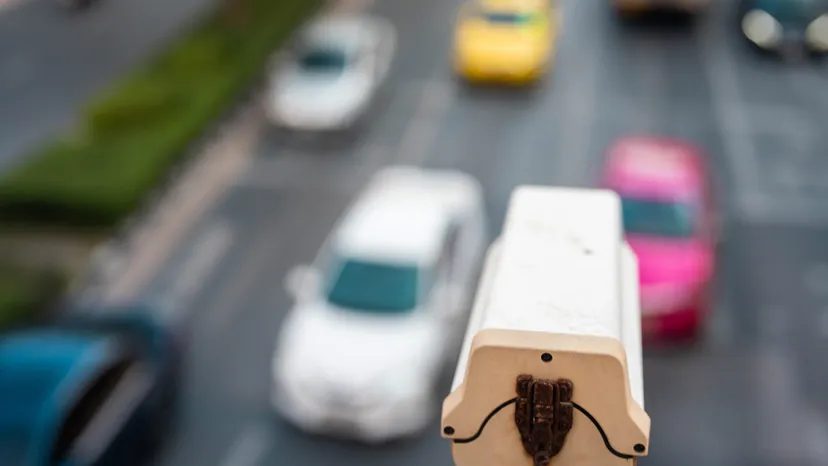
Inductive loops aren’t the only way traffic lights know a car is waiting. Look closely at the poles and you’ll often spot alternative detection systems. These advanced sensors sit above or beside the intersection. No metal digging into the asphalt is required.
The most common alternatives involve infrared, microwave beams, and video analytics. Each has strengths. Each has flaws.
Active and Passive Infrared Detection
Infrared sensors split into two camps: active and passive.
Active systems emit an invisible beam of infrared light. It hangs in the air, targeting the space where a vehicle’s bumper would rest at a stop line. When a car pulls up, it breaks the beam. The sensor registers the interruption. The light changes.
Emergency vehicles often carry their own active infrared transmitters. Sirens and strobes trigger the signal. The intersection detects the request. The light turns green for the ambulance or police cruiser.
Passive infrared sensors work differently. They don’t shoot a beam. They watch for heat. Specifically, they look for the thermal signature of a running engine. If an engine is hot, the sensor sees it.
This method has a critical weakness. So does direct sunlight. Intense heat sources can mimic an engine. The sensor gets confused. It triggers a false positive. The light changes for no reason. Traffic slows down for nothing.
Microwave Detection
Microwave sensors operate on physics similar to active infrared. Instead of light, they project a magnetic field. The field covers the approach lane.
When a metal vehicle enters the field, it disrupts the waves. The sensor picks up the disturbance. It knows a car is there.
Microwave units are pricey. They cost more than simple loops. They also cost more than basic infrared cameras. But they are immune to heat contamination. Sunlight doesn’t fool them. Exhaust doesn’t blind them. In environments with extreme temperature swings, they hold their ground.
The Video Camera Network
Video systems are the heavy hitters. They are also the most complex.
Multiple cameras mount on the signal poles. Think CCTV, but focused on the intersection. These cameras feed data to a central server. The software identifies vehicles. It counts them. It distinguishes a sedan from a pedestrian.
This isn’t just about one intersection. The cameras network dozens of stops together. The server analyzes real-time flow. It adjusts signal timing to maximize efficiency. If one light stays green too long, the system tweaks it.
Long-term data helps city planners. They spot bottlenecks. They decide where to widen roads or add turn lanes.
There is a catch. Fog. Heavy rain. Snow. These weather conditions degrade camera vision. If the lens gets dirty or the visibility drops, the system goes blind. That’s why redundancy matters.
Redundancy Saves Commutes
Cities rarely rely on just one detection method. You’ll often find dual systems. A loop paired with a microwave sensor. Or infrared combined with video.
Why? Failure happens. Sensors break. Wires degrade. Weather interferes.
If the primary sensor fails, the backup kicks in. Traffic keeps moving. A single point of failure doesn’t cause gridlock. Redundancy is the silent guardian of urban flow.
Frequently Asked Questions
How do traffic lights actually work?
It depends on where you are.
In dense cities, traffic is constant. Lights often run on fixed timers. The flow is predictable enough that sensors aren’t always necessary.
In suburbs or rural areas, traffic is sporadic. Sensors are essential. They detect vehicles waiting. They control how long the light stays red. They trigger turn arrows when cars enter dedicated lanes.
How do they know a car is there?
Inductive loops are still the most common method. Metal coils are embedded in the pavement. When a car sits on top, the metal changes the magnetic field. The sensor notices the shift.
But as we’ve seen, infrared, microwave, and video are increasingly common. The technology varies by location and budget.
Are computers in control?
Sometimes.
Many modern intersections are part of a centralized network. Computers monitor traffic in real time. They adjust signals based on live patterns. If an accident clogs a lane, the system responds.
In smaller towns, local timers or simple sensors do the heavy lifting. Centralized control isn’t universal.
How does the detection circuit function?
For inductive loops, the physics are straightforward.
A coil of wire sits in a groove cut into the road. An inductance meter monitors the coil. It’s constantly testing the magnetic properties.
When a vehicle arrives, its metal body interacts with the field. Inductance increases. The change is electric. The traffic controller sees the spike. It knows a car is waiting. It prepares to change the light.
The system doesn’t just react. It anticipates. It balances. It fails gracefully when it can. But when it works, you barely notice it. You just drive through.