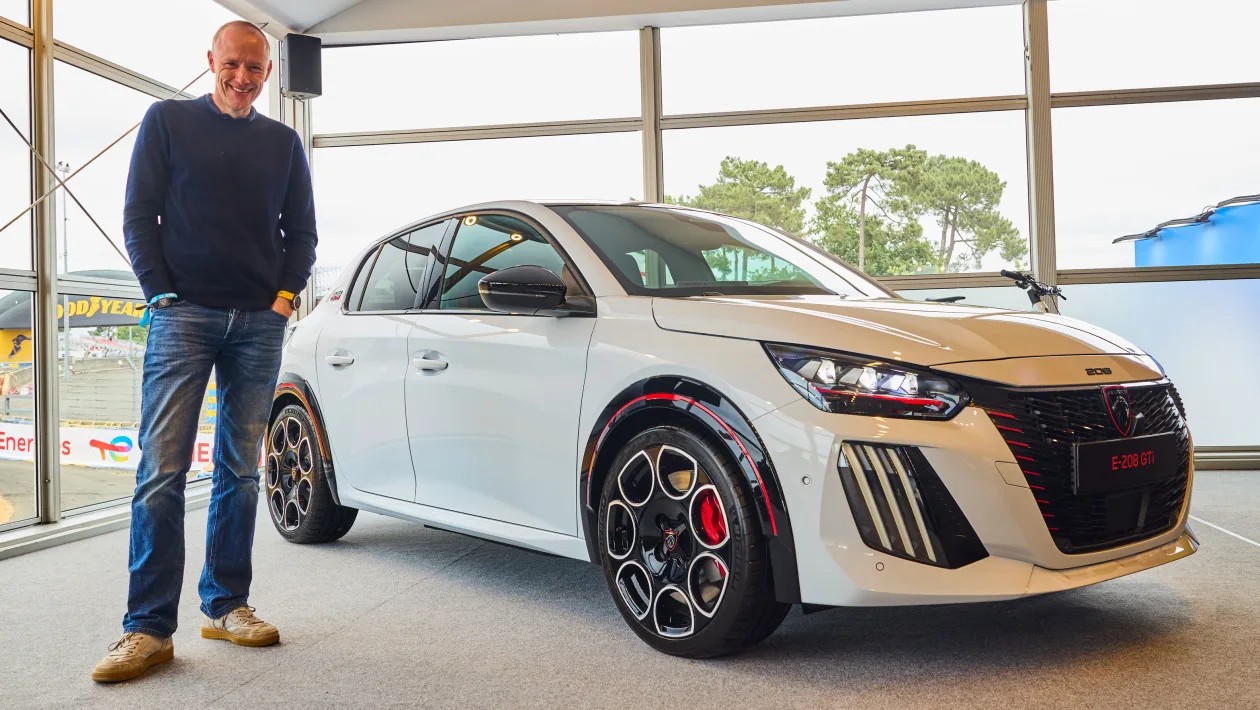
The wait is over. Peugeot has officially opened orders for the E-208 GT-i, marking a gritty, fully-electric return to the hot hatch wars. It is the first car to wear the GT-i badge since 2016.
The price point is the headline here. After applying the government’s £1,500 Plug-in Car Grant, the cost settles at £33,495. That places it below the Alpine A290 GTS+, which rings up at £34,245, and cheaper than the Cupra Raval VZ Extreme at £36,310. It is an accessible entry into electric performance, provided you can secure a spot before the allocation runs dry.
Why the Peugeot E-208 GT-0 beats the competition
Speed isn’t just a metric for this car; it is the selling point. Under the hood sits a 277bhp motor that launches the 2.2-tonne hatchback from 0 to 62mph in 5.5 seconds.
That is faster than the Alpine A290. Faster than the Cupra Raval. It even leaves the 254bhp Mini John Cooper Works (5.9 seconds) and the upcoming Volkswagen ID. Polo GT-i behind. The powertrain, codenamed M4+, delivers 345Nm of instant torque to the front wheels, managed by a mechanical limited-slip differential integrated into the gearbox. This isn’t just about off-the-line jumps. The mid-range punch is significant, with the 50-to-75mph sprint taking just 3.2 seconds.
But there is a complication. A rival exists within the same family. The Vauxhall Corsa-GSE shares the exact same chassis and powertrain as the Peugeot. It is expected to be cheaper. Why buy the French version? Heritage. Peugeot Sport spearheaded the project. They shaped the “weapons-grade” mechanics. The Corsa is the volume seller; the E-208 is the enthusiast’s choice.
How much range does the electric GT-0 have?
Expectations must be grounded in reality. You cannot drive a 277bhp hot hatch gently. The range figures reflect two distinct driving styles.
- Performance tyres (Michelin Pilot Sport 4S): 219 miles. These are the standard fitment, designed for grip, not efficiency.
- Efficiency tyres (Hankook Ventus S1 Evo-3): 233 miles. A 14-mile gain, but a sacrifice in cornering confidence.
The battery is 54kWh gross, with 51kWh usable. Charging is competent for a compact car. DC fast charging from 20% to 80% takes under 30 minutes at a peak rate of 100kW. At home, a 7.4kW wallbox will top you up in 4 hours and 40 minutes. Peugeot backs this hardware with an 8-year or 62,000-mille battery warranty.
Christophe Auriault, the project manager, claims the thermal management system prevents power cuts even on mountain passes. “If someone is driving up a mountain pass,” he says, “they should be able to stay in Sport mode.” That is a bold claim for electric motors that usually thermal-throttle.
Is the chassis tuned for real driving?
Yes. The standard E-208 felt compliant. The GT-i is different. Peugeot Sport has lowered the ride height by 25mm. They widened the track and stiffened the suspension with motorsport-inspired dampers that feature hydraulic bump stops. A new rear anti-roll bar adds body control.
Braking hardware is upgraded at the front, with 355mm discs clamped by red-painted four-piston calipers. The rear brakes remain standard, which might be a point of contention for track enthusiasts, but for street use, the setup is track-focused. The steering is described as more direct, aiding the car’s agility.
The software is also borrowed from the Peugeot 9X8 Le Mans hypercar. This isn’t a badge slap; it is a recalibration of the ESP and regenerative braking. In Sport mode, the regen is deactivated to provide consistent brake pedal feel, mimicking a traditional internal combustion experience.
Design: Retro cues meet electric future
Visually, the car screams its lineage. Eight colours are available, but Okénite white highlights the red GT-i accents best. The grille, headlamp details, and badges all feature that signature red. The bodywork includes flared wheelarches to accommodate the wider stance, a black front splitter, and a larger rear spoiler paired with a gloss-black diffuser that houses a racetrack-style fog light.
The wheels are 18-inch alloys with a “holed” design that echoes the legendary 205 GT-i 1.9 from the 1980s. Inside, the theme continues. The cabin features two-tone upholstery inspired by that same classic 205 GT-i. Alcantara patches cover the dashboard and steering wheel. Red stitching adorns the seats, the steering wheel, and even the seatbelts.
Standard kit includes sport seats, a central touchscreen with TomTom navigation, wireless Apple CarPlay, and Android Auto. Ambient lighting defaults to red, because why not? It is a cohesive, aggressive interior that avoids the sterile feel of some electric crossovers.
The E-208 GT-i is here. It is fast. It is reasonably priced for what it offers. And while the Vauxhall Corsa-GSE looms as a budget alternative, the Peugeot carries the weight of history on its shoulders. The question isn’t whether it is a good car. It is whether the badge is worth the extra cash.