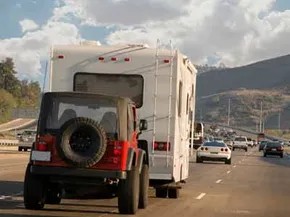
You bought the RV. You’ve parked the truck in the driveway. You are ready to hit the road. But there is a catch. If you plan to tow a secondary vehicle behind the coach for local errands, you might be staring at a mechanical disaster.
Most folks use a standard tow bar. It’s cheap. It’s easy. It works for cars with manual transmissions or those designed for flat towing. For modern automatics? Not so much.
Throwing your new SUV into neutral does not make it a trailer. If you drive it down the highway in neutral, you are asking for expensive repairs. The transmission fluid stops circulating. The gears spin dry. Heat builds. Metal melts.
“Many automatic vehicles cannot be flat towed in neutral without causing catastrophic transmission damage.”
So, do you drive back to the dealer? Do you pay for a professional installation? Probably not. You want to save money. You want to tow your own car. The solution lies in a small, unsung hero of the RV world.
The Role of Auxiliary Transmission Lube Pumps
How do you keep an automatic transmission alive while being dragged behind a 40-foot motorhome? You force fluid through it.
This is where an auxiliary transmission lube pump saves the day.
These devices are mounted directly to the transmission. They connect to the RV’s electrical system. When you start moving, the pump kicks on. It draws fresh, cool fluid from the transmission pan and forces it through the cooler lines.
Think of it as an artificial heartbeat for your drivetrain.
Without this pump, the internal pumps in your car rely on engine speed to move fluid. When you are flat towing, the engine is off. The internal pump is dead. The lube pump replaces that function. It keeps pressure up. It keeps heat down. It prevents the clutches from burning out.
Which Vehicles Need This Modification?
Not every car needs this. You need to check your drivetrain before buying equipment.
- Rear-wheel drive or all-wheel drive vehicles: You often need to disconnect the driveshaft. If you don’t, the wheels turning the transmission will spin the output shaft. This can destroy the transmission or the transfer case.
- Automatic transmissions: Even if you disconnect the driveshaft, the internal gears still need lubrication. A lube pump is usually mandatory.
- Four-wheel drive vehicles: The front differential may also need attention. Some setups require a front pump or a disconnect mechanism for the front axle.
Skip this step, and you risk a transmission rebuild that costs more than the tow bar itself.
Installation Basics
You don’t need a mechanic. You just need tools and patience.
- Mount the pump. It bolts onto the transmission case.
- Run the lines. Flexible tubing connects the pump to the transmission cooler lines.
- Wire it up. Connect to a switched power source on the RV. The pump turns on when the RV is in motion.
Some manufacturers offer kits that include everything. Others sell just the pump. Check compatibility before you buy. A mismatched kit is just expensive plastic.
Why Bother?
Is it worth the effort?
Consider the alternative. Driving the towed car to every destination limits your range. You
Certain automatics require a lube pump to be towed safely. But if you are hauling an older RV this summer, you might be off the hook. Honda, Acura, and Saturn models generally do not need extra help. Some newer Chevrolets, along with a select group of Pontiacs and Oldsmobiles, are also good to go.
For everyone else, a lube pump is looming in your future if you plan on flat towing—keeping all four wheels on the ground. Or you can skip the complexity. A tow dolly or a full trailer bypasses the issue entirely.
The specific vehicle dictates which system you need. Engines are set up differently. But a standard unit like Remco’s LP-1 handles a wide range of GM, Chrysler, Ford, and Mitsubishi transmissions.
Why Transmission Lube Pumps Matter
The goal is simple: keep the automatic transmission lubricated and cool. When the engine runs, the radiator handles the heat. Flat towing changes that. The engine is off. The transmission is still trying to shift. Friction builds. Overheat happens.
The Remco LP-1 solves this by drawing fluid from the oil pan. It pushes that fluid through the radiator cooler lines. Then it sends it back into the lubrication circuit. Power comes from a cable connected to the motorhome’s battery. This is smart. You won’t arrive at the campground with a dead towed battery.
An electronic monitor sits near the driver. You can watch the pump’s activity from the cab. Confirm everything is working.
Installation Basics
Installation requires precision. You cannot just bolt it on and hope for the best. The process varies by vehicle, but the core steps remain consistent.
First, locate the transmission pan. Drain the fluid. Remove the pan to access the pump inlet. Clean the surface thoroughly. A dirty seal leads to leaks.
Mount the pump securely. Vibration can loosen fittings over time. Use high-quality hose clamps. Ensure the intake and output lines are routed away from moving parts and exhaust components. Heat damages hoses.
Connect the drive cable to the transmission input shaft or a designated mounting point. This cable spins the internal pump mechanism. It must match the rotation speed and direction of the transmission. Incorrect setup means no flow. No flow means destroyed transmission.
Wire the power cable to the coach’s 12-volt system. Include an inline fuse. Protect the circuit from shorts. Connect the monitor wires according to the schematic. Test the monitor before final assembly.
Critical Checks Before You Hit the Road
A lube pump is only as good as its maintenance. Check for leaks regularly. Inspect hose condition. Look for cracks or wear. Replace fluid periodically. Old fluid loses its protective properties.
Verify the monitor displays correct operation. If the light doesn’t glow or the gauge stays static, stop. Do not continue towing. Diagnose the issue immediately.
Consider the weight distribution. Ensure the tow bar is properly adjusted. Uneven weight can stress the transmission. Add supplemental braking if required by law or safety standards.
Is it worth the effort? For many, yes. Flat towing offers freedom. You don’t need to load the vehicle. You can explore without towing a trailer. But that freedom comes with mechanical responsibility.
The lube pump is
The Mechanical Nightmare of Installation
Let’s be clear: installing a lube pump isn’t a weekend wrench-turning project for the casual DIYer. It is a surgical procedure on your drivetrain. Take the Remco LP-1, a popular choice for flat-towing. To get it functioning, you aren’t just bolting things on. You are dismantling the transmission’s undercarriage.
The process involves draining the fluid, dropping the pan, and drilling a hole directly into the metal. You have to reroute new hoses, mount the valve, and reinstall the pan with fresh sealant. Every step requires precision. One slip, one sharp edge catching a hose, one connection too close to a hot exhaust manifold, and you’ve got a failure waiting to happen.
Hoses cannot bend sharply. If you kink the line, the coolant won’t flow. No flow means no lubrication. No lubrication means a seized transmission. It’s that simple.
Wiring: The Hidden Complexity
But the mechanical work is only half the battle. Once the hardware is secure, you face the electrical maze.
You need to wire the lube pump, the monitor sensor, and the vehicle’s taillights into the motorhome’s system. This means poring over electrical schematics. You are determining circuitry, routing wires up through the firewall, and ensuring no interference with other systems.
If you skip the diagrams or guess at the connections, you risk blowing a fuse or worse, creating a fire hazard. The stakes are high. Improper installation voids the pump’s warranty instantly. Even worse, it can destroy the transmission you were trying to protect in the first place.
Unless you have a deep understanding of what’s lurking under the hood, hire a pro. For a unit like the Remco, expect the job to take about six hours, and likely require a second set of hands.
Ready to Roll: Pre-Tow Checklist
Once the shop or your careful hands have verified the installation, you are finally ready to tow. But the checklist doesn’t end there.
- Secure the Hardware : Ensure the hitch, coupler, tow bar, and safety chains are tight. No slack.
- Electrical Connection : Plug in the connector cable. Check all lights.
- Vehicle Configuration : Put the towed car in neutral. Loosen the steering wheel lock so the wheels can track with the trailer.
- The Green Light : Wait for the indicator light on the dashboard monitor to glow green.
Only then do you hit the road. The system is active. The pump is lubricating. You can tow to your heart’s content, knowing the transmission is being fed oil under pressure.
It’s a lot of work for a few hours of driving. But for those who believe flat-towing is the most efficient way to travel with an RV, it’s the price of admission. The road ahead is open. Whether you’re ready for it is another question entirely.