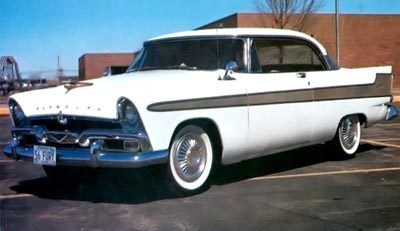
Plymouth used to be the budget option in the Chrysler family. It wasn’t the sporty choice. It was the sensible one. But in 1956, the brand tried to change the narrative. They launched the Plymouth Fury. This was not a mass-market car. It was a limited-edition halo model designed to prove Plymouth could play in the big leagues.
The initial 1956 run was a statement of intent. The Fury combined luxury with power in a way no other Plymouth had before. It was the plushiest and most potent car the brand offered that decade. But the real story begins with what happened next.
Production numbers were low. Style was high. That combination created a blueprint for future success. The 1957 and 1958 models didn’t just repeat the formula. They refined it. Each year brought improvements. The cars got better. They became faster. They became more desirable.
Today, collectors hunt for these early Furys. Why? Because they represent a pivotal shift. Plymouth went from weak sister to performance contender in three years. The early Furys are coveted for their unique blend of high style and low production numbers. They are great to look at. They are great to drive.
The 1956 model year marked the start. The 1957 and 1958 iterations perfected the design. This progression explains why these specific years are so sought after. They capture a moment when Chrysler decided to take performance seriously, even on a budget brand.
The Fury wasn’t just a nameplate. It was a catalyst. It changed how the market viewed Plymouth. And it left behind some of the most interesting American muscle cars of the mid-1950s.
How the 1956 Plymouth Fury Changed the Game
Kaufman Thuma Keller wasn’t kidding around.
The Chrysler Corporation chairman stood in the Plymouth studio. He looked at a clay model. It was sleek. Peaked fenders. A clean bar grille. Totally unlike anything Plymouth had rolled out before.
The stylists smiled. They thought it was pretty good.
“It’d better be,” Keller shot back. “We can’t afford another mistake.”
He was right to be worried. Keller himself was partly to blame for the styling inertia that had gripped Chrysler since World War II. When the company unveiled its first post-war redesign in 1949, Keller insisted the cars be “tall enough to get into while wearing a hat.” They got exactly that. Tall. Stiff. Traditional.
That strategy worked fine during the late-1940s seller’s market. Nobody cared if the car was ugly. They just wanted a car.
Then competition arrived. Ford launched a massive sales blitz in 1953. Suddenly, Chrysler products looked dumpy. Outdated. Plymouth took a serious beating. In 1954, calendar year volume totaled a disappointing 399,000 units. For the first time since 1930, Plymouth finished fifth in sales. It had lost its third-place finish.
The writing was on the wall.
Then came 1955. The new Plymouth arrived. And it was no mistake.
The 1956 successor followed with fins, flair, and Plymouth’s first V-8 engine. Entirely restyled. Dramatically new. Colorful. Handsome. Quick. Plymouth claimed fourth in industry production in both 1955 and 1956. By 1957, it was back to third.
But historians remember 1955 for something bigger than sales numbers. It was the rejuvenation of Chrysler Corporation.
Lee Iacocca, a key figure in a later Chrysler revival, noted a simple truth: once you’re selling standard stuff at a good clip, you’re allowed to have fun.
For Iacocca, that fun began with the reborn convertible.
For Chrysler in the mid-1950s, it meant high performance.
The company had introduced its hemispherical-head V-8 in 1951. Four years later, that mighty engine was powering the first of the great Chrysler 300s. Those cars dominated NASCAR and AAA stock-car competition. The allure of the 300 wasn’t just on the track. It pulled buyers into showrooms. It prompted many to choose the more affordable Windsor or New Yorker over the top-tier models.
That sales value naturally encouraged other divisions to think similar thoughts.
Each brand released a limited-production, high-performance special for 1956.
- Dodge offered the D-500 option for any model in its lineup.
- DeSoto added the Adventurer hardtop coupe.
- Plymouth fielded the Fury.
The Fury outsold all its high-power stablemates combined.
The 1956 Plymouth Fury: Born at Chicago
Introduced at the Chicago Automobile Show on January 10, 1956, the Plymouth Fury was as exciting as anything Plymouth had put out in some time.
Though it shared the same body used for the ordinary Savoy and Belvedere two-door hardtops, it sported several distinctive styling features that set it apart decisively.
The 1956 Plymouth Fury engine choice was strategic
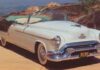
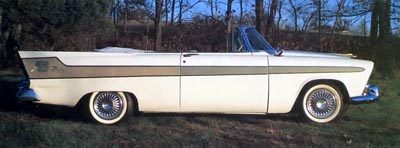
Visually, the 1956 Plymouth Fury was barely distinguishable from the standard Belvedere. It wore a one-tone eggshell white paint scheme. A full-length bodyside sweepspear cut through the white, featuring a gold-anodized aluminum insert. The grille center carried that same anodized gold treatment. Even the wheel covers were special. They featured a “spoke” design. These parts actually swapped with DeSoto Adventurer wheels. The only difference was the hub cap. Plymouth used plain hubs. DeSoto stamped “DeS” on theirs.
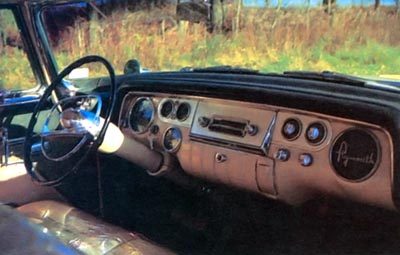
Inside, the cabin matched the exterior. Eggshell vinyl upholstery dominated. Black jacquard inserts provided contrast. It sat on the sharply finned 1956 hardtop body. It looked dashing. But the visual flair was secondary. The real story happened when you pressed the gas pedal.
Most rivals took a different route with performance. Ford and Chevy simply boosted existing V-8s. Plymouth engineers rejected that path. They looked at their own 277-cubic-inch polyspherical-head engine. They deemed it too small. They worried about reliability. Superchargers were out. Fuel injection was off the table.
They also avoided the famous Hemi. Why? Corporate politics? Or simple preference? The records don’t say. What they did do was look north. They grabbed the 303-cid poly-head V-8 from the Canadian Chrysler Windsor and Dodge Royal.
This wasn’t a random swap. It was a calculated move. The 303 displacement sat right at the top of the NASCAR Class 5 limit. That range was 259 to 305 cubic inches. It was the maximum they could run without penalty. They didn’t need to tweak a weak engine. They didn’t need risky forced induction. They just needed the biggest legal engine available from a sibling brand.
The 1956 Fury’s power came from a Canadian-sourced 303-cid V-8, positioned perfectly at the NASCAR Class 5 displacement limit.
Why the 303 engine defined the Fury’s legacy
The decision to import the 303 was pragmatic. It solved two problems at once. It provided displacement. It avoided engineering risk. The 277-cid poly-head was undersized for serious racing. The Hemi was likely reserved for other divisions or too complex to integrate quickly. The Canadian engine was ready. It fit. It performed.
This choice set the Fury apart. It wasn’t just a styling package. It was a dedicated performance model built on a proven, albeit borrowed, powertrain. The gold accents drew eyes. The 303 V-8 drew crowds at the track. It was a subtle but significant shift in how Plymouth approached high-performance variants. They stopped trying to stretch existing small blocks. They started looking for the right tool for the job, even if it came from another factory.
The result was a car that looked like a Belvedere but ran with the big dogs. The eggshell paint faded. The gold trim oxidized. But the 303 V-8 kept its place in history. It proved that sometimes the best engineering solution is the one you already have in the warehouse, across the border.
1956 Plymouth Fury Performance
The showroom sheen didn’t matter much to the guys who actually drove. They wanted torque. They wanted grip. They wanted to know if that 240 horsepower from the high-lift cam and 9.25:1 compression ratio was real or just a brochure promise.
This was the era of the horsepower race. Chevy had just cracked the 1.0 hp/cu in barrier in 1957, and Chrysler’s own 300B was flirting with that same number using optional high-compression heads. But the Fury? It sat at a respectable 0.8 hp/cu in. Not bad. Not yet groundbreaking. But it had a solid foundation.
To put that power down without spinning out, Plymouth didn’t skimp. The suspension was dialed in. Heavy-duty springs and shocks kept things planted. The car sat an inch lower than its Plymouth siblings, hunkered down, looking like it meant business. A front anti-sway bar added to the composure. The brakes? Jumbo Dodge units, 11 inches across. Big stopping power for a big car.
Rolling stock was wide. 7.10 x 15 tires. Wide enough to bite.
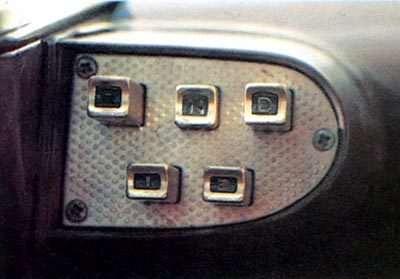
Transmission options were straightforward. A heavy-duty three-speed manual with a beefed-up clutch was the standard for those who liked to shift. For the lazy, there was the two-speed PowerFlite automatic, now controlled by pushbuttons. No column stalks here. Just buttons on the dash. Simple. Effective.
But how did it all come together on the road? Did the Fury live up to the hype? Or did it just look good parked?
“The Fury hunkered down on its well-damped suspension an inch closer to the road.”
Enthusiasts were itching to find out. The specs looked promising. The hardware was there. Now, it was time to see if it could deliver.
The 1956 Plymouth Fury’s Daytona Beach Speed Run
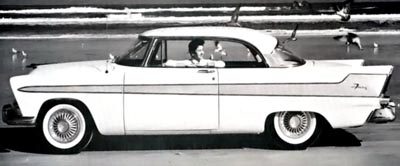
The 1956 Plymouth Fury nearly set a record at Daytona Beach’s annual Speed Week. But if anyone doubted that “business” was exactly what Plymouth intended, they had only to read about the exploits of a pre-production 1956 Fury that ran on the sands of Daytona Beach, Florida, on the same day the new model was being shown in Chicago.
Driven by Phil Walters, fresh from campaigns with the Chrysler-powered Cunningham racers, it blasted through the flying mile at 124 mph. The best one-way speed hit 124.611 mph. It also covered the standing mile at 82.54 mph. This was extraordinary for a near-stock passenger car weighing 3,650 pounds. The only nod to streamlining was masking off the headlamp housings and removing the wheel covers.
Why the Fury Didn’t Qualify for Stock Class
The new Fury looked like a sure winner at the Daytona Speed Weeks in February. But NASCAR regulations intervened. Plymouth was informed that the Fury did not qualify for the Stock class because it had not been in production the required 90 days.
The only alternative was to run it as a Factory Experimental. This meant facing rather more serious competition.
How the Modified Fury Performed at Daytona
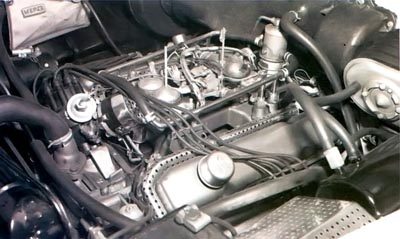
Plymouth gave it a try. They fitted a higher-lift cam. New heads came with close to 10:1 compression. A Chrysler manifold carried twin four-barrel carbs. On its first run, this modified Fury scorched through the traps at 143.596 mph.
A faulty fuel cap created a tank vacuum. This starved the car for gas on the return trip. Walters fell short of 130 mph.
Which Car Beat the Modified Fury?
In any case, the Plymouth Fury would have been beaten. A Mercury prepared by Bill Stroppe soon turned in a 147.26 mph average in the same class. Nevertheless, it was an impressive performance.
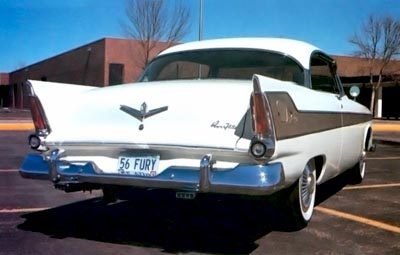
Performance and Ergonomics of the 1956 Plymouth Fury
Take a base model 1956 Plymouth Fury straight off the dealer’s lot. No aftermarket spoilers. No factory tuning. Just stock parts.
The result? It performed surprisingly well.
Motor Trend put a standard example through its paces. The test car hit 114 mph with a 3.73 rear axle ratio. The tachometer sat at 4,400 to 4,600 rpm. Engineers noted that with a longer straightaway, speeds could have reached 118 to 120 mph at 4,900 rpm.
Acceleration figures were solid for the era.
– 0 to 60 mph in 9.5 seconds
– Quarter-mile in 16.9 seconds at 83.5 mph
Handling was another story. The Fury rode like a Belvedere but with less pitch over bumps. Body roll was reduced. Steering felt more precise.
Ergonomics were less refined. The tachometer was shoved under two small gauges where the ignition knob usually lived on standard Plymouths. Reaching the ignition switch required long arms.
Despite the cramped interior layout, it remained a capable road car. Fast. Reliable.
1957 Plymouth Fury
The strategy worked. Sales numbers reflected the success.
1956 deliveries totaled 4,485 units. That was four times the sales of Chrysler 300s or DeSoto Adventurers. It held a near two-to-one advantage over the Dodge D-500.
Price played a role. The others cost more. A 1956 Fury started at $2,866. Base price under $3,000.
That price point helped move metal.
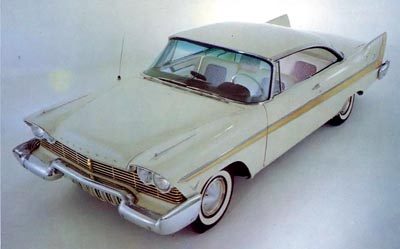
Virgil Exner’s Design Revolution
The 1957 Plymouth Fury looked wider and lower than the car that came before it. But that was just the warmup. The real shift happened across the entire corporate lineup. Chrysler spent roughly $300 million to totally redesign every model. The architect behind this overhaul was Virgil Exner. He had joined Chrysler in 1949. Until then, his influence was minimal. That changed in 1957.
“Ex,” as he was known, became a household name. His cars were vivid. They broke the mold for a brand previously defined by conservative styling. Exner had already proven his skill. He designed the famous Ghia-bodied show specials for Chrysler. The K-310 of 1951 was one of them. His work on the 1954 Imperial Parade Phaetons also left a mark. Those designs influenced the 1955 Imperial, Chrysler, and DeSoto models that followed.
His path to total control was accidental. It started with an insult. K.T. Keller asked Exner for his opinion on early proposals for the 1955 Dodge and Plymouth. Exner said they weren’t worth a damn. Keller took him literally. He fired the original designers. The 1955-1956 Dodge ended up being a collaboration between Exner and Maury Baldwin. The 1955-1956 Plymouth was the work of Exner and Henry King.
By 1957, Exner held the reins. He had executive control over every Chrysler product. The results were dramatic. The designs were so bold that they shifted the industry balance. Highland Park, home of General Motors, lost its design initiative. GM played catch-up for years. They eventually regained their traditional leadership, but the momentum had shifted.
The 1957 Plymouth Fury: Sculpted Lines Over Aerodynamics
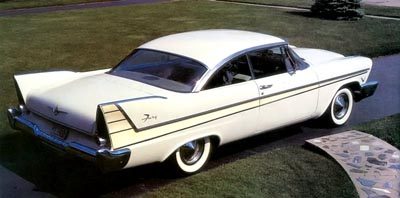
Virgil Exner is mostly remembered for the tailfins, which ballooned into absurd proportions on various makes by 1959. That’s an unfair legacy. The fin was just one piece of a cohesive design language he called the “Forward Look.” The 1957 Plymouth Fury was the most radical expression of that theme. It featured a daringly low beltline and massive amounts of glass, making it the most advanced car in those specific regards at the time.
It was also one of the first vehicles to raise the hood and deck to align with the fenders. That silhouette remains a design standard today.
“The most important thing about the 1957s,” Virgil Exner Jr. noted, “was that they were sculptured. Today they don’t look nearly as sculptured, but back then, the Ford and Chevy by comparison were fat-looking, and the Chrysler products were slim.”
Maury Baldwin clarified the aerodynamic intent behind the spikes. “The fins were aerodynamic in the first concept — we did quite a bit of aero work on them. Later they just became a styling thing.”
Marketing teams didn’t need to sell the concept. A 1958 Fury brochure called them “directional stabilizers . . . wind-tunnel tested and proved to add materially to the new Fury’s roadability by counteracting and minimizing the effect of crosswinds.” Drivers probably didn’t notice the crosswind mitigation. They just liked the look.
1957 Plymouth Fury Performance and Styling Details
The 1957 Fury launched slightly later than the rest of the Plymouth lineup, maintaining a limited production schedule similar to the 1956 model. Exner kept the off-white and gold color scheme. It suited the sleeker new bodywork better than before.
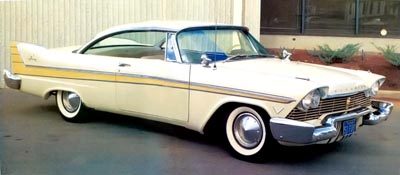
He removed the anodized gold from the wheel covers, reverting to slightly modified stock units. He applied that gold accent to the entire grille instead. Bumper extenders, which were optional on lower-trim Plymouths, became standard on the Fury. This addition increased the overall 1957 length by 1 1/2 inches.
Lower, Longer, and Heavier on Rubber
The 1957 Plymouth Fury wasn’t just an update; it was a physical reshaping. While it shared the extended 118-inch wheelbase with the softer Belvedere and Savoy trims, the Fury distinguished itself by hugging the pavement harder. It sat 5.5 inches lower than the previous generation, giving it a sleeker, more predatory stance that separated it from the stodgier models in the lineup.
The change in stance required a change in footwear. Wheel diameter dropped by a single inch, but the footprint widened. Instead of smaller, taller sidewalls, the Fury rolled on wider 8.00 x 15 tires. This was a deliberate move to improve stability at the lower ride height.
Inside, the 1957 model year leaned into comfort and convenience with a mix of standard features that felt like luxury at the time and optional extras that pushed the price ceiling higher.
Standard equipment included:
* A two-tone steering wheel
* Variable-speed electric wipers
* Padded dashboard and sun visors
* Foam-rubber seat cushions for better long-haul comfort
* A “sweep-second self-regulating watch” built into the instrument panel
These weren’t just gadgets; they were selling points for buyers who wanted a car that felt advanced.
For those willing to pay extra, the options list was long. “Full-Time” power steering was available, a feature that made maneuvering such a large sedan significantly easier. Power brakes joined the list, addressing the need for stopping power with the increased weight. Air conditioning, electric window controls, and power-adjustable seats turned the Fury into a mobile lounge.
Whitewall tires were a popular aesthetic choice, adding a touch of formal elegance to the chrome-heavy exterior.
There was one safety feature that rarely made it into the glossy brochures but was available nonetheless: dealer-installed seatbelts. At a time when seatbelts were often seen as an afterthought or a nuisance, Plymouth offered them, even if they weren’t prominently advertised. It was a nod to safety that flew under the radar, but it was there for those who knew to ask.
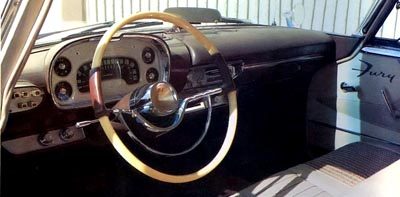
The interior of the 1957 Plymouth Fury had style points. Custom instrument panels. Two-tone steering wheels. But the real story was under the hood.
Chrysler didn’t just tweak the engine. They bored out the Canadian 303 to a full 318 cubic inches. Bore and stroke landed at 3.91 by 3.31 inches. Dual four-barrel carburetors joined the party. The rest came straight from 1956’s high-compression recipe. Domed pistons. High-lift camshafts. Free-flowing dual exhausts. Heavy-duty valve springs to keep everything from vibrating apart.
The result was called “V-800.”
It pushed out 290 horsepower and 325 pound-feet of torque. That kind of power wasn’t reserved for top-tier buyers. You could spec the V-800 in any 1957 Plymouth. High-line Belvedere? Sure. Detrimmed Plaza? Also an option. This turned the base model into a secret weapon. A Q-ship in muscle car form. Chevy didn’t appreciate the ad campaign that highlighted this fact.
Then came the transmission. Chrysler introduced the TorqueFlite. Three speeds. Pushbutton control. It would go on to be one of the finest automatics ever built. In the Fury, it mated to a 3.36:1 rear axle. Other ratios existed for both the TorqueFlite and the standard heavy-duty “three-on-the-tree” manual.
The 1957 Plymouth Fury wasn’t just loud; it was sophisticated in ways Plymouth hadn’t been before. Chrysler rolled out a corporate-wide torsion-bar independent front suspension. It replaced the outdated solid-axle setups of the past. The result was a ride that cruised effortlessly at highway speeds. It ate up rough pavement with ease. Handling precision jumped to a new level. Among the “Low-Priced Three”—Plymouth, Dodge, and DeSoto—Plymouth held the crown for cornering ability that year.
The Fury’s suspension wasn’t stock. It used heavy-duty components tuned for the enthusiast. Motor Trend editor Joe Wherry put one through its paces. He wrote that the car powered through hard turns with authority. A true driving enthusiast could even drift it. There was one flaw. The power steering lacked self-centering action. You had to fight the wheel back to straight. But the steering ratio was fast. Less than three and a half turns lock-to-lot meant quick corrections when the road got tight.
On a back road, a well-driven Fury could leave a fuel-injected Chevy or a standard Ford eating dust. That was the suspension talking. But buyers cared more about straight-line speed.
Wherry’s test car hit 60 mph in 8.7 seconds. It used the TorqueFlite three-speed automatic, controlled by pushbuttons. Wait, the test car had a stick shift. That helped the time. Wherry guessed a well-broken-in automatic would do it in eight seconds flat. He estimated a top speed of 120 mph. It was fast. “For the ordinary driver, this car is a potential handful,” he admitted. It demanded respect.
The price tag confused some. The base price sat just under $3,000. Most 1957 models sold for around $3,500. Compare that to the Belvedere V-8 hardtop at $2,449. The Fury was expensive for a Plymouth. Yet, people bought it. Production hit 7,438 units. That was a three-year high for the model.
Marketing leaned into the luxury angle. Plymouth ran ads showing sporting gentlemen sipping scotch by a fireplace. A painting of the 1957 Fury hung over the mantel. It was a bit much. But the car itself was special. It wasn’t just a commuter. It was a performance machine disguised as a luxury cruiser.
There was a catch. Like all Chrysler products from that era, the Fury suffered from tinworm. Rust. It ate through the body panels. A high number of 1957 and 1958 models succumbed to corrosion. That is why you see so few today. They didn’t last.
The Fury’s life was short. It lasted only one more year.
The Final Fury: 1958 Model Year Changes
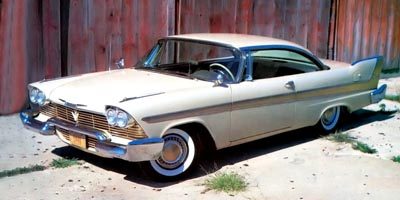
The 1958 Plymouth Fury looked almost identical to its predecessor. Stylewise, it was a repeat. The only obvious changes came from federal regulations and minor styling tweaks.
Quad headlamps were now legal. The Fury adopted a tube grille to house them. A matching stone shield appeared under the bumper. Taillights shrank into smaller “lollipop” shapes. The distinctive gold and white color scheme remained. The sweepspear was modified slightly at the rear. Wheel covers became standard equipment, no longer an option.
The price crept up. Base price rose to $3,067.
It was the end of the line for this specific generation. The Fury would disappear after 1958, merged back into the broader Plymouth lineup. The legend remained, though. It proved that a mass-market car could handle like a sports car. It just couldn’t survive the rust.
The End of the Line for the 1958 Plymouth Fury
The 1958 Plymouth Fury was a car caught in a perfect storm. Production issues and a sticker shock that simply didn’t work meant volume sales never stood a chance.
Under the hood, things shifted. The V-800 came back. It sat at 290 horsepower like before, but now it was the standard V-8 for the entire lineup. The base rating dropped to 225 horsepower. Compression took a quarter-point hit, settling at 9.00:1. The special “hop-up” parts that made the 290 version sing were gone. If you wanted power, you still had to pay for the “power pack” engine on any 1958 Plymouth.
The Golden Commando Option
There was one new toy. Optional on all models, including the Fury, was a brand new 350-cid wedge-head V-8. Chrysler called it the Golden Commando.
It pushed out 305 horsepower as standard. Fuel injection bumped that to 315 horsepower. This made it the fastest Fury yet built.
The numbers didn’t lie. A typical 315-horsepower example hit 0-60 mph in 7.5 seconds. The standing quarter-mile took 16.0 seconds flat. It crossed the line at nearly 90 mph.
Fast? Yes. Successful? No.
1958 marked the end of the limited-edition Plymouth Fury. The national economic recession that year was brutal. Plymouth bled sales like most every other make. Total model year sales dropped by about 300,000 units.
Out of that carnage, only 5,303 Furys left the lot.
The recession killed the party. The bugs killed the reputation. The price killed the volume. The Fury vanished, leaving behind a handful of survivors and a reputation for being too much car for too little time.
“Unfortunately for those who had come to love this unique driver’s Plymouth, 1958 was the last year for the limited-edition Plymouth Fury.”
It was a sharp decline. From a unique driver’s car to a footnote in Chrysler’s history. The Golden Commando was fast. The Fury was gone.
The 1959 Plymouth Fury: A Shift in Identity
The 1958 Plymouth Fury came standard with the Golden Commando V-8, a move that signaled a shift in Plymouth’s strategy. Because the original Fury was essentially a sport-tuned Belvedere hardtop with minor tweaks, it was an easy sell for executives. They kept the name but dropped the exclusivity. For 1959, the Fury became the new top-tier series, replacing the Belvedere at the summit of the lineup. It was available in every body style the company offered, plus two new additions: the Sport Fury hardtop coupe and convertible. These two models were the spiritual successors to the limited-run 1956-1958 Furys.
The 1959 Sport Fury received a heavy facelift. It rode on conventional torsion-bar suspension. You could order it in any color, though the signature gold sweepspear was gone. Inside, buyers could option swivel seats or the “Highway Hi-Fi” record player. Under the hood, the setup changed. The 260-horsepower 318 cubic-inch V-8 was now standard, whereas it had been optional on lesser models. For those wanting sharper acceleration, Plymouth introduced a new 361 cubic-inch Golden Commando V-8 producing 305 horses.
The Sport Fury looked distinctive. It wasn’t the thoroughbred race-bred machine of the mid-50s, however. Plymouth realized this quickly. The sub-series was axed for 1960. When you could buy a four-door Fury sedan with a six-cylinder engine, the “sport” distinction had vanished.
Check out the specifications of the 1956-1958 Plymouth Fury on the next page.
For more information on cars, see:
-
Muscle Cars
-
Sports Cars
1956-1958 Plymouth Fury Specifications
The end of the limited-production Plymouth Fury had little to do with the Automobile Manufacturers Association’s infamous ban on competition advertising. The AMA’s decision came down with a clang shortly after the 1957 Daytona speedfest. That timing was likely for the best. The Plymouth Fury had not performed well at the industry’s last formal speed event anyway. The real killer was the 1958 recession.
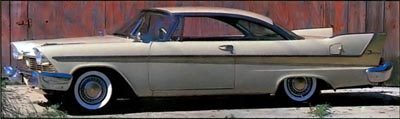
Rust is the silent killer of 1950s Mopars, and the Plymouth Fury is no exception. Most of the original gold-and-white rockets from the 1956-1958 era are gone, victims of time and corrosion. What remains is a rare glimpse into a specific moment when Chrysler decided to blur the lines between a race car and a street car.
The early Fury story is steeped in drag strip lore. Wally Parks, the father of hot rodding, took the Experimental class flying mile in one of these beasts. It wasn’t just any stock V-8 under the hood. It was a Chrysler engine fed by Hilborn fuel injection—a setup that screamed performance before “muscle car” was even a household term. But the Stock class told a different tale. It was a Chevrolet parade ground. The best Chevy scored 118.460 mph in the flying mile. That sounds fast until you remember the 1956 Fury had already clocked an unofficial run 5.5 mph faster. The gap was real.
Even without regulatory interference, the Fury’s dominance would have been short-lived. Chrysler soon extended the Fury’s larger engine to lighter, lesser Plymouth models. The factory stock-car team shifted focus to the bare-bones Plaza two-door. Independent teams followed suit. The Fury became a halo car, a marketing tool rather than a volume seller. It was a logical pivot. The publicity value outweighed the production cost.
For collectors, the 1956-1958 Furys remain the holy grail. They were the first. They were also the best. High-strung engines don’t just age well on modern unleaded gasoline. That’s an open question. These machines demand fuel. Lots of it.
Yet, their place in Chrysler history is secure. It’s as solid as their place in our affections. That matters more than numbers on a spec sheet.
1956-1958 Plymouth Fury Basic Specifications
1956
1957
1958
| Spec | 1956 | 1957 | 1958 |
|---|---|---|---|
| Production | 4,485 | 7,438 | 5,303 |
| Price (new) | $2,866 | $2,925 | $3,067 |
| Wheelbase (in.) | 115.0 | 118.0 | 118.0 |
| Overall Length (in.) | 204.8 | 206.0 | 206.0 |
| Overall Width (in.) | 74.6 | 79.4 | 79.4 |
| Overall Height (in.) | 58.8 | 53.5 | 53.5 |
| Curb Weight (lbs) | 3,650 | 3,595 | 3,510 |
| Wheels (dia. x width, in.) | 15 x 5.50 | 14 x 6 | 14 x 6 |
| Standard Tires | 7.10 x 15 | 8.00 x 14 | 8.00 x 14 |
| Front Suspension | Independent; unequal length A-arms, coil springs, anti-roll bar. | Independent; upper and lower control arms, longitudinal torsion bars. | |
| Rear Suspension | Live axle on longitudinal leaf springs. | Live axle on longitudinal leaf springs. | |
| Brake Type F/R | drum/drum | drum/drum | drum/drum |
| Brake Diameter F/R (in.) | 11.0/11.0 | 11.0/11.0 | 11.0/11.0 |
| Brake Lining Area (sq. in) | 173.5 | 184.0 | 184.0 |
| Steering Type | worm & roller | worm & roller | worm & roller |
Note: All Models Hardtop Coupes
Sources: Chrysler Corporation; Langworth, Encyclopedia of American Cars 1930-1980
1956-1958 Plymouth Fury Drivetrain Specifications
1956
1957-1958
1958
| Spec | 1956 | 1957-1958 | 1958 |
|---|---|---|---|
| Type | ohv V-8 | ohv V-8 | ohv V-8 |
| Bore x Stroke (in.) | 3.81 x 3.31 | 3.91 x 3.31 | 4.06 x 3.38 |
| Displacement (cu. in.) | 303 | 318 | 350 |
| Compression Ratio (:1) |