Light towing is straightforward. You grab a Class I or II hitch, maybe a simple drawbar, and you’re off. These handle the lightest loads with ease. But when you are moving a gigantic RV or a herd of draft horses, the stakes change. You need serious equipment. That means a beefy pickup, a sturdy trailer, and a hitch that won’t fail under pressure.
If you are hauling campers or boats, Class III and IV hitches might suffice. They handle up to 10,000 pounds of gross trailer weight. Just under 4,536 kilograms. That is plenty for many households. But go beyond that weight, and you enter a different league. You need a Class V hitch. Or, more specifically, a gooseneck hitch. These beasts can handle up to 30,000 pounds. About 13,000 kilograms.
Why Gooseneck Over Bumper Pull?
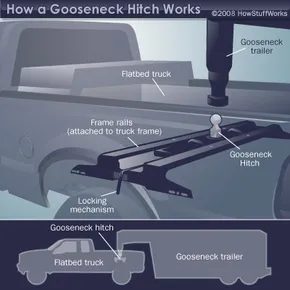
Regular hitches extend from the rear bumper. They hang off the back. Gooseneck hitches, along with the closely related fifth wheel systems, anchor directly into the bed of a pickup truck. This changes everything.
Gooseneck hitches use a large hitch ball to lock into the trailer’s kingpin. Fifth wheel hitches use a large, wheel-shaped plate. Both methods offer superior strength compared to rear-mounted solutions. But there is another reason enthusiasts prefer them. Maneuverability.
Trailers connected via a gooseneck point can make significantly tighter turns. The pivot point is higher and closer to the vehicle’s center of gravity. This reduces the swing radius. It makes backing up less of a nightmare.
The Cost and Installation Reality
Prices vary depending on the model. Generally, you are looking at a couple of hundred dollars for the hitch itself. Does that price include the installation kit? Sometimes. Often, no.
This matters if you are a DIY enthusiast. Some hitches are easier to install on specific makes and models. Others require more fabrication or specialized tools. If you plan to install it yourself, check the compatibility first. A difficult install can turn a weekend project into a month-long headache.
On the next page, we’ll dig into the other factors you need to weigh before buying.
You can’t just strap any trailer to a gooseneck hitch. The hardware demands a specific trailer architecture. Specifically, you need a unit with a protruding neck—the classic “gooseneck” shape—that drops into the bed of your truck. If your trailer doesn’t have that distinct forward extension, the whole setup fails.
Weight is the other non-negotiable. Gooseneck hitches are built to haul heavy loads, but you still have to verify the numbers. Check the empty weight of the trailer. Then check it again with the load. A few thousand pounds is manageable. Add six horses, a weekend’s worth of gear, or livestock, and the math changes fast. You also need to respect your truck’s limits. Check the manufacturer’s towing capacity specs. Leave a buffer. If you underestimate the weight or add cargo last minute, you want margin for error.
Installation matters too. Some setups are DIY-friendly. Others are nightmares. The truck model and hitch brand dictate the difficulty. If your pickup is tight, don’t hesitate to hire a pro. Precision is key. The hole for the hitch ball must be drilled exactly right. The assembly must bolt securely to the frame. Sometimes you have to remove truck components to fit the hardware. Watch out for fuel lines. Brake lines. You don’t want to sever a critical system while bolting down steel.
Installing Gooseneck Hitches
The process varies by vehicle. Some trucks offer pre-drilled holes. Most do not. You’ll likely need to mark and drill. Use a template. Follow it. Measure twice. Drill once. Misalignment means a wobbly hitch. Or worse, a detached trailer.
Clean the bed thoroughly. Remove rust. Apply a sealant if required. This prevents corrosion later.
Position the hitch. Align with the frame rails. Bolt it down. Torque to spec. Don’t guess. Use a torque wrench. Over-tightening cracks the frame. Under-tightening loosens under load.
Connect the electrical harness. Test the lights. Brake controller. Ensure everything syncs before you hook up the trailer.
Once installed, test the connection. Low speed. Tight turns. Watch for binding. Listen for clunks. If it sounds off, recheck the bolts. Recheck the alignment.
A properly installed gooseneck hitch transforms your truck. It becomes a hauling beast. But only if you respect the specs. Only if you install it right.

Drilling and Frame Alignment: The Core of Installation
Skipping the manual is a fast track to disaster. Every brand has its own quirks, but the rule is universal: follow the instructions or risk watching your trailer detach the moment you take a turn. It sounds dramatic, but mechanical failure doesn’t care about your confidence. The reality is that installing a gooseneck hitch often demands surgical precision on the truck itself.
The most invasive step? Cutting into the metal. You typically need to drill a precise hole through the center of the truck bed floor. Why? To bolt the hitch assembly directly to the frame rails underneath. This creates a rigid connection point for the hitch ball. Most modern units allow that ball to fold flat or detach entirely, keeping the bed clean when you aren’t hauling. But until that bolt is torqued correctly, it’s all guesswork.
Measuring Twice, Drilling Once
You won’t get away with eyeballing this. The process involves serious measuring. You need to determine the exact distance from the back edge of the bed to the center of the hole, and ensure that center point is perfectly aligned left-to-right. Misalignment here throws off the pin weight distribution, which can make the truck handle like a shopping cart with a bad wheel.
Expect to use a tape measure, a square, and plenty of patience. You’re also scanning for hidden obstacles. Fuel lines, brake lines, and wiring harnesses often run right through the bed floor. Hit one of those while drilling, and you’ve turned a simple hitch install into a $500 repair bill. Tools are standard garage fare—drills, wrenches, saws—but the skill required is less about strength and more about accuracy.
Safety Anchors and Professional Help
The hitch assembly doesn’t just hold the ball; it usually integrates safety chain anchors. These aren’t afterthoughts. They are engineered attachment points designed to keep the trailer from separating completely if the primary hitch fails. It’s a redundant system, plain and simple.
But here’s the thing: if the measuring feels wrong, or if you’re not comfortable drilling into your vehicle’s structural components, stop. Call a pro. There is no shame in paying someone to ensure your heavy gear stays attached to your truck. A poorly installed hitch isn’t just an inconvenience; it’s a liability on the highway.
Lots More Information
Related HowStuffWorks Articles
-
How Fifth Wheel Hitches Work
-
How Front-mount Receivers Work
-
How Hitch Covers Work
-
Hitch Components Quiz
-
How Towing Weight Distribution Systems Work
-
Hitch Types Quiz
Sources
-
“Dictionary of Automotive Terms.” Motor Era. (9/15/2008) http://www.motorera.com/dictionary/index.htm
-
Gray, Scott. “Trailer Hitches — Ideas on How to Choose the Right One.” OffRoaders.com. (9/29/2008) http://www.offroaders.com/tech/Trailer-Hitches.htm
-
“Hide-A-Goose Gooseneck Hitch Installation.” etrailer.com. (10/1/2008) http://www.etrailer.com/tv-gooseneck_installation_dodge_ram_2006.aspx
-
“Trailer Hitch Classes.” Hitches4Less.com. (9/29/2008) http://hitches4less.com/trailer-hitch-classes.html
-
Lindenman, Thomas and McCoy, Richard. “Gooseneck Hitch Assembly and Method of Installation.” United States Patent. 10/26/1999. (9/29/2008) http://www.freepatentsonline.com/5971418.pdf
-
Longhurst, Chris. “The Car Maintenance Bibles.” CarBibles.com (9/15/2008) http://www.carbibles.com/
-
Martin, Joe. “Trailer Loading and Towing Guide.” Sherline Products. (9/15/2008) http://www.sherline.com/lmbook.htm#refrn4
-
Morgan, Elizabeth. “Gooseneck Trailer Hitches.” Ezine Articles. 9/8/2005. (9/29/2008) http://ezinearticles.com/?Gooseneck-Trailer-Hitches&id=69515
-
“NTTA Guide to Safe and Legal Towing.” National Trailer & Towing Association.” (9/29/2008) http://www.ntta.co.uk/law/index.htm
-
“Purchasing the Right Horse Trailer – From the Horse’s Point of View” EquiSpirit Trailers. (9/29/2008) http://www.equispirit.com/info/articles/buying-horse-trailer.htmv
-
“Towing Glossary.” U-Haul. (9/15/2008) http://www.uhaul.com/hitches/glossary/
-
“Trailer Hitches.” PickupSpecialties.com Corporate Web site. (9/29/2008) http://www.pickupspecialties.com/Hitches/class_iii_receiver_hitches.htm
-
“Trailering 101.” Traveled Lane Trails, Inc. (9/30/2008) http://www.traveledlanetrailers.com/trailering101/trailering1c.htm