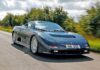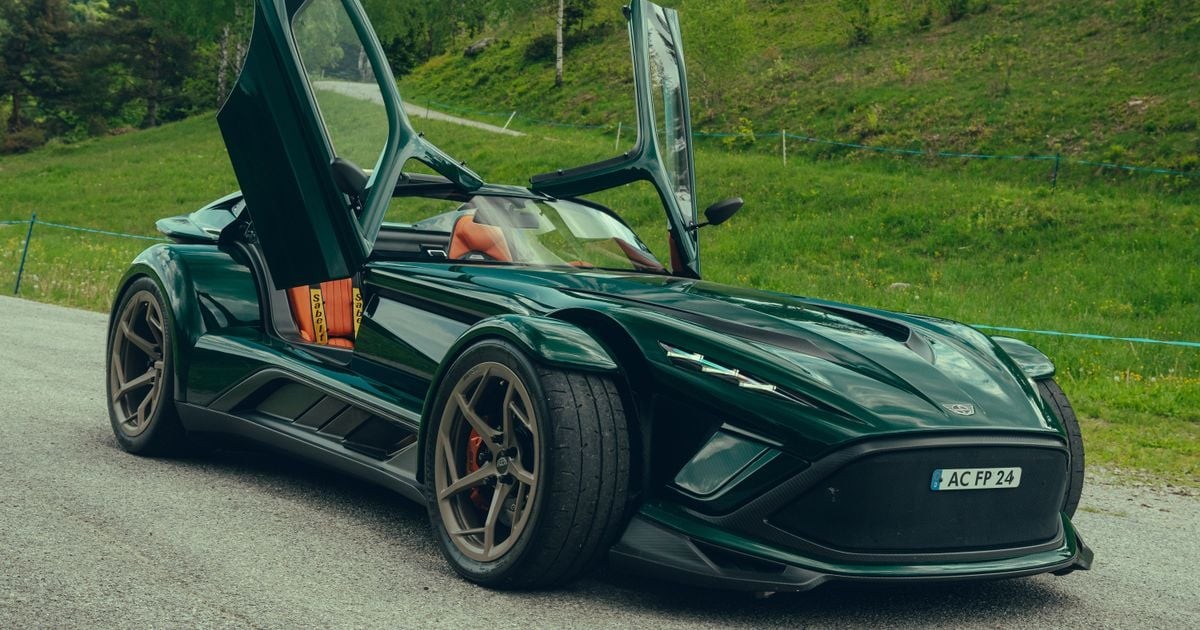
Donkervoort is finally letting Australians touch the wheel. The Dutch boutique manufacturer has confirmed that right-hand drive P24 RS models are available for order. It is their first time building RHD cars at all.
This moves the P24 RS beyond Europe, Japan, Singapore, New Zealand, the UK, and Hong Kong. The wait for local buyers is over.
The P24 RS specs: Power and Weight
The car weighs 780kg. Dry weight. It has 450kW of power on tap. That is not a typo. The new 3.5-litre twin-turbo V6 is an in-house Donkervoort creation.
The star feature here is the ‘Power To Choose’ engine mapping. You get three settings.
- 400hp (294 kW). Mellow.
- 500hp (368 kW). Serious.
- 600hp (441 kW). Maximum violence.
Switch modes with a button. Torque hits 800Nm at the top setting. Donkervoort claims this makes the P24 RS the only production car pushing 600hp under one tonne.
The numbers are aggressive. 0 to 200 km/h in 7.4 seconds. Top speed over 300 km/h. It pulls 2.3g of lateral force in corners. That is enough to make your spine rattle.
Chassis and Usability
Underneath sits a hybrid tubular chassis. Donkervoort uses its own Ex-Core carbon-fibre tech to reinforce it. The length is 4,000mm. The wheelbase is 2,420mm. It is wide.
Is it track-only? Not quite. Donkervoort insists on everyday usability.
“Donkervoorts prioritise driver engagement… making every drive an unforgettable event.”
— Denis Donkervoort, Managing Director
You get 298 litres of luggage space. Yes, really. There is a removable twin-targa roof. Suspension, traction control, and engine maps are all adjustable. You can take the roof off and put your groceries in the back.
How many are made and what do they cost?
Production is tight. Only 150 P24 RS cars will be built globally. Fewer than 30 will be right-hand drive. The rest are for LHD markets.
Prices? No Australian figure yet. In Europe, the base starts at €298,550. That is roughly A$486,000 before tax, freight, and localisation costs. Add options. It goes up.
Orders are open now. Right-hand drive buyers are already in the specification process. Donkervoort is taking the request seriously.
Why now?
Denis Donkervoort says overseas demand drove the RHD decision. They heard the calls. The new PTC engine gave them the engineering leeway to make it happen.
“Right-hand drive was an opportunity that came… with our own research and continuous phone calls,” he noted.
The brand is old school. Founded in 1978. Low volume. Extreme customisation. They say 99% of cars they have built since the late 70s are still on the road. That is longevity you don’t see in modern German sports cars.
So, you have 30 slots. A 780kg weapon with 600hp options. And a waiting list that likely moves slowly.
If you want one, you need to act. The factory is already building them.