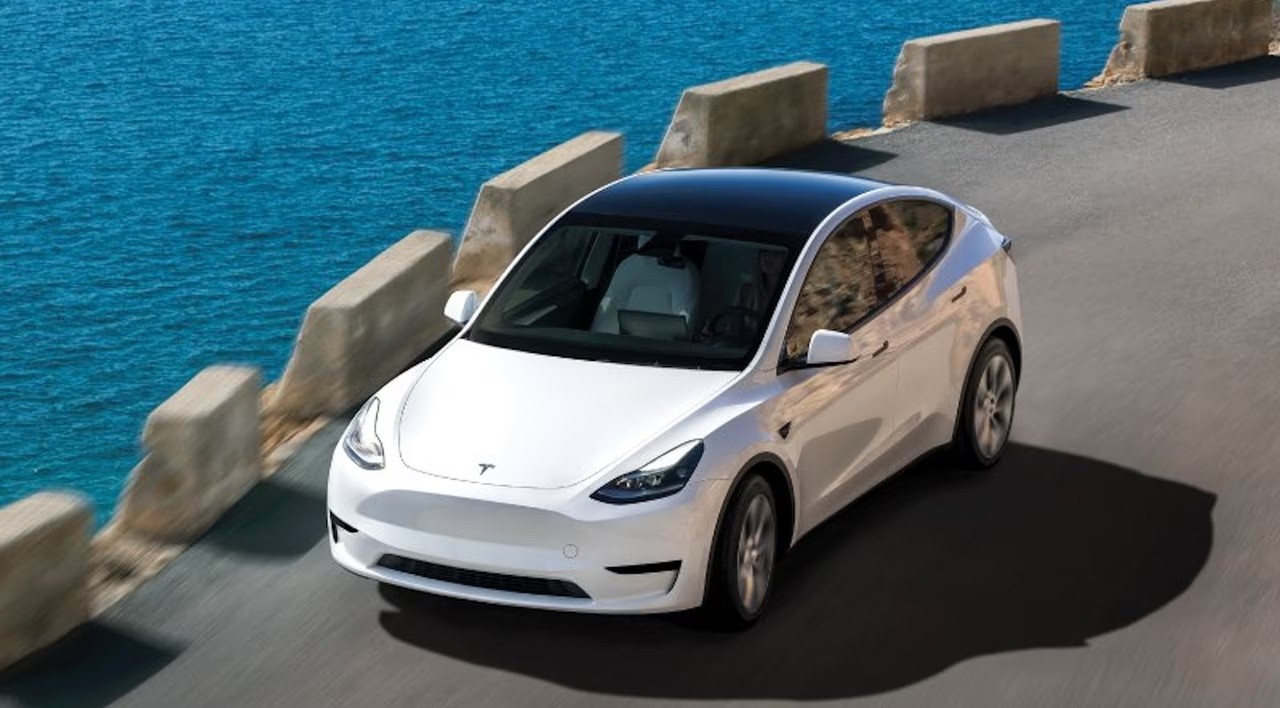
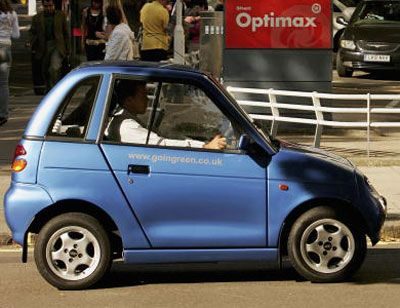
If you’re not looking for it, you can easily miss it. A small boxy dot in London’s sea of heavy machinery. The G-Wiz doesn’t just sit small next to taxis, delivery vans and buses. It disappears into the cracks of urban infrastructure. The fact that this is Britain’s most popular electric car feels like a glitch in the matrix.
How city cars are taking over the city
The geometry of the G-Wiz is clean and aggressive. It’s a two-door hatchback that looks more like a mobile storage unit on wheels than a car. The proportions are extreme. The cockpit is located at the front, almost on the axle. The rear overhang is negligible. This design is not just for aesthetic purposes. This was carefully planned due to urban congestion and lack of parking spaces.
Drivers have to navigate narrow streets that are difficult to navigate in a regular sedan. The G-Wiz can break through obstacles that larger vehicles cannot. It became a symbol of urban efficiency, or at least the illusion of urban efficiency.
Why G-Wiz is popular
The popularity of this small electric car goes beyond its size. It’s a matter of time. London’s congestion charge hits drivers hard. The zero-emission G-Wiz is offered a loophole. At least financially. For many people, this is the cheapest way to continue driving in the city without daily tolls.
Cars are everywhere. You can see it parked on the sidewalk. You can see it going around a red light, but it looks smaller than the bus next to it. It has become a cultural fixture. People either loved its quirkiness or hate intrusion. Both reactions kept it in the spotlight.
The reality of driving a small electric car
When you get behind the wheel, the trade-off becomes clear. Visibility is limited. Thick pillars and small windows create blind spots that can be dangerous. The ride is firm. You have very little insulation. But these shortcomings take a backseat to central London’s dense gridlock Cars do one thing; it gets you there.
G-Wiz legacy does not apply to performance specs. This is pure persistence. It changes the way people think about electric cars. Not as a futuristic fantasy, but as a practical (albeit imperfect) tool.
Small price
G-Wiz still drives past London gas stations, a ghost of the electric age that once ruled Britain. But the crown of the world’s cheapest vehicle has passed. It’s smaller than you expect. And significantly cheaper.
Hit the bottom
If you’re looking for the absolute lowest place to own a car, the list is short. Prices vary widely depending on local subsidies, taxes and currency strength, but three names are consistently at the bottom end.
- Daihatsu Mira in Japan.
- Bajaj RE4 autorickshaw in India.
- Wuling Hongguang Mini EV in China.
China’s volume king
Wuling Hongguang Mini EV is not only cheap. It’s a cultural phenomenon. It cost just $4,500 in basic configuration and outsold most car brands worldwide. Why? Because in China, urban traffic is not about status. It’s all about efficiency.
The car is small. 2.9 meters long. Two seats in the standard version, four in the extended wheelbase. It runs on a small 9.3 kWh battery. Range? About 120 kilometers on a single charge. It is enough for a daily commute in Shanghai or Chengdu. Not for a cross-country trip.
The reality of India
Cross India and the equation changes. Bajaj RE4 is a three-wheeler. It is registered as a vehicle, not a car. But for millions, it’s the only option. Priced around $2,000-$3,000 new, it’s a multi-purpose tool. A moving shop. Taxi. The barrier to market entry is not just price. It’s infrastructure. In China, an electric car can be charged at home. This is not possible in every corner of rural India.
Japan’s Kei Car Logic
Different rules apply to the Japanese Daihatsu Mira. Kei cars are a legal class with strict size and engine displacement restrictions. This enables tax relief and cheaper insurance. Mira fits the bill. It is effective. It’s practical. But it’s a niche market. You can’t buy one in Europe. Or the USA. The market is closed.
Who will win?
Depends on your definition of “cheapest”.
- Lowest sticker price: Bajaj RE4 (counting tricycles).
- Lowest price for a 4-wheel passenger car: Wuling Hongguang Mini EV.
- Lowest maintenance costs: Toyota Aygo (used market).
G-Wiz is gone. Electric cars are still expensive in the West. But in developing countries, the cheapest ride is not a luxury. It’s a lifeline. And it’s getting smaller.
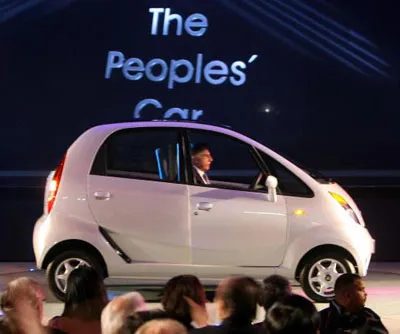
On January 10, 2008, Ratan Tata got behind the wheel at the New Delhi Auto Show and introduced the Tata Nano to the world. It’s not just a prototype anymore. The Tata Group chairman took the controversial mini-car for a test drive to show that the project is no longer a dream but a reality.
Tata driving the Nano has become iconic.
This is a statement.
She didn’t just present the product. He didn’t just present the product.
She experimented with radical ideas to make travel affordable for the masses. He experimented with radical ideas to make travel affordable for the masses.
Those who attended the car show got a close look at the car advertised as the cheapest car in the world.
The Logic Behind the Price Tag
Why do people care so much? Because price was the headline. The Nano is designed to be priced under Rs 100,000. That’s the goal. Achieving this means removing everything unnecessary. The weight of the car was less than 750 kg. It was equipped with a two-cylinder engine. The interior was sparse, but it worked.
Design is about efficiency, not luxury. The engine was mounted at the rear. This layout saves space in the cabin. The power transmission has also been simplified. Although critics cited safety concerns, the Tata team believed that a lightweight car with a strong chassis could meet safety standards without increasing cost or weight.
Manufacturing for the masses
Nano is not manufactured on a traditional assembly line. Tata Motors introduced a new method of manufacturing cars. They adopted a modular approach. Subassemblies are built separately and then assembled together. This reduces the factory footprint. It also reduces the capital investment needed to build the factory.
The result was a car that could be mass produced. The goal was volume, not margin. Although a small profit was made from each car, the total revenue was billions of rupees. This model challenges the entire automotive industry’s approach to affordable cars.
レセプション: 希望と現実
自動車ショーは電気式です。 人々はナノを信じたいと思っています。 インドの数百万世帯で二輪車に取って代わることを約束している。 4 つの車輪、屋根があり、風雨から保護されます。 セダンの数分の一の価格で、それは奇跡のように思えます。
しかし、誰もが納得しているわけではありません。 業界の専門家は、実際のコストを考慮した場合に価格を維持できるかどうか疑問を抱いています。 品質管理に不安がある。 安い素材は時間が経っても長持ちしますか? タタモーターは価格を抑えながら安全性と信頼性を維持できるのか?
ナノがシンボルになった。 それは野心を表します。 これは、テクノロジーがモビリティを民主化できるという希望を表しています。 それが成功するか失敗するかに関係なく、発展途上国における個人交通のアクセス、コスト、将来についての議論を強いられます。 ナノの物語はまだ執筆中ですが、その影響は否定できません。 それは手頃な価格の車に対する私たちの考え方を変えました。
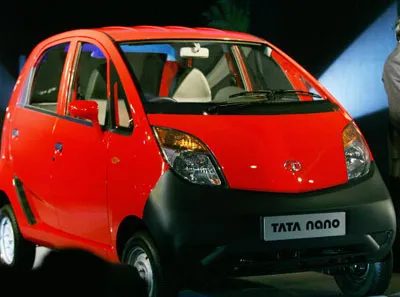
At just 10 feet long and 5 feet tall, the Tata Nano is practically a footnote in terms of physical presence. Most city cars are closer to 14 or 15 feet long. However, the Nano refused to grow. This is an unusual size that is almost comically compact compared to a regular sedan. Although it looks small, it can accommodate 5 people. How? Through tight packing efficiency and a layout that prioritizes internal volume over external dimensions.
The engineering team didn’t just downsize the car; they rethought where to place components. The engine is hidden in the back, the suspension components have been kept to a minimum and the seating arrangement has been optimized to squeeze as much headroom as possible into the smallest area. This is a space trick that challenges traditional car design.
This approach redefines the meaning of “compact”. Nano sets a new benchmark for urban mobility by moving the boundaries of interior space in relation to the vehicle’s footprint. This proves that you don’t need a sprawling chassis to transport your family. The next stage of this evolution takes the “mini” concept to a new level, focusing on increasing efficiency and reducing the footprint.
“It’s only 10 feet long and 5 feet high… it seats five passengers.”
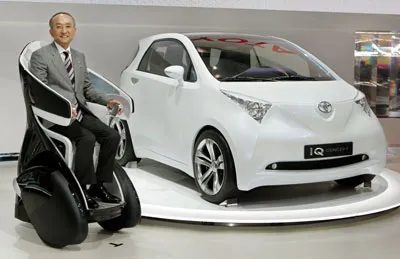
Katsuaki Watanabe, then president of Toyota Motor, stood there holding what looked like a mistake.
It was the iQ.
Small. Boxy. Almost comically compact. But underneath that stubby silhouette was a desperate, brilliant attempt to solve a problem nobody else had fully cracked yet: how to pack four seats and basic dignity into a footprint smaller than a city parking space.
This wasn’t just another retro fad. This was the result of “iQ,” an internal project code that stood for “Innovative Quality.” The goal? Ultra-high fuel efficiency. Ultra-low emissions. And a shape that defied conventional automotive geometry.
Take another look.
The packaging paradox
Most subcompacts compromise. You get cute styling, sure. But the rear seats? They’re for kids. Or luggage. Not adults. Not for any duration longer than a quick trip to the corner store.
Toyota challenged that assumption.
The iQ featured a four-seat layout where all passengers sat upright. How? By extending the wheelbase as far forward as possible and pushing the cabin to the extreme rear. The front overhang vanished. The rear overhang was minimal. The result was a van-like cabin volume in a car that measured just 109.8 inches long.
For context, that’s shorter than a standard golf cart in some configurations.
“We wanted to create a car that offered the freedom of a scooter with the practicality of a small city car.”
That was the stated vision. And it worked, technically. The interior space felt cavernous for the exterior dimensions. You could fit four average-sized adults. Not comfortably on a cross-country road trip, but comfortably enough for daily commuting in congested urban centers.
Why it matters now
We’re looking back at the iQ because the segment it tried to own has shifted. Electric micro-cars are rising. The Fiat 500e, the Smart EQ, the Citroen Ami. But the iQ was a gasoline-powered anomaly. A combustion engine car that felt electric in its packaging logic.
The original iQ (2008-2015) used a 1.0-liter or 1.3-liter D-4D diesel engine in many markets, paired with a CVT. In Japan, you could get a hybrid variant. The fuel economy was staggering for its time. Some versions achieved over 60 mpg. In Europe, where diesel ruled the small car segment, it was a sales success.
But the iQ wasn’t just about numbers. It was about attitude.
The styling, penned by Toyota’s European design team, was polarizing. Sharp angles. Vertical surfaces. It looked like it was designed by an architect, not a car guy. And that was the point. It rejected the curves of the Mini or the Fiat 500. It was functional. Brutalist, even.
The electric successor
Toyota didn’t leave the idea dead. They evolved it.
In 2024, they announced the new iQ. Not a revival. A reinvention. And this time, it’s fully electric.
The new iQ is smaller. Much smaller. It’s a kei car by Japanese standards, but globally, it’s a true micro-EV
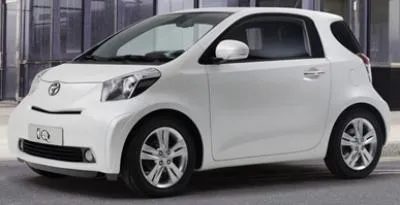
At about 10 feet long (about 3 meters) and 5 feet 6 inches wide, the BMW iQ is well suited for tight urban spaces. It redefines what a car is. This is not a random thought. This is a deliberate measure in response to increasing traffic congestion in European cities.
This project was born out of an unexpected partnership. Swiss watchmaker Swatch, known for its bold designs and affordable luxury products, has partnered with Daimler-Benz. What is their goal? We are creating the next generation of urban transport. It’s not a car. It’s not a compact hatchback. Something completely new.
The iQ is not designed to compete with the Mini Cooper or the Fiat 500. Designed to be in places these cars can’t reach. Its footprint is smaller than most compact cars. However, it comfortably fits four adults. how? With aggressive packaging. The battery is under the floor. Passengers sit in trapezoidal cabins. The wheels were pushed into the corners. This creates an evenly spaced interior that utilizes every inch.
The cooperation between Swatch and Daimler is more than just a marketing strategy. This is a test of design philosophy. In Swatch, attention is paid to color, material and emotional content. Daimler brings design discipline and safety standards. The result is a car that feels fun but is built to last.
iQ is designed with functionality in mind. Every arc has a purpose. The high roofline offers plenty of headroom. Short crossings improve maneuverability. You can enjoy the scenery from the large windows. It’s not about looking aggressive. This seems effective.
iQ is more than just a car. This suggests that city driving may be different.
Critics called it weird. Enthusiasts call it “smart”. Engineers say this is necessary. iQ is the prototype of the future of urban driving. This goes to show that size isn’t everything. That’s innovation.
The partnership between Swatch and Daimler did not last long. I left Swatch after a few years. But IQ is still there. This proves that even small cars can be smart. Collaboration between industries can have unexpected consequences.
iQ の功线は販岩台数にあおますます。 This is the way of thinking that was planted. It uses lightweight material. It emphasizes the efficiency of the city. Let’s have 常識に challengeする意意. These ideas did not disappear even in iQ. They spread.
The iQ was never intended to be mainstream. This is a bumblebee. This shows that the automotive industry is ready for change. The future of mobility is not a bigger engine. It’s a smarter design.
After all, that’s the interesting point of iQ. That’s not the size. That’s not the price. But that’s the vision.
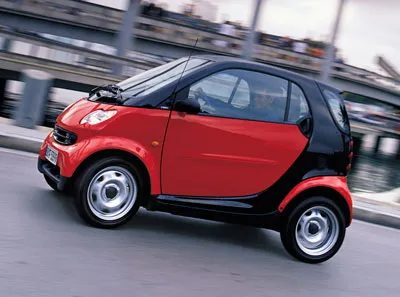
How Safe Is the Micro-Car?
Smart Fortwo challenges traditional car logic. Just over 2.5 meters long, less than 1.5 meters (5 feet) wide and about 5 feet high, it’s basically a two-person cabin on wheels. It takes up less road space than many compact cars. But does such a small footprint matter in crash dynamics?
To answer the question of how safe is the Smart Fortwo, we need to look beyond the footprint and into the frame. The company’s reputation is based on its Tridion Safety Cell, a strong, high-strength steel and aluminum passenger cell. The cage is designed to remain intact in a crash, even if the surrounding bodywork crumples.
The reality of crash testing
When you ask which small cars are safest, the Smart Fortwo often gets mixed reviews. Early models were criticized for their short wheelbases, which could make them unstable in sudden movements or side impacts. However, subsequent generations addressed these issues with reinforced structures and advanced driver assistance systems.
In the official Euro NCAP tests, the Fortwo achieved quite good results for its class. This rating reflects the ability to protect adult occupants through strong airbag deployment and a strong seat structure. why some microcars fail in safety tests The problem is usually a weight distribution and a lack of crush zones. The Fortwo mitigates this problem by using materials that absorb impact energy without affecting the cabin.
Comparing the Smart Fortwo to Larger Vehicles
このような小さな車は本質的に危険なのでしょうか? Not necessarily. Where は、そのサイズよりも重要です。 密集した都市環境では、フォーツーの操縦性により、死角や狭い空間での反応時間が遅くなり、大型車両が引き起こす事故を防ぐことがよくあります。
ただし、高速道路では質量の不足が問題になる可能性があります。 物理学では、より重い車両との衝突では、より大きな車両が有利になります。 This is how the Smart Fortwo compares しかし、ほとんどの事故が低速で発生する都市部の通勤では、フォーツーのエンジニアリングには独自の癖があります。
The Verdict on Micro-Car Safety
スマート フォーツーは、サイズだけが安全性を決定する要因ではないことを証明しています。 tridion cellは優れた保護機能を備えており、かさよりも俊敏性を重視する都市部のドライバーにとって実行可能な選択肢となっています。 しかし、本当の安全機能は認識です。 ドライバーは車両の限界を認識し、それに応じて運転スタイルを調整する必要があります。
それで、安全ですか? ドライバーの認識が許す限り安全です。 多くの人にとって、これで十分です。
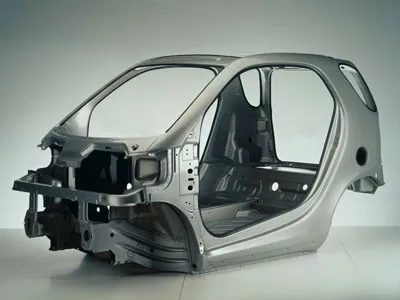
The Steel Backbone of Urban Mobility
The Smart Fortwo’s survival strategy is built into its skeleton. In particular, the Tridion Safety Cell is a high-strength steel frame that can withstand shocks, so passengers do not have to be exposed to shocks. This is a clever engineering choice for a car the size of a toaster, enclosing the cabin in a rigid cage and isolating passengers from the crumple zones.
But Smart isn’t just resting on the legacy of the Fortwo. Another model is also in development and has been quietly making the rounds in Japanese cities for some time. Tokyo, with its cramped parking spaces and narrow alleys, has traditionally been a significant market area, but the US market has been limited. This is changing. The car is currently preparing for its official American debut, marking a shift from niche import to potential mainstream contender. 🚗
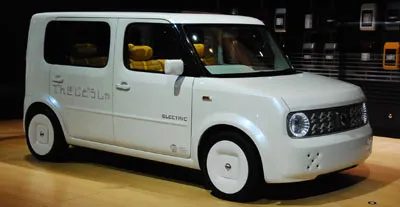
Cube’s retro-futuristic charm
The Nissan Cube has been used in Japan since 1998. This represents a design direction that may eventually make it to the US market. If this name sounds familiar, it’s probably because you saw it on “The Italian Job.” The car’s unique beauty leaves a lasting impression.
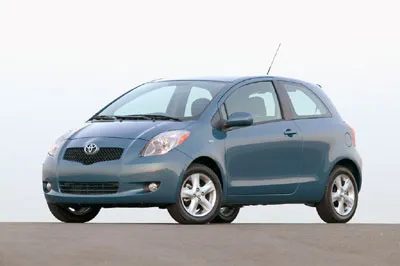
Toyota Yaris: a silent competitor
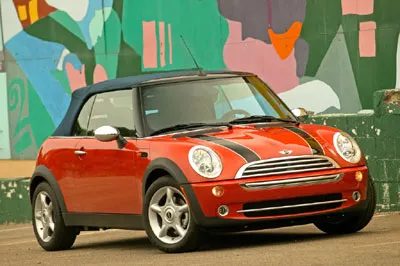
BMW’s Mini Cooper is a compact front-wheel-drive model that has defined the small car segment for years, but now there’s a vehicle with a dual identity. In Japan it is called Toyota Vitz, but in the rest of the world it is called Toyota Yaris.
The Yaris isn’t flashy, but its numbers tell a different story. It delivers a respectable fuel economy of 36 mpg highway and 29 mpg city, numbers that are more than enough to compete with newer rivals. Whether you want the practicality of a hatchback or the traditional cargo space of a sedan, Toyota offers it in both configurations.
This model did not appear out of nowhere. It fills the gap left by the Scion xA and effectively replaces its predecessor in the Toyota lineup. For those who prioritize practicality over looks, the Yaris is a reliable and fuel-efficient choice that cements its place as the smart choice in a crowded market.
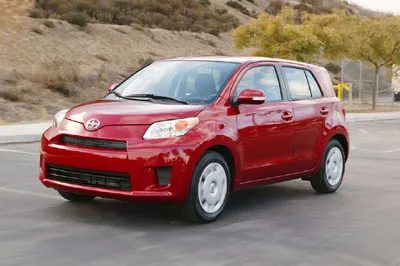
The Scion xD doesn’t want to be a sports car. It is a front-wheel-drive four-door hatchback firmly rooted in the subcompact segment. Toyota’s youth-focused brand created especially for American buyers who want something small, practical and out of the ordinary. It had its own identity. The mechanical connection is undeniable, but this isn’t just a rebadged Toyota Yaris.
This model represents Scion’s attempt to carve out a niche in a crowded market. It offers a boxy aesthetic that prioritizes interior space over aerodynamic smoothness. The goal is simple. The idea is to provide a fun-to-drive, affordable entry point into the Toyota ecosystem without the stigma of “just an economy car.”
The next part of this comparison looks at another type of small car. Although they share the same pedigree, they use completely differentbadges depending on where you live. This car is called the Honda Fit in North America, but you won’t find that name in Europe or Japan. There, it goes by the Honda Jazz.
The contrast between the US-focused Scion xD and the globally adapted Honda Jazz highlights how automakers can tailor small cars to specific regional tastes. The xD has a rugged, utilitarian charm, while the Jazz (or Fit) focuses on versatile packaging and efficiency.
Global Name Game: Honda Jazz vs Honda Fit
Why does the same car have two names? This is brand strategy. Honda named the car Honda Jazz in most international markets, emphasizing style and musicality. In the US and Canada, it has been renamed the Honda Fit to create a sharper, more dynamic image.
Both names refer to the exact same vehicle architecture. The difference is in minor trim variations and local tuning preferences. For enthusiasts who follow these models, it is important to understand that Honda Jazz and Honda Fit are the same car. This type of naming split is common in the automotive industry, where manufacturers tailor their marketing angles to different groups of people.
In contrast, the Scion xD has didn’t have this dual identity. This is unique to Scion in the US market. When Scion was discontinued, the xD’s legacy remained as a distinct chapter in Toyota’s history. Its production ended, leaving a void in the subcompact hatchback segment that neither the Corolla Hatchback nor the Yaris fully filled for some buyers.
Key Differences in Design Philosophy
The xD’s boxy design was a deliberate choice. It maximized headroom and cargo space within a tight footprint. The high roofline and vertical rear doors make it easier to loading groceries or gear. The Honda Jazz/Fit has a more streamlined profile that offers better aerodynamics and a lower drag coefficient.
xD’s interior uses simple and durable materials. However, Jazz/Fit has introduced innovative seating solutions, such as the “Magic Seats” which can be folded flat, upright or long to suit different types of cargo. This versatility has become a hallmark of Jazz/Fit’s appeal.
For those researching these vehicles, understanding these design choices can helps clarify why each car found its specific audience. xD appeals to those who value rugged simplicity and brand exclusivity. Jazz/Fit appeals to buyers who want maximum practicality and global reliability.
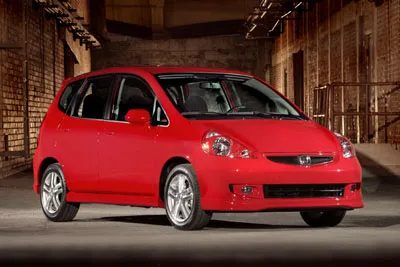
The naming game begins with the Honda Fit, a subcompact that redefined the hatchback in the early 2000s. But if you ask anyone in Europe, Australia, Africa or the Middle East, they’ll tell you it’s a Honda Jazz. It’s the same car. Different marketing spin. The Fit debuted in 2001 and captured the imagination with its tall, space-saving design. But it wasn’t until nearly five years later that it finally crossed the Pacific Ocean and arrived in US showrooms.
And then there’s this car that’s been sitting at the table for over 65 years.
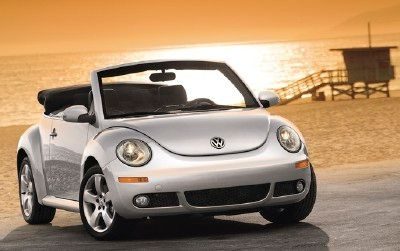
The original Volkswagen Beetle did not disappear when production ceased in the 1980s. It waited. When it comes back, it wears its history like a garment. The 1998 Volkswagen New Beetle is more than just a car. It’s a nostalgic trip on wheels. Retro design comes to life in the new millennium. By 2006, the formula had been refined into a surprisingly solid form.
This special 2006 New Beetle Cabriolet hits that sweet spot. It’s not the original version, so I think it’s a bit too precious. But then plastic surgery lost some of its appeal. this. Mid-cycle model. Engineering has taken hold of appearance.
Under the hood: More than meets the eye
The 2006 New Beetle shares its bones with the Golf Mk4 platform. This is no accident. That means this car has real drivability. Front engine, front wheel drive. This setting prioritizes comfort over cornering sharpness. But it worked.
Under the hood, buyers had choices. The basic model is equipped with a 1.9 liter TDI diesel. Effective. Peppy at low RPMs. Perfect for city driving. Want more power? 2.0 liter FSI petrol engine produces 130 horsepower. It’s enough to reduce stress when merging onto the highway. Not thrilling. But adequate.
By sharing the platform with the Golf, the reliability is significantly improved compared to the original air-cooled model.
Deal with it? Don’t expect sports car dynamics. The suspension is soft. Tuned for comfort. Steering is light. It may be too light for some enthusiasts. But what about the convertible’s top-down mode in everyday driving? It’s forgiving.
Design: A Love Letter to the Past
1998 年新甲壳虫 的设计最初引起了争议。 太圆了。 太可爱了。 但到 2006 ,这种造型已经成为经典。 弯曲的屋顶线。 突出的轮拱。 圆形的车头灯。 毫无疑问是甲壳虫。 但它显然也是 2000 年代初的产物。
敞篷版 增加了额外的吸引力。 软顶在大约 20 秒内折叠下来。 电源操作。 不用大惊小怪。 但请注意这一点:车顶装置会占用后备箱空间。 不是很多。 但如果您要收拾行李去周末旅行,这已经足够重要了。
内饰材料为硬塑料。 期待这一点。 设计很简单。 模拟仪表。 中央车速表。 这并不豪华。 但它很实用。 座位呢? 意外的支持。 对于一辆看起来像玩具的汽车来说,它可以让你在长途驾驶时保持良好的状态。
Why the 2006 Model Matters
2006 新甲壳虫 代表了第二代进化的顶峰。 到今年,最初的问题已经得到解决。 生锈问题。 电气小魔怪。 他们基本上已经消失了。 这是一个成熟的产品。 一辆知道它是什么的车。 它对自己的身份感到满意。
Compared to the original air-cooled Beetle, the 2006 New Beetle is heavier. Less efficient in